
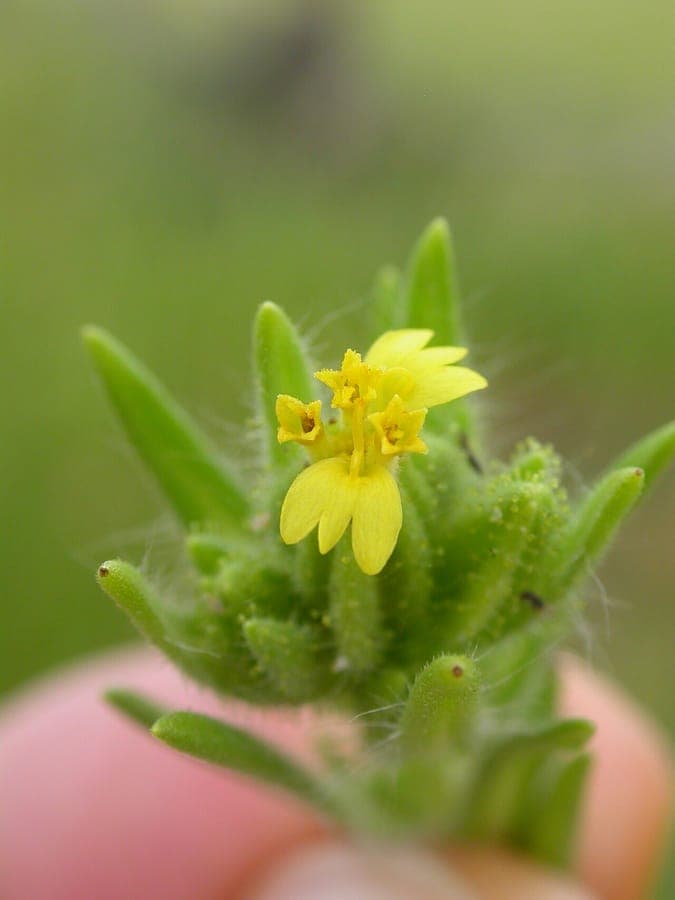
Matt Lavin from Bozeman, Montana, USA / CC BY-SA 2.0, via Wikimedia Commons
Madia glomerata: complete guide
Madia glomerata
Want to see Madia glomerata: complete guide in your garden?
1 minute, no credit card
Overview
Madia glomerata, commonly known as mountain tarweed or clustered tarweed, is a unique wildflower native to North America, ranging from Alaska and Canada to the western United States. This member of the Asteraceae family (daisy family) is popular with nature enthusiasts and gardeners wanting to create authentic wildflower combinations. The plant is known for its cheerful yellow flowers, aromatic foliage, and very low maintenance requirements.
Appearance and Bloom
Madia glomerata grows 30-60 centimeters tall with linear, fragrant leaves bearing fine hairs. The most striking feature is the charming, vibrant yellow flowers that appear in dense, clustered heads from July through September. Each flower head is approximately 1 centimeter across and thickly distributed on the plant. The flowers attract insects and produce interesting seed heads that feed birds.
Ideal Location
Plant in full sun to part shade. Madia glomerata thrives with at least 4-6 hours of direct sunlight daily. The plant grows well in dry, sloppy spots and tolerates various light conditions. This is a perfect plant for xeriscaping gardens and for places where other plants struggle. Ensure good air circulation.
Soil
Well-draining soil is essential. Madia glomerata grows best in sandy, rocky, or clay soils with low to average fertility. Too much nutrients can lead to excessive leafy growth at the expense of flowers. The plant tolerates both slightly acidic and neutral soil. If you have heavy clay soil, amend with sand or gravel for better drainage.
Watering
Once established, this plant is extremely drought-tolerant and requires minimal watering. Water regularly in the first year until well established. After that, water only in extreme drought conditions. Overwatering can lead to root rot. This is an ideal plant for dry, water-scarce areas.
Free design
Want to see Madia glomerata: complete guide in your garden? Make a free design now.
Pruning
Pruning is largely unnecessary. If you want the plant to self-seed, leave some flowers to produce seed. Remove spent flower heads for longer blooming and neater appearance. After blooming ends, you can cut the plant back or leave it to self-seed in fall.
Maintenance Calendar
Spring: Plant out in warm areas or sow seed in situ.
Summer: Water regularly in the first year. Deadhead spent flowers for longer blooming.
Fall: Leave seed heads on the plant for natural self-seeding next year.
Winter: In temperate climates, seed can overwinter and germinate next spring.
Winter Hardiness
Madia glomerata is typically grown as an annual, though in some climates it can function as a short-lived perennial. The seed is extremely cold-hardy and can survive harsh winters. In areas with mild winters, the plant can re-establish via self-seeding.
Companion Plants
Combine Madia glomerata with other wildflowers and drought-tolerant plants. Suitable plant companions are lupines, gaillardia, California poppies, and ornamental grasses. The yellow flowers create beautiful contrast with purple, blue, and red blooming flowers. Use in borders, wildflower meadows, and xeriscaping.
Closing
Madia glomerata is an underrated yet valuable wildflower for North American gardens and conservation projects. With its cheerful yellow flowers, aromatic foliage, and minimal care needs, it deserves more popularity. It thrives in dry, poor soil where many other plants fail. Explore more guides on gardenworld.app and bring the wildness of North America to your front yard.
Want to see Madia glomerata: complete guide in your garden? Make a free design now.
Upload a photo, pick a style, and get a photorealistic design with plant list in under a minute.
No credit card required


Similar plants
Calendula stellata: complete guide
Calendula stellata
Complete guide to Calendula stellata, the star-flowered marigold from Sicily: location, soil, watering and companion planting tips.
Korean chrysanthemum: complete guide
Chrysanthemum x rubellum
Chrysanthemum x rubellum is a hardy autumn perennial with single pink to copper flowers from August to November. Care and combinations.
Helianthus divaricatus: complete guide
Helianthus divaricatus
Helianthus divaricatus is a North American woodland sunflower with yellow summer blooms, ideal for naturalistic borders and shady edges.