
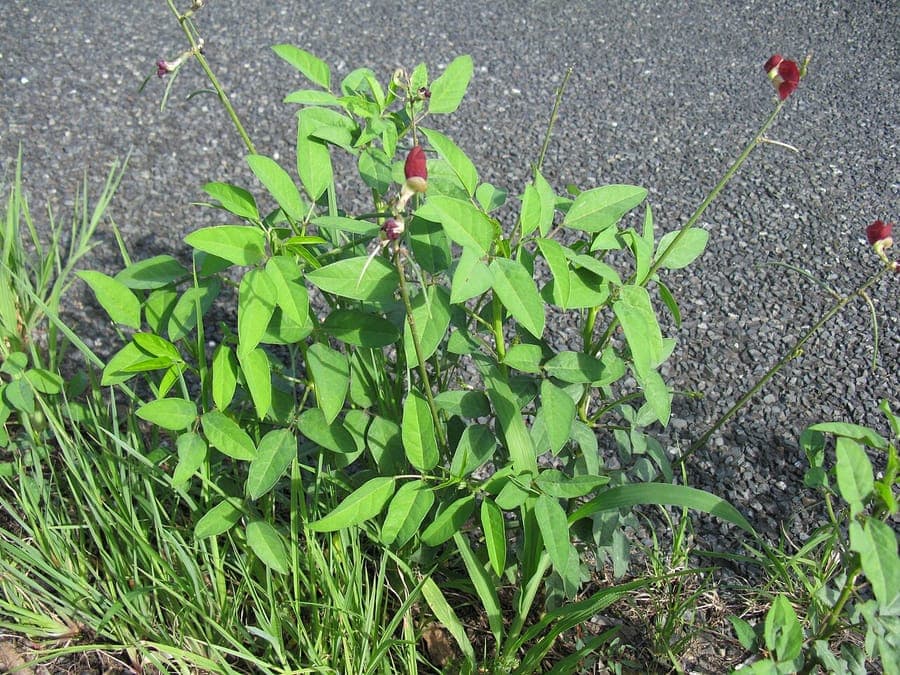
Harry Rose from South West Rocks, Australia / CC BY 2.0, via Wikimedia Commons
Macroptilium lathyroides: complete guide
Macroptilium lathyroides
Want to see Macroptilium lathyroides: complete guide in your garden?
1 minute, no credit card
Overview
Macroptilium lathyroides, commonly known as phasemy-bean, wild bushbean, or hare's-foot fern, is an elegant climbing plant from the Fabaceae family native to tropical America. This versatile annual vine thrives in warm climates and scrambles naturally over trees, shrubs, and fences throughout Central and South America. The plant creates an impressive display of delicate green foliage, compound leaves, and vibrant flowers, making it ideal for gardeners seeking to create tropical atmosphere. Its three-part leaflets create a light, feathery appearance that filters sunlight beautifully.
Beyond ornamental appeal, Macroptilium lathyroides enriches soil through nitrogen-fixation via symbiotic bacteria in its root nodules. This attribute makes it valuable in permaculture, sustainable agriculture, and wildlife gardens. The plant attracts bees and other pollinators, supporting garden ecosystem health.
Appearance and Bloom
The phasemy-bean develops into a graceful climbing vine with slender, angular stems that twine readily along support structures. Its compound leaves consist of three leaflets, each roughly 2-5 cm long, creating an airy, finely divided appearance. The plant reaches 1-2 meters in height, sometimes exceeding this in optimal conditions. The delicate foliage casts light, dappled shade beneath.
Flowers are a major attraction, ranging from magenta-pink to rose-purple, sometimes with white markings, arranged in loose, drooping clusters. Floral display extends from June through October in temperate regions, and virtually year-round in warm climates. Blooming is particularly prolific midsummer through autumn. Following pollination, characteristic long, narrow seed pods develop, reaching 15 cm or more. These pods contain black or brown-striped seeds valuable for wildlife. The pods dry on the plant and eventually split, scattering seed.
Ideal Location
Macroptilium lathyroides loves sunshine and warmth. Select a location receiving at least 6 hours of direct sunlight daily. In very hot climates, light afternoon shade may prevent excessive heat stress. The plant grows best in consistently warm environments with temperatures above 15 degrees Celsius (59 degrees Fahrenheit). It dies after frost, so in temperate zones, treat it as an annual or grow it in pots brought indoors before autumn frosts.
Provide a sturdy support structure - trellis, netting, wire framework, or pergola - up which the vine can climb. Good air circulation around the stems is important for disease prevention.
Soil
Macroptilium lathyroides is undemanding regarding soil composition, thriving in any well-draining medium. Standard garden soil or potting mix works well. The plant grows optimally in moderately rich soil with ample organic matter. pH between 6.0 and 7.5 is ideal, though the vine tolerates slightly wider ranges. Incorporate compost or aged bark at planting time; the plant even grows in poorer soils, though more fertility encourages vigorous flowering.
Excellent drainage is critical; waterlogging invites root rot. In containers, use a high-quality potting mix amended with extra organic material. A 5 cm mulch layer around the base aids moisture retention and weed suppression.
Free design
Want to see Macroptilium lathyroides: complete guide in your garden? Make a free design now.
Watering
Young vines require consistent moisture, especially during early growth and flowering phases. Water two to three times weekly in dry weather, maintaining moist (but never waterlogged) soil. Mature plants are somewhat more drought-tolerant but produce superior flowers with regular watering. Ensure good drainage to prevent fungal issues.
In containers, check soil moisture frequently; pots dry faster than garden beds. Reduce watering in autumn and winter, particularly in cooler climates where growth slows. Avoid wetting foliage late in the day, which invites fungal diseases.
Pruning
Macroptilium lathyroides responds well to pinching and pruning. Pinch growing tips when vines reach 15-20 cm height to encourage branching and fuller growth. Remove dead, damaged, or diseased growth promptly. After primary flowering (typically late autumn), light pruning of weak stems keeps the plant tidy.
To encourage more flowers mid-season, pinch back new growth slightly. Keep pruning tools sharp and clean to minimize damage and disease transmission. Never remove more than one-third of the plant's foliage at once.
Maintenance Calendar
March-May marks planting time; sow seeds indoors in early spring or direct-sow after the last frost. Keep soil consistently moist. June-July sees vigorous vegetative growth; water regularly. August-October witnesses abundant flowering; continue feeding with dilute liquid fertilizer every two to three weeks. November-February is dormant season in mild climates; reduce watering and protection from frost if growing in containers.
Feed every two to three weeks with dilute, balanced liquid fertilizer during active growth. Avoid high-nitrogen formulas, which encourage foliage at the expense of flowers. Potassium-rich feeds enhance flowering.
Winter Hardiness
Macroptilium lathyroides is highly frost-sensitive. The plant dies at the first frost and cannot tolerate temperatures below 5 degrees Celsius (41 degrees Fahrenheit). In temperate climates, it functions as a true annual - grow from seed each spring and remove after autumn frosts. In warm zones (USDA 10-11), plants may perennialize and self-seed annually, providing consecutive years of growth.
In regions with cold winters, start seeds indoors in early spring, harden off, and transplant after frost danger passes. In containers, move plants indoors before first frost to a sunny, frost-free location for potential overwintering.
Companion Plants
Macroptilium lathyroides pairs beautifully with other warm-climate plants. Plant shorter, shade-tolerant companions around its base that won't aggressively compete for nutrients - consider low-growing species like Cuphea or golden Impatiens. The vine can scramble over pergolas or arbors with other warm-season vines, creating tropical vertical gardens. Combine with warm-toned ornamental plants for maximum impact.
Use tropical and subtropical garden styles that celebrate warmth, color, and exotic forms.
Closing
Macroptilium lathyroides is an easy-to-grow climbing plant that brings tropical elegance and vibrant flowers to any warm-climate garden. With ample sunlight, consistent moisture, sturdy support, and minimal pruning, you'll enjoy beautiful blooms throughout the growing season. Whether cultivated in containers in temperate zones or as a permanent fixture in warm regions, this delightful vine significantly enhances garden aesthetics and ecological value. Source seeds or plants from specialty seed suppliers and introduce tropical climbing beauty to your garden today!
Want to see Macroptilium lathyroides: complete guide in your garden? Make a free design now.
Upload a photo, pick a style, and get a photorealistic design with plant list in under a minute.
No credit card required


Similar plants
Tall Silky Lupine: complete guide
Lupinus elatus
Tall silky lupine is a fast-growing Californian perennial with silvery foliage and blue-purple flower spikes, ideal for a prairie-style garden.
Garfield Lupine: complete guide
Lupinus garfieldensis
The Garfield lupine is a rare, fast-growing American perennial for alkaline, dry grassland gardens, with striking blue flower spikes.
Lupinus elegans: complete guide
Lupinus elegans
Lupinus elegans, the elegant lupine, is a spectacular blooming plant from Mexico with blue flower spikes. Care, cultivation and garden use.