
Melburnian / CC BY 3.0, via Wikimedia Commons
Macadamia tetraphylla: complete guide
Macadamia tetraphylla
Want to see Macadamia tetraphylla: complete guide in your garden?
1 minute, no credit card
Overview
Macadamia tetraphylla, commonly known as the rough-shelled macadamia or Queensland nut, is a fascinating exotic tree from Australia that has adapted to various climates. This subtropical species naturally occurs in regions between South Queensland and North New South Wales. The tree is known for both its ornamental value and potential food production, though it thrives best in warm, sheltered environments.
The tree belongs to the Proteaceae family, the same group containing elegant proteas and banksias. Macadamia tetraphylla is particularly interesting for gardeners seeking something different and exotic. The combination of attractive foliage and potential fruit makes this a valuable addition to any exotic garden collection.
Appearance & Bloom
Macadamia tetraphylla grows into a medium-sized tree with a tendency towards a broad, rounded silhouette. The leaves are elongated, deep green, and provide an elegant, refined appearance. The foliage is dense enough to provide summer shade while remaining light enough to filter some light through.
The flowering is subtle yet charming. Flowers are small, typically yellow to cream-colored, and appear in clusters. They emerge from the leaf axils and have a pleasantly soft aroma. Blooming typically occurs in spring, providing a beautiful visual surprise after winter passes. After flowering, nuts may form, particularly in warm climates.
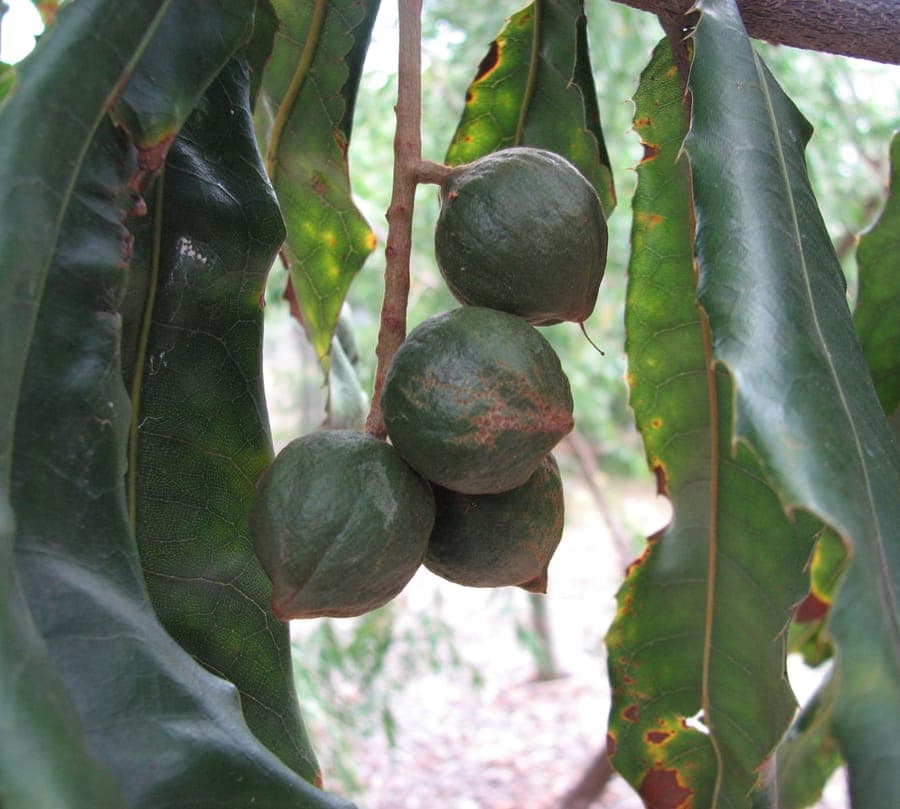
The fruits are the most distinctive feature of this tree. They are round, hard, and have characteristically rough shells, explaining why the tree is called rough-shelled. Inside lies an oil-rich kernel that is highly nutritious.
Ideal Location
Macadamia tetraphylla does best in a warm, sunny spot in your garden. Choose a location where the tree receives at least 6-8 hours of direct sunlight daily. Full sun is ideal, but in extremely hot climates some afternoon shade can be beneficial.
The tree is sensitive to cold and strong winds, so select a sheltered spot with wind protection. If you live in a cool climate, it may be advantageous to position the tree against a south-facing wall where it can absorb heat.
This is not a shade-tolerant tree. Poor light leads to weak growth, thin foliage, and no fruiting. Ensure no other trees or structures block the light as your tree grows.
Soil
Macadamia tetraphylla thrives best in well-draining, nutrient-rich soil. Ideal is a mixture of garden soil with organic matter such as compost or leaf mold. The soil should not be waterlogged - this leads to root problems.
The pH preference is around neutral to slightly acidic (pH 5.5-7.0). Test your soil before planting and adjust as needed with sulfate or lime.
Ensure good soil structure by adding organic matter before planting. This improves both drainage and moisture retention. Mulch around the tree with a 5-7 cm layer of organic material, but keep this 10 cm away from the trunk.
Free design
Want to see Macadamia tetraphylla: complete guide in your garden? Make a free design now.
Watering
Watering must be regular but not excessive. During the first months after planting, you should water regularly to establish roots. Once established, Macadamia tetraphylla is reasonably drought tolerant, but consistent moisture is best.
Water deeply but less frequently rather than shallowly and often. This encourages deep root growth. During dry periods, especially during the growing season, regularly check if soil is moist 15-20 cm deep.
During rainy seasons, you can significantly reduce watering. However, ensure good drainage so water doesn't accumulate around roots. Excessively wet conditions can lead to root rot.
Pruning
Macadamia tetraphylla requires minimal pruning in young years. Allow the tree to develop its natural form. However, remove dead, damaged, or diseased branches as you notice them.
As the tree matures, you can perform light structural pruning to support shape or remove low-hanging branches. This is best done after the growing season.
Avoid aggressive pruning, as this can stress the tree and increase growth. Use clean pruning tools and disinfect between cuts to prevent disease spread.
Maintenance Calendar
Spring: Begin feeding as new growth starts. Check for pests and diseases. Ensure the tree receives regular watering. Summer: Continue watering, feed every 4-6 weeks. Monitor for insect damage. Fall: Gradually reduce feeding. Ensure fallen leaves are cleared. Winter: Minimal watering, no feeding. Protect against unexpected frost.
Winter Hardiness
Macadamia tetraphylla is not frost hardy. This is a subtropical tree that suffers damage below approximately 0 degrees Celsius. In temperate climates, the tree must overwinter in a protected environment, ideally indoors.
If you live in a cool climate, grow the tree in a large pot so it can be moved indoors for winter. Keep it in a bright room with temperatures between 10-15 degrees Celsius.
Even in warmer regions, frost can cause damage. Protect young trees with cloth during freezing periods.
Companion Plants
Macadamia tetraphylla grows well with other subtropical species such as fuchsias, hibiscus, and other warm-weather plants. Avoid placing near large trees that cast shadows.
In containers, it pairs well with slower-growing tropical plants. This creates an inviting, exotic appearance.
Conclusion
Macadamia tetraphylla is perfect for gardeners who enjoy growing something different and challenging. With proper placement, soil, and care, you can enjoy years of beauty and potential food production from this unique tree. Start small, listen to your tree's needs, and you'll be rewarded with a distinctive addition to your garden.
For help finding a healthy plant, check local garden centers or specialized suppliers. Gardenworld.app can help you plan your garden layout for your exotic trees!
Want to see Macadamia tetraphylla: complete guide in your garden? Make a free design now.
Upload a photo, pick a style, and get a photorealistic design with plant list in under a minute.
No credit card required


Similar plants
Gevuina avellana: complete guide
Gevuina avellana
Chilean hazel, Chilean wildnut, Gevuina avellana - South American tree with edible nuts. Exotic, interesting silhouette. Warm zones only. Requires winter protection.
Protea cynaroides: complete guide
Protea cynaroides
King protea (Protea cynaroides) is a spectacular South African flower with huge pink-red flowerheads. Perfect for cut flowers and exotic gardens.
Hakea sericea: complete guide
Hakea sericea Schrad. & J.C.Wendl.
Hakea sericea: drought-tolerant Australian needle-leaf shrub, fast-growing with white spring flowers and excellent storm resistance capability.