
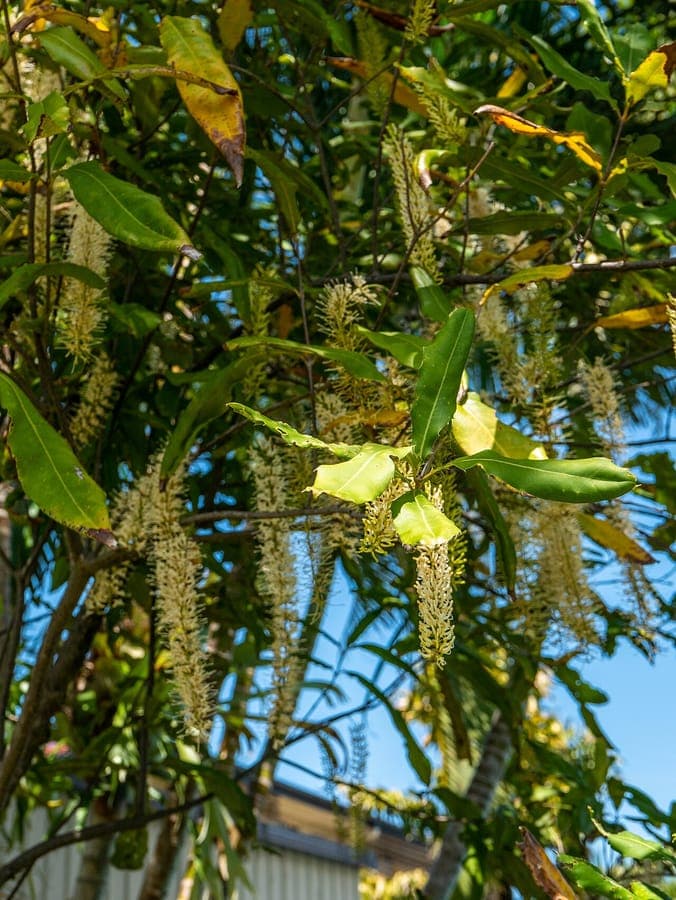
John Robert McPherson / CC BY-SA 4.0, via Wikimedia Commons
Macadamia integrifolia: complete guide
Macadamia integrifolia
Want to see Macadamia integrifolia: complete guide in your garden?
1 minute, no credit card
Overview
Macadamia integrifolia, commonly known as Queensland nut, smooth-shell macadamia, or bopplenut, is an impressive tropical tree native to Queensland and northern New South Wales, Australia. This member of the Proteaceae family is world-renowned for producing some of the finest edible nuts available. The tree reaches 30 to 50 feet (10-15 meters) at maturity and develops a dense, symmetrical canopy that provides excellent shade. Beyond nut production, Macadamia wood is prized for woodworking, furniture, and decorative projects. The tree thrives in warm climates across the globe, from California to Hawaii to Australia, making it accessible to gardeners in tropical and subtropical regions.
Macadamia integrifolia is remarkably disease and pest-resistant compared to many tropical fruits. Once established, it demands minimal intervention and rewards patient gardeners with decades of productivity. The nuts are buttery, sweet, and versatile in the kitchen, whether roasted, raw, or incorporated into confections and savory dishes.
Appearance and Bloom
The Queensland nut develops into a graceful, upright tree with glossy, dark green foliage. Leaves are lance-shaped, reaching up to 12 inches (30 cm) long, arranged in tufts that create a full, lush crown. Bark begins smooth and grey, becoming increasingly rough and deeply furrowed with age. In warm climates, the tree remains evergreen year-round, providing constant visual interest.
Small, creamy-white to pale yellow flowers emerge in long, drooping clusters during spring through early summer, depending on your climate zone. These delicate blooms are sweetly fragrant and highly attractive to bees, ensuring good pollination and fruit set. After successful pollination, hard-shelled nuts develop within a thick, fibrous husk. Individual nuts are roughly 1-1.5 inches (2-3 cm) in diameter and can take up to 18 months to fully mature on the tree.
Ideal Location
The Queensland nut is a lover of sunshine and consistent warmth. Choose a location receiving at least 6-8 hours of direct sunlight daily. In very hot climates (USDA zones 10-11), afternoon shade can prevent leaf scorch during peak summer heat. Good air circulation is essential to minimize fungal diseases, particularly in humid environments. Select a site protected from strong winds, which can damage branches and cause nut drop in young trees.
This tree thrives in USDA hardiness zones 10 and 11. In cooler climates, it makes an excellent container specimen for conservatories or frost-free greenhouse environments, bringing tropical elegance indoors during the cold months.
Soil
Macadamia integrifolia performs best in well-draining soil with moderate organic matter. The tree is relatively pH-tolerant, growing well across a pH range of 5.5 to 7.0, with slightly acidic to neutral conditions being optimal. Sandy loams or clay loams amended with compost or aged bark provide ideal growing conditions. Adequate organic material improves water retention and nutrient availability.
Waterlogging is the primary enemy, causing fatal root rot. If you have heavy clay soil, create a raised planting bed with improved drainage. A 5-10 cm mulch layer around the base conserves moisture, regulates soil temperature, and suppresses weeds. Keep mulch several inches away from the trunk to prevent collar rot.
Free design
Want to see Macadamia integrifolia: complete guide in your garden? Make a free design now.
Watering
Young trees require consistent moisture during establishment and growth seasons (spring and summer). Water deeply two to three times weekly if rainfall is absent, ensuring the soil remains moist but never waterlogged. As trees mature, they become somewhat drought-tolerant but produce better with regular watering during the growing season. Reduce watering frequency in autumn and winter unless conditions are particularly dry.
In areas with cold, wet winters, ensure excellent drainage; plant on slopes or raised beds if necessary. Young trees benefit from frequent, consistent watering to establish strong root systems. Once mature, trees often need supplemental water only during extended dry periods.
Pruning
Macadamia integrifolia naturally develops an attractive form with minimal intervention. In early years, light shaping can encourage a strong central leader and well-distributed branches. Remove any dead, diseased, crossing, or weak growth promptly, ideally in spring before the growth season. This improves air circulation and prevents pest and disease issues.
To maintain a fuller, more compact canopy, prune lightly after winter, removing approximately 20 percent of the length of lower branches. This stimulates new growth and promotes flowering. Keep pruning tools sharp and clean to minimize damage and prevent infection. Avoid heavy pruning, which stresses the tree and may reduce fruiting.
Maintenance Calendar
January-March marks the primary growing season. Water regularly and provide protection from intense afternoon sun in very hot areas. April-June sees flowering and fruit set; apply balanced or potassium-rich fertilizer to support development. July-September is often dry; maintain consistent watering. October-December is the rest period; reduce watering slightly but never allow the soil to dry completely.
Apply 5-10 cm compost or aged manure around the base twice yearly, avoiding direct contact with the trunk. Conduct soil testing every two to three years to identify and correct nutrient deficiencies. Well-fed trees produce better nut crops.
Winter Hardiness
Macadamia integrifolia is frost-sensitive. Mature trees tolerate brief exposure to temperatures as low as 5 degrees Celsius (41 degrees Fahrenheit), but sustained cold below 10 degrees Celsius (50 degrees Fahrenheit) causes damage. Growth is optimal in regions with mild winters where nighttime temperatures stay above 15 degrees Celsius (59 degrees Fahrenheit).
In USDA zones 9 and colder, grow the tree in containers and move it indoors to a warm, sunny location (minimum 10-15 degrees Celsius) during winter. This may slightly reduce growth but allows even northern gardeners to cultivate this remarkable tree. Place it outdoors in late spring after the last frost.
Companion Plants
The Queensland nut grows beautifully alongside other warm-climate plants. Underplant with shade-tolerant, low-maintenance species such as Fatsia japonica, dwarf palms, or bay laurel (Laurus nobilis). These companions appreciate the dappled shade and don't compete aggressively for nutrients. Avoid dense plantings that restrict air movement and increase disease pressure.
Create tropical, Mediterranean, or contemporary garden styles that showcase the tree's architectural form. The Macadamia integrifolia serves as a dramatic focal point in any warm-climate landscape.
Closing
Macadamia integrifolia is an outstanding choice for gardeners in warm climates seeking a distinctive, productive tree that combines visual beauty with culinary reward. With ample sunlight, excellent drainage, consistent watering during the growing season, and minimal pruning, you'll enjoy decades of nutty abundance. Find quality trees from specialty nurseries, locate the warmest, sunniest spot in your garden, and prepare to harvest nature's finest nut. Your Queensland nut tree will reward your patience and care with years of generous productivity.
Want to see Macadamia integrifolia: complete guide in your garden? Make a free design now.
Upload a photo, pick a style, and get a photorealistic design with plant list in under a minute.
No credit card required


Similar plants
Gevuina avellana: complete guide
Gevuina avellana
Chilean hazel, Chilean wildnut, Gevuina avellana - South American tree with edible nuts. Exotic, interesting silhouette. Warm zones only. Requires winter protection.
Macadamia tetraphylla: complete guide
Macadamia tetraphylla
Discover how to grow Macadamia tetraphylla or rough-shelled macadamia. Tips for location, soil, water and maintenance.
Protea cynaroides: complete guide
Protea cynaroides
King protea (Protea cynaroides) is a spectacular South African flower with huge pink-red flowerheads. Perfect for cut flowers and exotic gardens.