
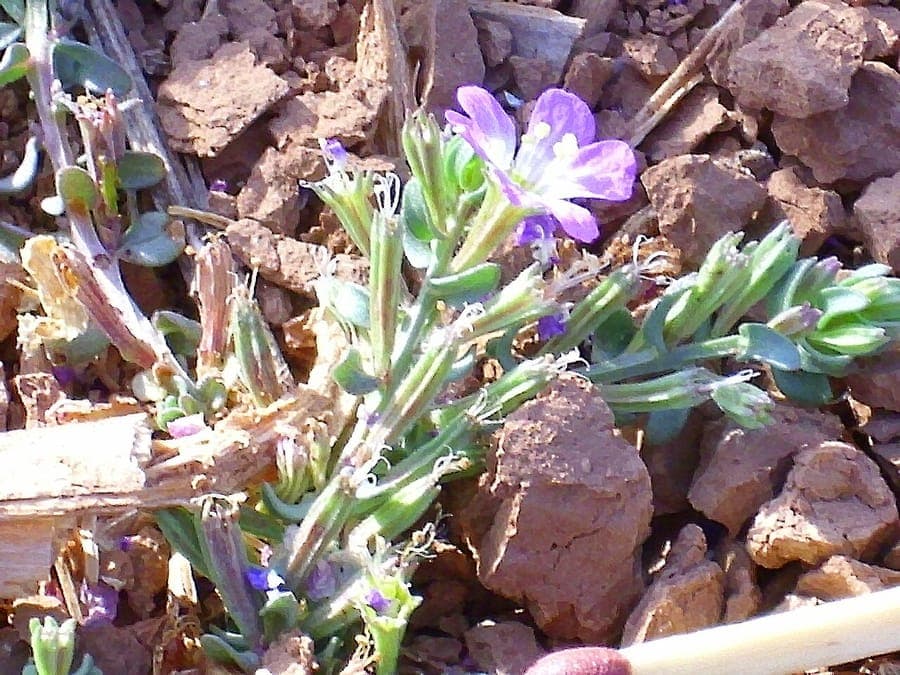
Javier martinlo / CC BY-SA 4.0, via Wikimedia Commons
Threebract loosestrife: complete guide
Lythrum tribracteatum
Want to see Threebract loosestrife: complete guide in your garden?
1 minute, no credit card
Threebract loosestrife (Lythrum tribracteatum) is a compact herbaceous plant from the family Lythraceae, distributed across Europe, North Africa, and Central Asia to Afghanistan. The plant grows 30 to 60 cm tall and produces abundant pink to purple flowers during the summer months.
The flowers are small, six-petaled blooms that appear densely stacked in short, dense flower clusters. They appear from May through September, depending on the climate. The leaves are oblong to linear, approximately 5 to 15 mm long, and give the plant a graceful outline.
This loosestrife is likely an annual or biennial in temperate climates, but can return as a perennial under favorable conditions. The plant is frost hardy to approximately -10 degrees Celsius and grows well in USDA zones 7 to 10.
The plant prefers fully sunny locations with at least six hours of direct sunlight. In partial shade, it grows less well and blooms less abundantly. The plant grows well in moist soils and wetlands but also accepts drier soils with regular watering.
A pH range of 5 to 5.5 is optimal, but the plant also grows in more neutral soils. The soil must be well-draining. Compact clay soils can lead to waterlogging, so improve with sand if needed.
Watering is important, especially when planting and during dry periods. The plant thrives in moist soils, so water regularly. Once established, it tolerates shorter dry spells better. Ensure the soil does not dry completely.
Pruning is not strictly necessary, but you can trim back after blooming to maintain a compact shape. Remove wilted flower clusters to encourage possible new blooming. In spring, dead stems can be removed.
The threebract loosestrife is low-maintenance. During the growing season, you can apply general-purpose fertilizer once per month, but this is not strictly necessary. Avoid over-fertilizing, which leads to lush leaf growth.
The best planting season is spring or early autumn. Plant at a distance of 30 to 45 cm for natural growth patterns. Ensure regular watering in the first months.
The plant is moderately frost hardy. In USDA zones 7 to 10, it survives without protection. In colder regions, mulching provides protection. In very cold areas, it cannot survive and must be replanted annually.
This loosestrife combines well with other moisture-loving plants and summer bloomers. Group it with saxifrage, verbenas, and other Mediterranean plants for a luxuriant effect. For moist soils, combine it with other water plants.
The threebract loosestrife is ecologically valuable and attracts bees and other pollinators. With proper moisture and sunlight, it is a continuous-blooming addition that makes the summer months pleasant. Its compact growth and abundant flowers make it perfect for front yard design.
Want to see Threebract loosestrife: complete guide in your garden? Make a free design now.
Upload a photo, pick a style, and get a photorealistic design with plant list in under a minute.
No credit card required


Similar plants
Winged loosestrife: complete guide
Lythrum alatum
Everything about Lythrum alatum, the winged loosestrife. Care, location, pruning and garden pairings for this native North American wetland perennial.
Dnieper loosestrife: complete guide
Lythrum borysthenicum
Everything about Lythrum borysthenicum, the Dnieper loosestrife: location, bloom season, care in pond margins and bog gardens. Full growing guide included.
Grand redstem: complete guide
Ammannia robusta
Everything about Ammannia robusta: pond margins, bog gardens, soil, care and propagation. Practical advice for water garden enthusiasts in temperate climates.