
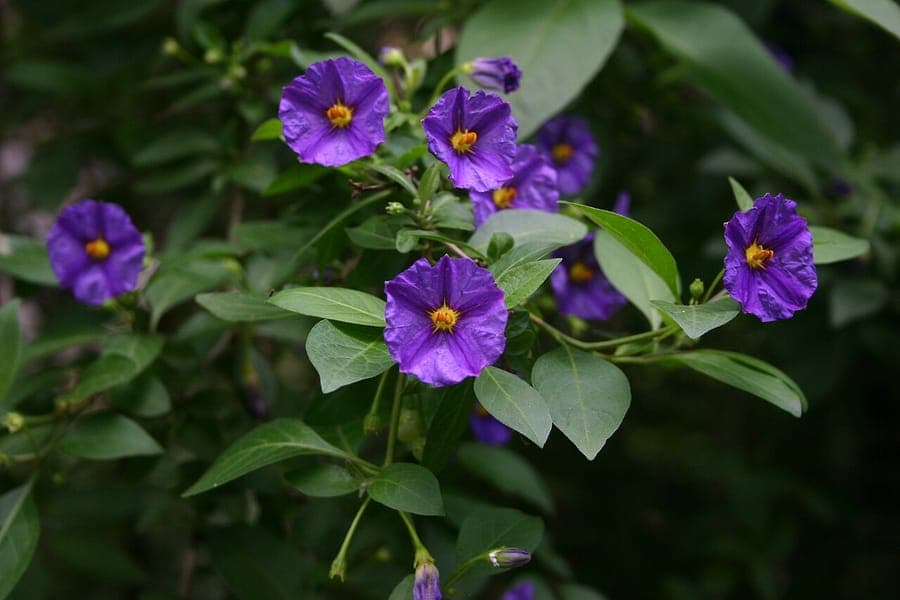
Paul venter / CC BY-SA 3.0, via Wikimedia Commons
Blue potatobush: complete guide
Lycianthes rantonnetii
Want to see Blue potatobush: complete guide in your garden?
1 minute, no credit card
Overview
The blue potatobush (Lycianthes rantonnetii) is a spectacular ornamental shrub originating from South America, specifically from Bolivia to southern Brazil and northeastern Argentina. This elegant plant is celebrated for its stunning blue flowers and berry-producing abilities. It's an excellent choice for gardeners seeking a distinctive plant with continuous blooming and attractive foliage throughout the growing season.
Although the name "potatobush" suggests a connection to potatoes, both plants indeed belong to the Solanaceae family. However, the blue potatobush distinguishes itself clearly through its ornamental value and unique growth habits. This shrub works beautifully as a standalone specimen or in groupings, providing color and visual interest throughout the entire growing season.
Appearance and bloom
The blue potatobush grows into a compact to medium-sized shrub, typically reaching 1.5 to 2 meters in height, though it can grow taller in ideal conditions. The foliage is glossy dark green and oval-shaped, creating a striking contrast with the flowers.
The flowers are the true stars of this plant. Though small at about 1-2 centimeters in diameter, they appear in abundance, displaying a striking blue-purple or lavender-blue hue. They're arranged in loose clusters and bloom continuously from spring through fall. Following the flowers come attractive red berries, making the plant even more ornamental and providing food for birds.
The combination of blue flowers and red berries creates a stunning contrast that bird enthusiasts will certainly appreciate. The plant has a natural growth form, which simplifies maintenance and preserves an organic appearance.
Ideal location
The blue potatobush thrives best in a sunny location with at least 6-8 hours of direct sunlight daily. Full sun exposure not only promotes richer flowering but also helps keep the plant compact and healthy.
While the plant can tolerate some shade, blooming will be less abundant in partially shaded locations. Ensure adequate space around the plant for good air circulation, which aids in disease prevention.
This plant is frost-sensitive and can only overwinter outdoors in mild climates (zones 9-11). In northern and central Europe, it's often grown in containers so it can be brought indoors for winter protection.
Soil
The blue potatobush prefers well-draining soil with a pH between neutral and slightly acidic (6.0-7.0). Heavy clay soils can be problematic, so adding compost, peat, or perlite helps improve drainage.
When planting in containers, many gardeners use a mixture of potting soil and perlite in roughly a 3:1 ratio. This ensures adequate moisture and nutrient retention while allowing excess water to drain away.
Adding mature compost to the soil also helps maintain moisture balance and nutrient richness. A mulch layer of 5-10 centimeters of organic material (leaf mold, wood chips) helps retain moisture and reduce temperature fluctuations.
Free design
Want to see Blue potatobush: complete guide in your garden? Make a free design now.
Watering
The plant has moderate water needs. During the growing season (spring and summer), water regularly when the top centimeter of soil feels dry. Don't let it dry out completely, but also avoid waterlogged conditions.
In winter, especially when the plant is kept indoors, water requirements decrease significantly. Water only when the soil is clearly dry, as the plant is dormant and needs less moisture.
For potted plants, check daily or every other day during warm periods. Drip irrigation is ideal for plantings, as it maintains stable moisture levels and prevents wet foliage.
Watch for excessive moisture, which can promote fungal diseases, especially if plant density is high. Good drainage holes in containers are essential.
Pruning
Pruning is important for maintaining a compact form and stimulating more blooms. In early spring (March-April), cut back about one-third of the height to promote branching. This leads to a fuller, denser plant.
Long, spindly shoots can be trimmed back during the growing season. Remove dead, diseased, or weak growth whenever noticed. After flowering, around October-November, the plant can be cut back in preparation for winter, especially in cooler regions.
Pruning after blooming also helps stimulate a second flush of flowers. Don't be afraid to prune aggressively; this plant tolerates cutting well.
Maintenance calendar
Spring (March-May): Prune, begin feeding after initial growth burst Summer (June-August): Water regularly, encourage blooming, thin if necessary to promote flowering Fall (September-November): Reduce feeding, prepare for winter Winter (December-February): Minimal watering, protection in cold regions, await the new season
Winter hardiness
The blue potatobush is NOT winter hardy in northern and central Europe. In areas where frost occurs (temperatures below 0 degrees Celsius), the plant must be protected or kept indoors.
In milder climates (USDA zone 9 and above), it can overwinter outdoors, though protection against severe frost may still be necessary. The safest approach is to bring the plant indoors before the first frost.
Companion plants
The blue potatobush pairs beautifully with:
- Calendula (warmth and yellow contrast)
- Blue plumbago (shared blue tones)
- White-flowering jasmine (evening fragrance)
- Lavender (Mediterranean color and structure)
- Red-leaved coleus (interesting foliage contrast)
Closing
The blue potatobush is a magnificent plant offering continuous blooming, interesting berries, and attractive foliage. With proper care and attention, this plant thrives excellently in gardens where warmth and sunlight are available. Consider it a valuable addition to a Mediterranean or subtropical garden, or cultivate it in containers for flexibility.
Available at major garden centers throughout Europe. Visit gardenworld.app for more inspiration.
Want to see Blue potatobush: complete guide in your garden? Make a free design now.
Upload a photo, pick a style, and get a photorealistic design with plant list in under a minute.
No credit card required


Similar plants
Solanum dolichosepalum: complete guide
Solanum dolichosepalum
Discover Solanum dolichosepalum, an Andean nightshade with striking long sepals. Growing tips, hardiness, and companion planting for your patio.
Solanum ripense: complete guide
Solanum ripense
Discover Solanum ripense, a moisture-loving Andean nightshade for pond edges and conservatories. Growing tips, hardiness, and companions.
Solanum tomentosum: complete guide
Solanum tomentosum
Discover Solanum tomentosum, a thorny South African nightshade with felted leaves. Growing tips, hardiness, and companion planting ideas.