
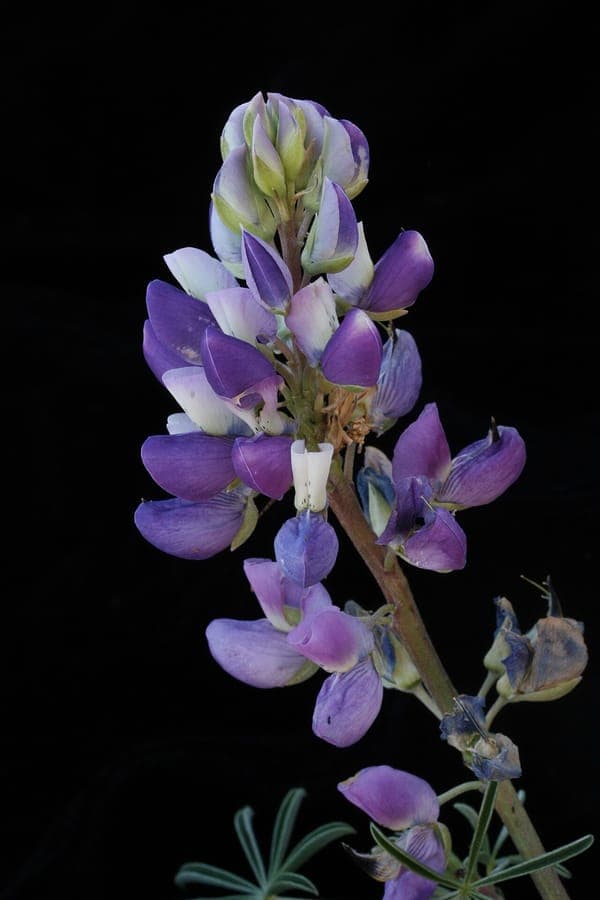
David L. Nelson, MD / CC BY-SA 3.0, via Wikimedia Commons
Manycolored Lupine: complete guide
Lupinus variicolor
Want to see Manycolored Lupine: complete guide in your garden?
1 minute, no credit card
Overview
The Manycolored Lupine (Lupinus variicolor) is a fascinating plant originating from West California. This unique species is renowned for its remarkable flower spikes that combine multiple colors in a single plant. This distinctive characteristic gives the plant its common name.
This plant belongs to the Fabaceae family and is a semi-shrub that grows in natural habitats along dry slopes of California. The plant attracts pollinators and adds character to any garden where it grows. For gardeners seeking something different and distinctive, the Manycolored Lupine is a perfect choice.
Appearance and Bloom
The Manycolored Lupine grows as a compact semi-shrub with fine texture. The plant reaches heights of 30 to 60 centimeters and forms dense flower spikes with mixed colors. The characteristic flower spikes display a mixture of purple, red, pink, and white, making this plant truly unique.
Flowers appear from March through May in full bloom. The leaves are feathery and finely divided, giving a delicate appearance. This leaf structure is typical of lupine species and supports their elegant look. The multicolored flower spikes are truly a work of nature's art.
After flowering, the plant forms seed pods that enable natural propagation. This makes the plant highly suitable for wild gardens and natural landscapes.
Ideal Location
The Manycolored Lupine thrives best in very sunny locations with excellent drainage. Place the plant where it receives at least 6 to 8 hours of direct sunlight daily. The plant prefers open, hillside positions where wind can flow freely.
The plant naturally grows on dry slopes in California and cannot tolerate shade. Full sun is essential for blooming. A southwest-facing position is recommended. This plant is perfect for Mediterranean gardens and xeriscaping.
Soil
The Manycolored Lupine requires well-draining, nutrient-poor soil. The plant thrives best in sandy, gravelly, or mountainous terrain. The ideal pH range is neutral to slightly acidic (pH 6.0 to 7.0).
Excessive feeding leads to leafy growth and few flowers. The plant is adapted to nutrient-poor, dry soils. In richer soils, you will see more foliage and fewer flowers. This is characteristic of many California species.
Watering
Provide minimal watering. The plant is highly drought tolerant and endures long dry periods. Water only when soil is completely dry. In temperate climates with normal rainfall, the plant requires no supplemental water.
Excessive water is very damaging and leads to disease and root rot. Drip irrigation can be used but must be sparse. In winter, the plant needs no water at all. This is a highly water-efficient plant.
Pruning
Minimal pruning required. Remove faded flower spikes after blooming to keep the plant tidy. This promotes compact form. Remove dead stems in spring. Avoid severe pruning as the plant does not recover well from it.
The plant is very self-maintaining. Excessive pruning can prevent good growth. A natural form is usually most beautiful with this plant.
Maintenance Calendar
January: Prepare for growing season. Ensure good drainage for incoming rains.
March-May: Blooming period! Enjoy the beautiful multicolored flowers. Minimal intervention.
June: After blooming, seeds can be collected. Leave some seed pods for natural propagation.
Summer: Minimal care. Plant tolerates heat and drought well.
Autumn: Prepare for winter. No extra maintenance needed.
December: Winter rest. Plant is completely dormant.
Winter Hardiness
The Manycolored Lupine is hardy down to approximately -7 degrees Celsius. In temperate climates of the Netherlands, Belgium, and France, the plant usually survives winters. In areas with very wet winters, mulching can help.
Better drainage is essential in wet areas. The plant can be better grown in pots in very wet climates. In very cold regions, the plant can be regrown annually from seeds.
Free design
Want to see Manycolored Lupine: complete guide in your garden? Make a free design now.
Companion Plants
The Manycolored Lupine combines well with other California plants that tolerate drought. Try combinations with:
- Eremophila (desert myrtle): similar water requirements
- Salvia (sage): beautiful flowers and drought tolerant
- Penstemon: vertical blooms pair nicely with lupine
- Dianthus (pink): compact form and xeric requirements
- Achillea (yarrow): yellow and orange tones contrast nicely
Choose other drought-tolerant plants. This plant is not suitable for wet, shady gardens.
Closing Thoughts
The Manycolored Lupine is a beautiful, unusual choice for gardeners seeking something special. This plant adds character and color to Mediterranean and xeric gardens. With minimal care and water use, your Manycolored Lupine will thrive for years.
Visit gardenworld.app for more plant inspiration. Visit gardenworld.app for all your garden design needs!
Vermeerdering en voortplanting
De plant kan gemakkelijk vermenigvuldigd worden uit zaad. Zaden kunnen in het voorjaar gezaaid worden in potgrond. Houd de zaaigrond vochtig maar niet nat totdat kiemling verschijnt. Dit duurt meestal 2 tot 3 weken. Zaailing kunnen worden uitgeplant wanneer zij groot genoeg zijn om te hanteren.
Natuurlijke vermeerdering gebeurt wanneer zaad van rijpe zaadschillen op geschikte plaatsen terechtkomt. Dit is een methode die de plant in het wild gebruikt om zich uit te breiden naar nieuwe gebieden. In de tuin kan je dit bevorderen door zaadschillen op geschikte plaatsen los te laten.
Zieken en plagen
Cobb berglupin is vrij resistent tegen zieken en plagen. De meest voorkomende problemen zijn schimmelziekten in zeer vochtige omstandigheden. Zorg voor goede luchtstroom rond de plant. Bladziekten kunnen voorkomen en kunnen met fungicide worden behandeld.
Insectenplagen zijn zeldzaam maar bladluizen kunnen soms voorkomen. Deze kunnen met insecticide worden behandeld of eenvoudigweg met sterke waterstraal weggespoten. Het is beter om biologische bestrijding te gebruiken wanneer mogelijk.
Opslag en bewaring van zaden
Zaden van Cobb berglupin kunnen opgeslagen worden voor toekomstige zaaiing. Verzamel rijpe zaadschillen en laat deze volledig drogen in een schone, droge ruimte. Verwijder de zaden uit de schillen en berg op in een droge plek. Zaden kunnen tot 2 tot 3 jaar levensvatbaar blijven als ze goed opgeslagen worden.
Historische en culturele betekenis
Deze plant heeft grote betekenis gehad in traditionele tuinen en natuurlijke ecosystemen. Inheemse volkeren hebben deze planten gebruikt voor diverse doeleinden gedurende eeuwen. De plant vertegenwoordigt een belangrijk onderdeel van de biologische erfgoed in zijn natuurlijke habitat.
De plant is ook belangrijk voor wetenschappelijk onderzoek omdat het onderdeel uitmaakt van diverse ecosystemen. Botanici en onderzoekers bestuderen deze plant om beter te begrijpen hoe planten zich aanpassen aan hun omgeving.
Gebruikswaarde en voordelen
Buiten de decoratieve waarde biedt deze plant verschillende praktische voordelen voor de tuin. Veel tuiniers waarderen de plant om zijn onderhoudsarme karakter en robuustheid. De plant kan jaren lang groeien zonder veel tussenkomst.
De plant draagt ook bij aan de biodiversiteit door voedsel en schuilplaats te bieden aan insecten en andere dieren. Dit maakt het een waardevolle toevoeging aan elke ecologisch bewuste tuin.
Ras en cultivars
Hoewel Lupinus sericatus primair als wilde plant voorkomt, zijn er enkele cultivars en selecties beschikbaar voor tuingebruik. Deze kunnen verschillen in bloemkleur of grootte. Kwekers hebben gewerkt aan het selecteren van de beste vormen voor tuingebruik.
Sommige botanische tuinen focussen op het behouden van pure, wilde types van deze plant. Dit helpt erfgoed en genetische diversiteit in stand te houden voor toekomstige generaties.
Want to see Manycolored Lupine: complete guide in your garden? Make a free design now.
Upload a photo, pick a style, and get a photorealistic design with plant list in under a minute.
No credit card required


Similar plants
Tall Silky Lupine: complete guide
Lupinus elatus
Tall silky lupine is a fast-growing Californian perennial with silvery foliage and blue-purple flower spikes, ideal for a prairie-style garden.
Garfield Lupine: complete guide
Lupinus garfieldensis
The Garfield lupine is a rare, fast-growing American perennial for alkaline, dry grassland gardens, with striking blue flower spikes.
Lupinus elegans: complete guide
Lupinus elegans
Lupinus elegans, the elegant lupine, is a spectacular blooming plant from Mexico with blue flower spikes. Care, cultivation and garden use.