
Loadmaster (David R. Tribble) This image was made by Loadmaster (David R. Tribble). Email the author: David R. Tribble Also see my personal gallery at Google Photos / CC BY-SA 3.0, via Wikimedia Commons
Texas bluebonnet: complete guide
Lupinus texensis
Want to see Texas bluebonnet: complete guide in your garden?
1 minute, no credit card
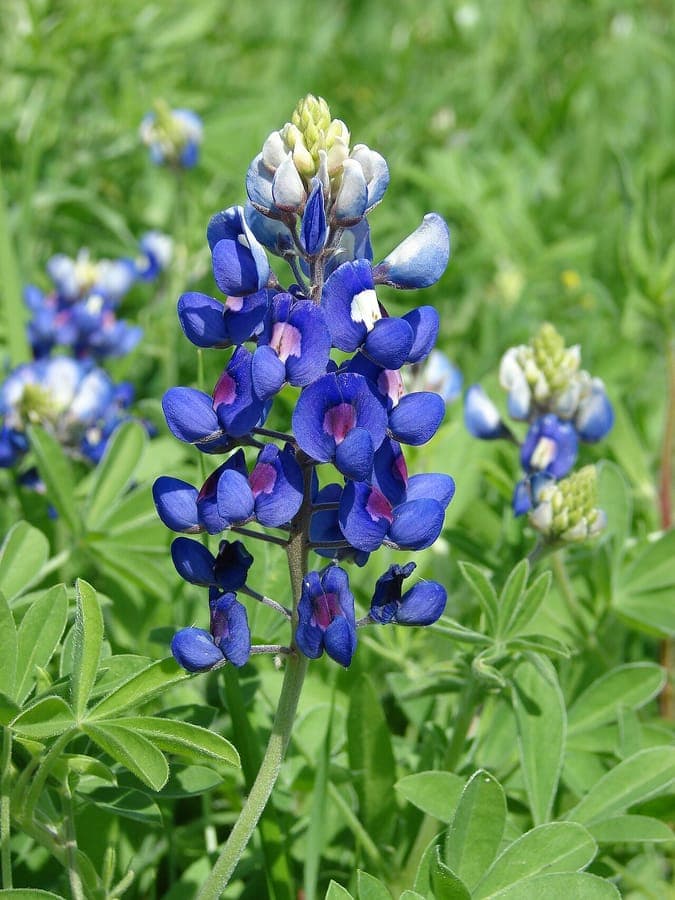
The Texas bluebonnet (Lupinus texensis) is a stunning perennial celebrated for its intensely blue flower spikes. This wildflower originates from Texas and northeastern Mexico and has become a beloved choice in American gardens. The plant grows as an upright shrub reaching 30 to 60 cm in height and blooms abundantly in spring, typically between April and May.
The flower spikes of the bluebonnet are densely packed with small, pea-like flowers in varying shades of blue. The leaves are characteristically compound, with elongated leaflets that give the plant a silvery appearance. This makes the plant decorative even without blooms.
Although this lupine naturally occurs in dry, sandy areas, it is adaptable and thrives in many different garden environments. The plant is exceptionally cold hardy and can tolerate temperatures down to -15 degrees Celsius, making it suitable for USDA zones 6 to 9.
The Texas bluebonnet prefers full sun and at least six hours of direct sunlight daily. The plant grows best in well-draining soil. Heavy clay soils can lead to root rot, so add sand or peat to your soil if it is clayey. Soil pH should be neutral to slightly acidic.
Watering is important, especially during dry periods. Ensure the soil drains well and does not remain waterlogged. Once established, the plant is quite drought tolerant. Water regularly during the growing season, especially in dry summers.
Pruning is not always necessary, but you can trim the plant after blooming to control growth and encourage new flowers. Remove dead flower spikes to extend the blooming period.
The lupine is low-maintenance once established. During the growing season, you can apply a general-purpose fertilizer in spring, but avoid over-fertilizing, which can cause lush leaf growth at the expense of flowers.
The best time to prune is immediately after blooming, in June. Remove dead flowers and stems. In winter, the plant requires minimal care. Check for pests such as aphids and caterpillars and control if necessary.
The Texas bluebonnet is extremely cold hardy. In USDA zones 6 to 9, it survives cold winters without protection. In colder regions, mulching is recommended to protect the roots.
This lupine grows excellently with other wildflowers and grass-like plants. Ensure adequate spacing for air circulation. Combinations with other spring bloomers such as Indian blanket (Gaillardia) and Texas poppy (Papaver) create a spectacular wildflower garden. Spacing of 30 to 45 cm is recommended.
The Texas bluebonnet is a visual delight and provides nourishment for bees and butterflies. With the right growing conditions, this plant is a sustainable addition to any front yard. Its brilliant flowers and hardy nature make it a favorite among gardeners seeking natural beauty.
Want to see Texas bluebonnet: complete guide in your garden? Make a free design now.
Upload a photo, pick a style, and get a photorealistic design with plant list in under a minute.
No credit card required


Similar plants
Tall Silky Lupine: complete guide
Lupinus elatus
Tall silky lupine is a fast-growing Californian perennial with silvery foliage and blue-purple flower spikes, ideal for a prairie-style garden.
Garfield Lupine: complete guide
Lupinus garfieldensis
The Garfield lupine is a rare, fast-growing American perennial for alkaline, dry grassland gardens, with striking blue flower spikes.
Lupinus elegans: complete guide
Lupinus elegans
Lupinus elegans, the elegant lupine, is a spectacular blooming plant from Mexico with blue flower spikes. Care, cultivation and garden use.