
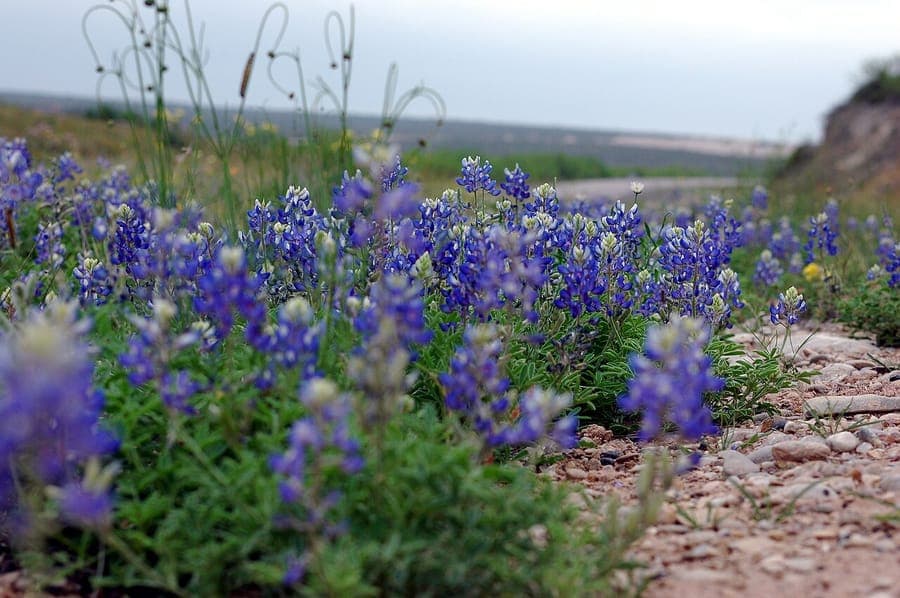
Clinton & Charles Robertson from RAF Lakenheath, UK & San Marcos, TX, USA & UK / CC BY 2.0, via Wikimedia Commons
Lupinus subcarnosus: complete guide
Lupinus subcarnosus
Want to see Lupinus subcarnosus: complete guide in your garden?
1 minute, no credit card
Overview
The Texas bluebonnet (Lupinus subcarnosus) is far more than just a beautiful perennial-it's the official state flower of Texas and a symbol of the American prairie. This lupine ranks among the most successful wildflowers of the southeastern United States, where it transforms spring hillsides into a sea of indigo.
With its distinctive intense blue flowers and compact growth habit, it's perfect for front yard designs. In the Benelux climate, it performs reliably as a biennial with considerable charm.
Appearance and bloom
Texas bluebonnet grows compactly and neatly, typically reaching only 30-40 centimeters tall. The plant bears hook-shaped, succulent leaflets arranged in palm-like formations. This "fleshy" characteristic gave this lupine its species name: subcarnosus, meaning somewhat fleshy.
The flowers are glorious: densely packed spikes of intense blue to indigo, occasionally appearing almost violet. Each spike persists for weeks, and the plant often produces multiple flowering waves from April through June. This makes Texas bluebonnet exceptionally valuable for landscapes that bloom abundantly without constant intervention.
Following bloom, characteristic seed pods develop, which also attract birds.
Ideal location
Give Texas bluebonnet full sun: at least six to eight hours of direct sunlight daily. While it tolerates partial shade, it flowers less attractively and becomes leggy there. Southwest-facing positions and heat-reflecting walls promote optimal growth.
This lupine excels in prairie and native plant gardens. Plant in mass groupings of five to ten specimens for maximum impact. It's equally at home in borders, containers on sunny terraces, and in rock gardens.
The plant thrives in open, windy locations-another plus for front yard designs receiving abundant sun and air movement.
Soil
Texas bluebonnet is not finicky but prefers slightly sandy conditions. Sandy loam or sand-clay mixture is ideal. In heavy clay soils, amend with sand and gravel for improved drainage.
The plant prefers neutral to slightly acidic soil (pH 6-7). Waterlogged or very acidic soils cause suffering. Always ensure good surface drainage.
Avoid excess nutrients-too much nitrogen promotes leafy growth at the expense of flowers.
Free design
Want to see Lupinus subcarnosus: complete guide in your garden? Make a free design now.
Watering
Once established, Texas bluebonnet is quite drought-tolerant. During the growing season (March-June), water regularly, especially during dry periods. As the plant enters vigorous growth, maintain evenly moist but never waterlogged soil.
Post-bloom, water significantly less. From July through October, water minimally-only during extreme drought. Winter watering is minimal; this plant prefers resting in drier conditions.
Prefer drip irrigation at the roots; wet foliage invites fungal diseases.
Pruning
Removing faded flower spikes several times throughout the season extends blooming significantly. This deadheading is optional but highly effective.
At season's end (October-November), you can cut the entire plant back to 5 centimeters above soil. This promotes more compact growth next season. Some gardeners simply leave the plant and cut it back in spring.
Remove any damaged, diseased, or pest-damaged plant parts immediately.
Maintenance calendar
March: Soil preparation, seed or planting hole preparation. April-May: Sow seed or install young plants, water regularly. May-June: Deadheading, continued watering. July-September: Minimal water, monitoring. October-November: Cut back plant (optional), winter rest preparation. December-February: Dormancy, keep very dry.
Winter hardiness
In southern climates (USDA zones 7-9), Texas bluebonnets overwinter without difficulty. In the Benelux, they're typically grown as annuals or cautious biennials. They tolerate brief frost, but prolonged wet winters can be fatal.
Tip: Avoid heavy mulch in wet winters! Good drainage is your primary winter defense. In milder zones with excellent drainage, they can persist as short-lived perennials.
Companion plants
Texas bluebonnet combines beautifully with:
- Gaillardia pulchella (Indian blanket)
- Salvia greggii (autumn sage)
- Eryngium amethystinum (amethyst sea holly)
- Coreopsis tinctoria (plains coreopsis)
- Verbascum phoeniceum (purple mullein)
These combinations create a native, prairie-like atmosphere.
Closing
Lupinus subcarnosus brings the glamour and drama of Texas prairie to your front yard. With its intense color, compact form, and nitrogen-fixing roots, it's a true winner.
Find Texas bluebonnet seed or young plants at specialty nurseries. Seed is economical and germinates readily; plants yield faster results. With patience, you'll enjoy a magnificent flower display.
Discover more Texas-inspired garden designs on gardenworld.app.
Want to see Lupinus subcarnosus: complete guide in your garden? Make a free design now.
Upload a photo, pick a style, and get a photorealistic design with plant list in under a minute.
No credit card required


Similar plants
Tall Silky Lupine: complete guide
Lupinus elatus
Tall silky lupine is a fast-growing Californian perennial with silvery foliage and blue-purple flower spikes, ideal for a prairie-style garden.
Garfield Lupine: complete guide
Lupinus garfieldensis
The Garfield lupine is a rare, fast-growing American perennial for alkaline, dry grassland gardens, with striking blue flower spikes.
Lupinus elegans: complete guide
Lupinus elegans
Lupinus elegans, the elegant lupine, is a spectacular blooming plant from Mexico with blue flower spikes. Care, cultivation and garden use.