
Wikimedia Commons / CC BY-SA 3.0, via Wikimedia Commons
Washington lupin: complete guide
Lupinus polyphyllus
Want to see Washington lupin: complete guide in your garden?
1 minute, no credit card
Overview
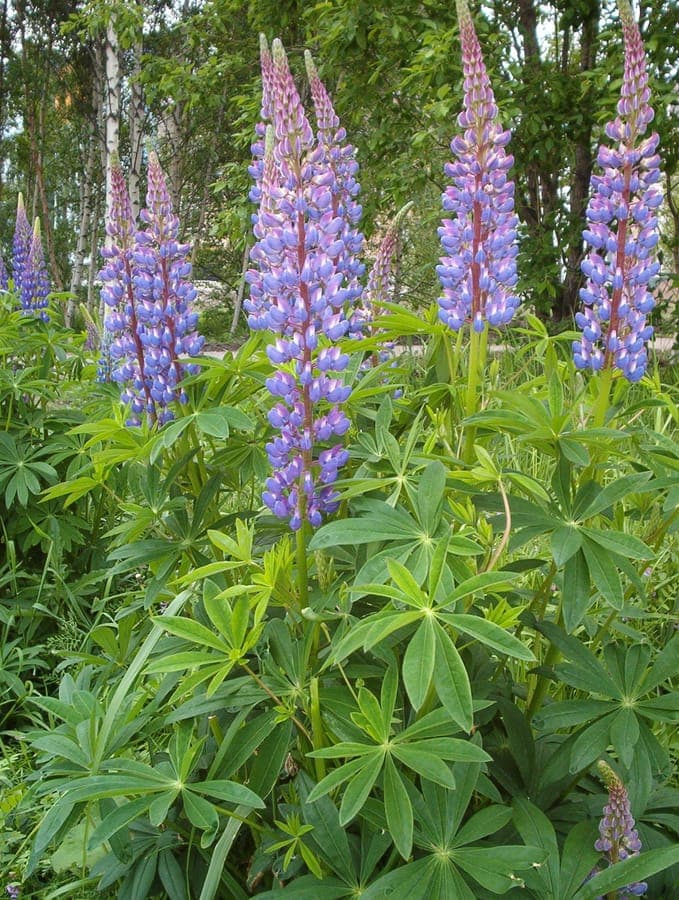
Washington lupin (Lupinus polyphyllus) is a bold and elegant perennial that brings vertical drama to any summer border. Native to western North America, from British Columbia to Montana, this herbaceous forb has become a garden staple across temperate zones thanks to its tall flower spikes, nitrogen-fixing roots, and resilience in well-drained soils. Reaching heights of 90–120 cm, it blooms from late June through August, offering striking columns of colour in shades of blue, purple, pink, yellow, and white.
Hardy in USDA zones 4–7, Washington lupin thrives in full sun and acidic soil. It's not overly fussy, but it does have specific needs – especially when it comes to drainage and soil pH. If you're planning a mixed border, this is one plant that demands attention in both placement and aftercare.
On gardenworld.app, you can visualise how lupins fit into your garden layout, adjusting for height, bloom time, and companion plants.
Appearance & bloom cycle
The plant forms a rosette of palmate leaves, each with 11 to 17 narrow leaflets, giving it a soft, fern-like texture. Foliage stays fresh green all season and rarely suffers from pests. The real show begins in late June when tall, upright racemes rise above the leaves, densely packed with pea-like flowers. Depending on the cultivar, blooms can be solid or bi-coloured – popular varieties include 'Gallery Rose', 'My Castle', and 'Polar Princess'.
Flowering lasts 4–6 weeks. Deadheading spent spikes encourages a second, weaker flush in late summer. Let the foliage die back naturally in autumn; cutting it too early weakens the plant's energy reserves.
Ideal location
Aim for 6–8 hours of direct sunlight daily (light level 7 out of 10). Lupins tolerate light shade but will stretch and produce fewer flowers. Choose a spot with good air movement to prevent powdery mildew and fungal issues, especially in humid climates.
Avoid low-lying areas where water pools. A raised bed or gentle slope is ideal, as it mimics the plant's natural habitat. Lupins don't transplant well once established, so pick their final spot carefully.
Soil requirements
Soil pH should be between 5.0 and 5.5 – slightly acidic. Alkaline soils cause chlorosis (yellowing of young leaves), which weakens the plant over time. Test your soil before planting; amend overly alkaline ground with sulfur or peat-free ericaceous compost.
The soil must be well-draining yet moisture-retentive. Heavy clay? Mix in grit and compost. Sandy soil? Boost organic matter with composted manure or leaf mould. Avoid rich, nitrogen-heavy soils – lupins fix their own nitrogen via root nodules and respond poorly to high-nitrogen fertilisers.
Free design
Want to see Washington lupin: complete guide in your garden? Make a free design now.
Watering
Water deeply but infrequently, especially during the first growing season and in dry spells. Aim for consistent moisture without waterlogging. Water at the base to keep foliage dry and reduce disease risk.
Once established, Washington lupin is moderately drought-tolerant but performs best with occasional deep watering during prolonged dry periods. Mulch lightly with bark or straw to conserve moisture and suppress weeds, but avoid piling mulch against the crown.
Pruning
After flowering, remove spent spikes down to the basal leaves. This prevents seed formation and redirects energy into root development. Do not cut back healthy foliage until it yellows and collapses in autumn.
In late autumn or early spring, trim any remaining dead growth to 5 cm above soil level. Avoid heavy pruning in winter, as old stems help protect the crown from frost and excess moisture.
Maintenance calendar
- March: Remove old debris, check for crown rot
- April: Plant or divide (rarely needed), improve soil if needed
- May: Begin regular watering in dry weather
- June–August: Peak bloom; deadhead regularly
- September: Reduce watering, allow foliage to die back
- October: Cut back dead stems, apply light mulch if desired
- November–February: Minimal care; avoid disturbing soil
Winter hardiness
Washington lupin is reliably hardy in zones 4–7 (down to -30°C). In zone 7 and milder, it often retains some evergreen foliage. The key to winter survival is drainage – wet, frozen soil leads to crown rot.
Avoid covering with plastic or thick mulch. Instead, let natural leaf litter or a thin layer of straw provide light insulation. In colder zones, a light winter mulch applied after the ground freezes can prevent frost heave.
Companion plants
Pair lupins with plants that complement their height and bloom time. Try them with delphiniums, foxgloves, or ornamental grasses for texture contrast. Silver-leaved plants like Artemisia or Stachys byzantina reflect light and highlight the flower spikes.
Avoid aggressive spreaders or shallow-rooted plants that compete for space. Also, don't plant near lime-loving species like lavender or clematis – lupins slightly acidify the soil over time.
Closing
Washington lupin is a rewarding perennial for gardeners who value bold colour and structure. While it doesn't thrive in every garden, those with the right conditions – acidic, well-drained soil and full sun – will enjoy years of reliable blooms.
Buy healthy plants in spring from trusted garden centres or reputable online suppliers. Look for compact, bushy specimens without signs of disease. Avoid bargain bins where plants may have been stressed.
And remember: on gardenworld.app, you can design a custom planting scheme that ensures your lupins shine in the right setting, surrounded by harmonious companions and backed by seasonal care reminders.
Want to see Washington lupin: complete guide in your garden? Make a free design now.
Upload a photo, pick a style, and get a photorealistic design with plant list in under a minute.
No credit card required


Similar plants
Tall Silky Lupine: complete guide
Lupinus elatus
Tall silky lupine is a fast-growing Californian perennial with silvery foliage and blue-purple flower spikes, ideal for a prairie-style garden.
Garfield Lupine: complete guide
Lupinus garfieldensis
The Garfield lupine is a rare, fast-growing American perennial for alkaline, dry grassland gardens, with striking blue flower spikes.
Lupinus elegans: complete guide
Lupinus elegans
Lupinus elegans, the elegant lupine, is a spectacular blooming plant from Mexico with blue flower spikes. Care, cultivation and garden use.