
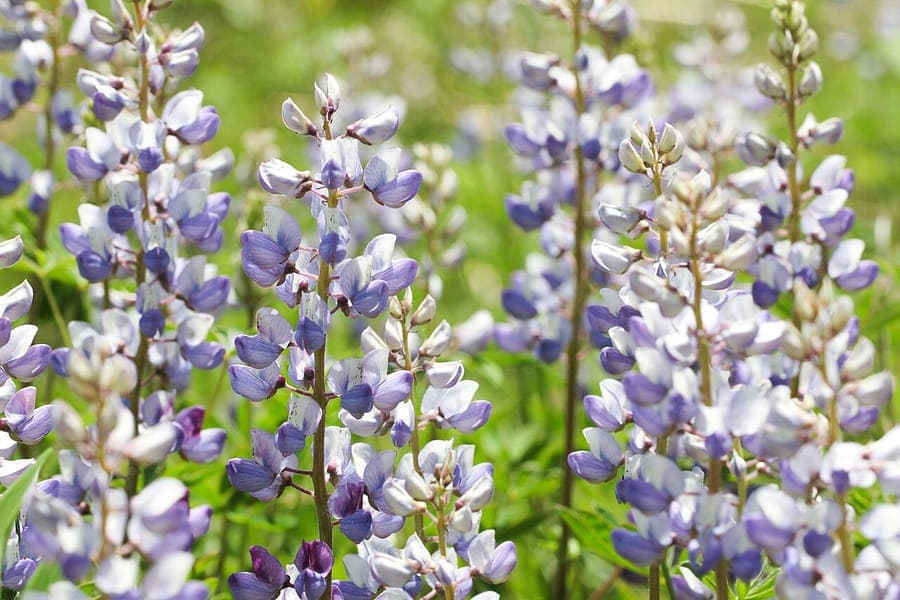
cassi saari / CC BY-SA 4.0, via Wikimedia Commons
Sundial lupine: complete guide
Lupinus perennis
Want to see Sundial lupine: complete guide in your garden?
1 minute, no credit card
Overview
Sundial lupine (Lupinus perennis) is a perennial herb native to eastern North America, found from Alabama up to Massachusetts. Unlike the often short-lived garden lupines, this species is long-lived and thrives in wildflower meadows, dry prairies, and open woodlands. It's a standout choice for gardeners aiming to support native pollinators while adding vertical interest to their planting schemes.
One of its most important ecological roles is as the sole host plant for the endangered Karner blue butterfly (Plebejus samuelis). Without Lupinus perennis, this butterfly cannot complete its lifecycle. That makes this plant not just ornamental, but essential in conservation gardening. If you're planning a wildlife-friendly garden, Sundial lupine should be at the top of your list. On gardenworld.app, you can design a pollinator garden layout that integrates Sundial lupine with other native species for maximum impact.
Appearance & bloom cycle
Sundial lupine produces tall, upright flower spikes 30–60 cm high, densely packed with pea-like flowers in shades of blue to violet, sometimes with a white or pale yellow banner spot. Blooming occurs from late May through June, depending on your USDA zone. The flowers open from the base upward, creating a long-lasting display.
The foliage is palmate, with 7–11 narrow, silvery-green leaflets radiating from a central point. The leaves are slightly hairy, giving them a soft texture. After flowering, slender seed pods form and dry in the sun, eventually splitting to scatter seeds naturally.
Ideal location
Full sun is a must - aim for at least 6–8 hours of direct sunlight daily. In partial shade, plants become leggy and produce fewer flowers. Choose an open, unshaded spot with good air circulation to prevent fungal issues.
This lupine dislikes root disturbance, so avoid planting near aggressive spreaders or in high-traffic garden areas. It works well in naturalistic borders, rock gardens, or dry slopes. It's also effective in xeriscaping due to its drought tolerance. Use gardenworld.app to map out spacing and sunlight patterns before planting - this helps ensure your lupines have room to establish without competition.
Soil requirements
Sundial lupine prefers well-drained, sandy or loamy soils with a slightly acidic to neutral pH (5.5–7.0). It struggles in heavy clay or constantly moist soils, where root rot can develop quickly.
It's adapted to low-fertility conditions and actually performs worse in rich soils. Avoid adding compost or fertilizer, especially nitrogen - this species fixes its own nitrogen through symbiotic bacteria (Rhizobium) in root nodules. Over-fertilizing leads to lush foliage but weak stems and poor flowering.
Free design
Want to see Sundial lupine: complete guide in your garden? Make a free design now.
Watering
Once established, Sundial lupine is highly drought tolerant. Water young plants weekly during their first growing season, especially in dry spells. After that, supplemental watering is rarely needed, even during hot summers.
Always water at the base to keep foliage dry and prevent fungal diseases. Never let the plant sit in soggy soil. Overwatering is the most common cause of failure with this species.
Pruning
Minimal pruning is required. After blooming, you can deadhead spent flower spikes to prevent excessive self-seeding or to tidy up the appearance. However, leaving some pods allows natural reseeding, which helps maintain a colony over time.
Do not cut back the foliage in fall - it provides winter insulation. Remove old leaves in early spring before new growth emerges.
Maintenance calendar
- Jan: Check for heaving due to freeze-thaw cycles
- Feb: Inspect for rodent activity around crowns
- Mar: Clear old debris, prepare bed for spring
- Apr: Watch for emerging shoots; protect from slugs
- May: Begin bloom period; reduce watering
- Jun: Deadhead if desired; monitor for seed pods
- Jul: Allow natural seeding; avoid fertilizing
- Aug: No maintenance needed; observe pollinator visits
- Sep: Transplant seedlings if overcrowded
- Oct: Leave foliage intact for winter protection
- Nov: Apply light mulch if in zone 4 or colder
- Dec: Minimal care; ensure good drainage
Winter hardiness
Sundial lupine is hardy in USDA zones 4–8. It reliably survives winter temperatures down to -30°F (-34°C). In colder zones, a light mulch of straw or pine needles can help prevent frost heaving.
The plant dies back to the ground in winter, but the crown and deep taproot remain alive. Avoid heavy mulching - it can trap moisture and promote rot.
Companion plants
Pair Sundial lupine with other native, sun-loving perennials like Eutrochium maculatum (spotted Joe-Pye weed), Asclepias tuberosa (butterfly weed), and Schizachyrium scoparium (little bluestem). These combinations support a wide range of pollinators and create a dynamic, textured landscape.
Avoid planting near invasive spreaders or moisture-loving species. Also steer clear of heavy feeders that require rich soil, as they'll outcompete the lupine.
Closing
Sundial lupine is a resilient, ecologically vital plant that brings beauty and function to the garden. With its striking blooms and role in supporting rare butterflies, it's a worthy addition to any native plant garden. It asks for little - just sun, well-drained soil, and patience during establishment.
Looking to incorporate Sundial lupine into your garden design? Use gardenworld.app to create a custom planting plan that matches your soil, light, and regional conditions. Available at most garden centres in spring and early summer, this perennial is worth seeking out for its long-term value and wildlife benefits.
Want to see Sundial lupine: complete guide in your garden? Make a free design now.
Upload a photo, pick a style, and get a photorealistic design with plant list in under a minute.
No credit card required


Similar plants
Tall Silky Lupine: complete guide
Lupinus elatus
Tall silky lupine is a fast-growing Californian perennial with silvery foliage and blue-purple flower spikes, ideal for a prairie-style garden.
Garfield Lupine: complete guide
Lupinus garfieldensis
The Garfield lupine is a rare, fast-growing American perennial for alkaline, dry grassland gardens, with striking blue flower spikes.
Lupinus elegans: complete guide
Lupinus elegans
Lupinus elegans, the elegant lupine, is a spectacular blooming plant from Mexico with blue flower spikes. Care, cultivation and garden use.