
Oregon Lupine: complete guide
Lupinus oreganus
Want to see Oregon Lupine: complete guide in your garden?
1 minute, no credit card
Overview
The Oregon lupine (Lupinus oreganus), also known as Kincaid's lupine, is a beautiful perennial from the pea family (Fabaceae). This plant naturally occurs in British Columbia, Oregon, and Washington, and has proven itself a reliable, low-maintenance grower in many gardens. With its characteristic purple flowers and finely branched flower spikes, this lupine makes a striking accent in borders with dry, sunny locations. Through gardenworld.app, you can explore how wildflower lupines are the ideal solution for low-maintenance garden designs.
Appearance and bloom
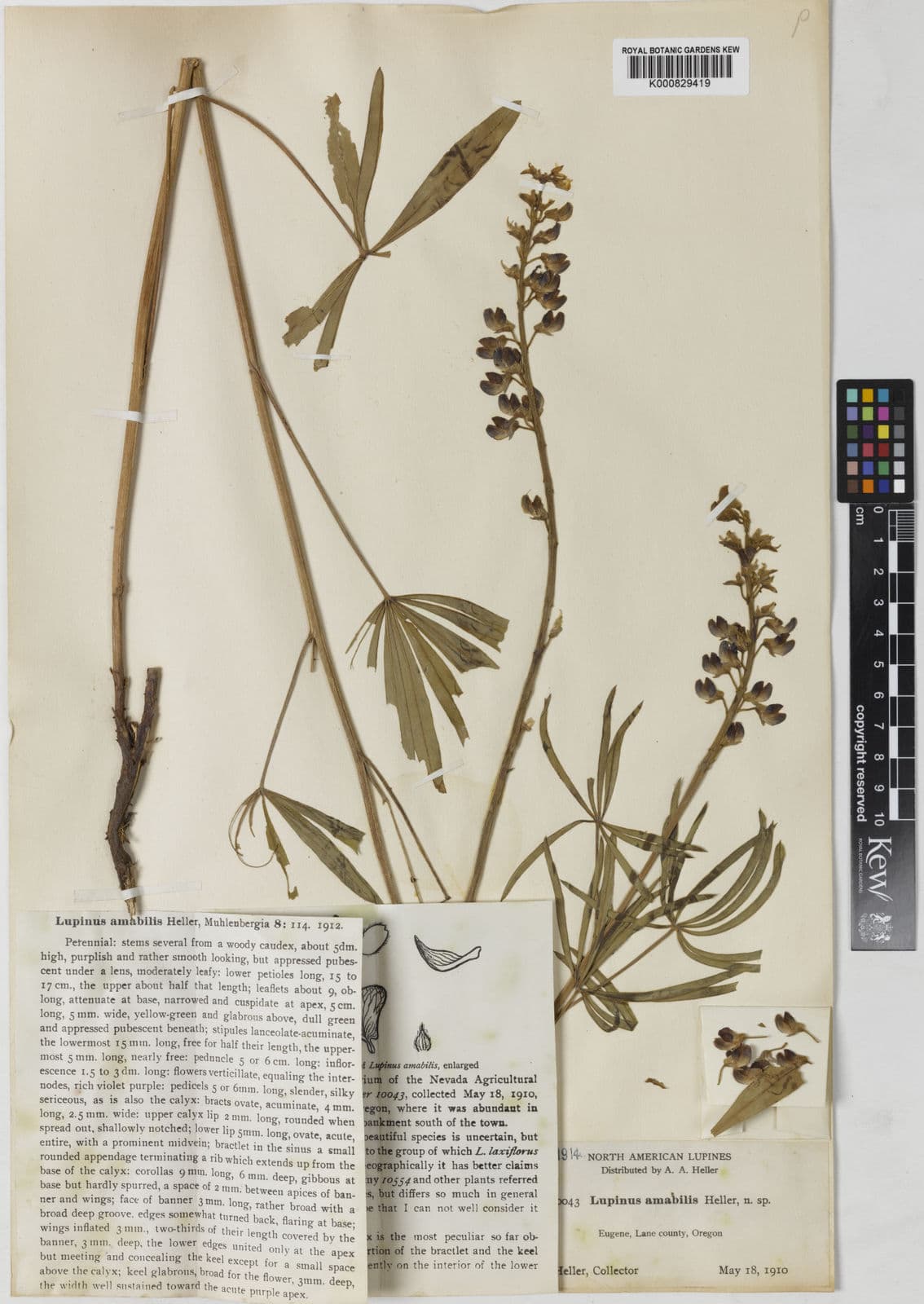
Lupinus oreganus grows as an herbaceous perennial reaching approximately 60-75 cm tall. The plant develops deep roots that support drought resistance. Characteristic are the hand-shaped compound leaves with 7-11 narrow leaf segments in silvery-gray to greenish color. The flowers appear in dense, upright spikes in purple to lilac tones, sometimes with white-marked eyes. Flowering typically occurs from May to July, depending on climate and growing conditions. After flowering, characteristic seed pods form containing black seeds.
Ideal location
Oregon lupines require full sun - at least six to eight hours of direct sunlight daily. In warm climates, light afternoon shade can be beneficial to counter excessive drying. The plant thrives well in open, windy locations and is excellent for coastal areas. Avoid planting under trees or in partial shade, as this can lead to fewer flowers and weaker growth. Reputable garden centers stock various lupine cultivars that perform well in temperate regions.
Soil
Lupinus oreganus prefers well-draining soil. The plant even thrives in poor, sandy soils where other garden plants struggle. In fact, overly nutrient-rich soil can cause more foliage than flowers. Slightly acidic to neutral soil (pH 5.5-7.0) is ideal. If you have heavy clay soil, improve it by adding sand, gravel, and humus-rich compost. The plant is highly tolerant of dry conditions once established thanks to its deep root system.
Watering
Once established, Oregon lupine is a drought-tolerant plant. During the first growing season, water regularly to encourage a strong root system - approximately two to three times weekly, depending on weather conditions. After the first season, supplemental water is usually only necessary during extreme drought periods. Excessive water can cause root rot and fungal issues, especially on heavy soils. Use drip irrigation or water at the plant's base to prevent leaf diseases. Avoid wetting foliage.
Pruning
Oregon lupine requires minimal pruning, but regularly removing spent flower spikes encourages additional blooms later in the season. After the main flowering period, you can cut back spent stems to approximately 15 cm from the ground. This often stimulates a fall rebloom. In spring, after winter, remove damaged or dead stems. Leave dead flower stalks in fall as food for overwintering insects and for self-seeding.
Maintenance calendar
Spring (March-May): Check for winter damage, apply compost or organic dressing around plant base. Support needed? Thin stems can break in strong wind. Begin regular watering if rainfall is low. Summer (June-August): Deadhead spent flowers for extended blooming. Check for drought stress. Water deeply weekly if no rainfall occurs. Fall (September-October): Leave spent stems for self-seeding and bird food. Collect seed for next season. Reduce watering - the plant prepares for winter dormancy. Winter (November-February): No maintenance needed. In harsh winters, some mulch protection can be beneficial.
Free design
Want to see Oregon Lupine: complete guide in your garden? Make a free design now.
Winter hardiness
Lupinus oreganus is highly winter-hardy and suitable for zones 4-9 (average minimum winter temperatures of -30 to -5 degrees Celsius). The plant tolerates snow and frost without problems. In warm, wet winters, disease pressure may increase; ensure good drainage. In regions with lots of wet winters, soil and uncontrolled moisture can cause more problems than cold. A layer of mulch in fall helps protect roots in borderline hardiness zones.
Companion plants
Lupines combine well with other drought-tolerant perennials. Try pairing them with:
- Salvias (Sage) in complementary colors
- Alliums with their distinctive ball flowers
- Lavender for texture contrast and fragrance
- Ornamental grasses like Stipa or Pennisetum
- Poppies in white or red for brightness
- Catmint (Nepeta) for softer effect
- Coreopsis for sustained summer color
These combinations create natural, low-maintenance borders. Gardenworld.app helps you fully visualize these plant combinations in your garden.
Propagation
Sow Lupinus oreganus in early spring, after soaking seeds for 24 hours in lukewarm water to soften the hard seed coat. Sow at 20 to 25 centimeter spacing in pots or directly in the border once nighttime frosts have passed. Germination typically takes 2 to 3 weeks at 15 to 20 degrees Celsius.
Because this lupine develops a deep taproot, dividing mature plants is practically impossible and usually fatal. Cuttings from young basal shoots about 10 centimeters long, taken in April, root reasonably well in a well-draining cutting medium. Self-seeding remains the most reliable method: let a few seed pods mature and drop for natural renewal of the border.
Cultivars such as 'Russell Hybrids' and 'The Chatelaine', though derived from related Lupinus polyphyllus crosses, are often sold alongside wild Lupinus oreganus at garden centers and can add colorful variety to the same border.
Pests and Diseases
Lupinus oreganus is relatively trouble-free, but the lupine aphid (Macrosiphum albifrons) can form large colonies on flower stalks in May and June. Rinse aphids off with a strong water spray or treat with insecticidal soap. Slugs threaten young seedlings primarily in spring; protect them with slug pellets or a gravel border.
During persistently wet summers, powdery mildew can appear on foliage, recognizable by a white powdery coating; space plants generously for good air circulation. Root rot from Phytophthora is the most serious threat on heavy, poorly draining soil - excellent drainage from planting onward is the best prevention. Read more about spotting and preventing common lupine diseases on gardenworld.app.
Ladybugs and lacewings are natural predators of the lupine aphid and can keep populations in check without resorting to chemical treatments. Encouraging these beneficial insects with a diverse planting scheme reduces the need for intervention throughout the growing season, and insecticidal soap products are widely available from reputable garden centers for more stubborn outbreaks.
Closing
The Oregon lupine is a beautiful way to add color and texture to your garden without much maintenance. Whether you have a dry area in the north or sunny spots to enliven, this plant performs excellently. In combination with other wildflower types, it creates an authentic, natural mood. Through gardenworld.app, you can integrate Oregon lupines into your complete garden plan and visualize them with other plant combinations. Seeds are available from reputable garden centers. With proper maintenance planning from gardenworld.app, you'll enjoy these purple beauties for years to come!
Want to see Oregon Lupine: complete guide in your garden? Make a free design now.
Upload a photo, pick a style, and get a photorealistic design with plant list in under a minute.
10,000+ gardens designed already
No credit card required


Similar plants
Riverbank Lupine: complete guide
Lupinus rivularis
Discover riverbank lupine (Lupinus rivularis) - moisture-loving perennial with extended bloom. Flowers May-July in purple tones. Ideal for wet gardens and.
White Beardtongue: complete guide
Penstemon albidus
Discover white beardtongue (Penstemon albidus) - elegant perennial with white to cream flowers. Drought-resistant, perfect for prairie and dry gardens.