
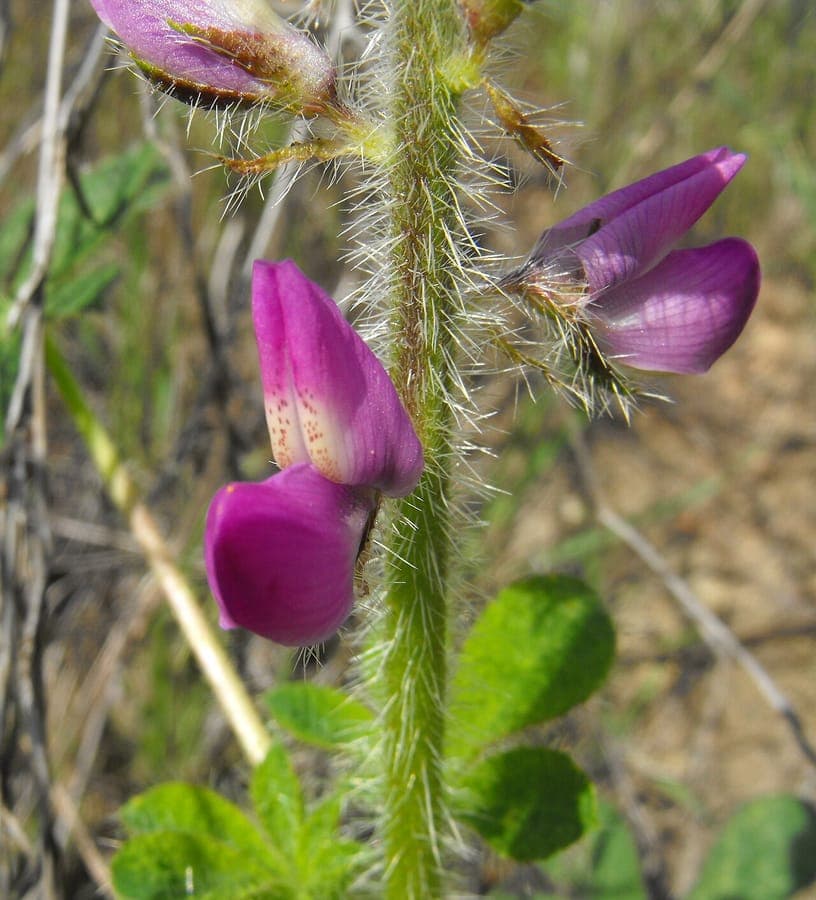
Stickpen / Public domain, via Wikimedia Commons
Stinging Annual Lupine: complete guide
Lupinus hirsutissimus
Want to see Stinging Annual Lupine: complete guide in your garden?
1 minute, no credit card
Stinging Annual Lupine (Lupinus hirsutissimus) is an annual plant from the Fabaceae family, native to California and northwestern Mexico. This charming wildflower is celebrated for its striking purple flower spikes and beautiful hairy foliage. The plant thrives in sunny borders and natural wildflower compositions.
Though non-native to Europe, Lupinus hirsutissimus successfully establishes as an annual in temperate gardens. It attracts bees and butterflies, contributing significantly to biodiversity.
Appearance and bloom
Stinging Annual Lupine reaches 30 to 60 centimeters tall, forming a vertical, vigorous plant. Leaves are palmately divided into slender leaflets covered with fine hairs - hence the scientific name hirsutissimus (very hairy). Flowers appear in dense, upright spikes of blue-purple tones.
The flowering season extends from spring through early summer, depending on sowing time and weather. Each floret along the spike is small, papilionaceous, and attractive to pollen-gathering insects.
Ideal location
Choose locations with full sun exposure - at least six to eight hours daily. Lupine flowers sparsely in shade. The plant performs well in loose, well-worked soil and warm, breezy locations. Shelter from heavy wind is beneficial but not essential.
Plant Lupine in borders, along paths, or in wildflower meadows. The vertical growth makes it effective for background planting and creating natural layering.
Soil
Well-draining soil is important for Lupine success. Water stagnation around seeds encourages disease. Sandy and loamy soils are ideal. Preference exists for slightly acidic to neutral pH, though Lupine shows reasonable flexibility.
Black earth and peat can be incorporated for better water retention, but excessive moisture-holding materials promote fungal issues. Sow directly into garden soil or raise seedlings indoors as climate permits.
Watering
Water moderately, especially during early growth stages. Once established, plants tolerate drought reasonably well due to deep root systems benefiting from nitrogen-fixing symbiosis. Excess moisture can cause leaf mold and fungal issues.
Provide regular watering during active growth in dry periods. As flowering begins, gradually reduce irrigation to encourage seed development.
Free design
Want to see Stinging Annual Lupine: complete guide in your garden? Make a free design now.
Pruning
Light pinching after germination encourages compact growth. Deadhead spent flowers regularly - this stimulates continued blooming throughout the season. In containers, modest pruning maintains neat form.
Don't remove seed pods unless self-seeding is undesired. Allow several seed heads to mature for next year's spontaneous germination.
Maintenance calendar
January to February: Sow seed indoors or direct sow after winter frost in cool regions. March to April: Germination typically follows cold stratification. Tend young seedlings. May to June: Transplant after final frost date. Flowering begins establishing. July to September: Full flowering; seed set follows. Water sparingly; allow growth to fade. October to December: Plant dies after first frost; collect seed or allow natural drop.
Winter hardiness
Stinging Annual Lupine is an annual, dying after first frost. In mild Mediterranean climates, it occasionally behaves as a biennial. Generally it's resown annually each spring. For self-seeding, allow seed maturation and drop for spontaneous reappearance next season.
Companion planting
Pair Lupine with other California wildflowers like California Poppy and Clarkia. Taller grasses like Stipa and Muhlenbergia provide graceful support. Dwarf roses and daisies integrate well too.
Lupine combines beautifully with silver-leaved Artemisia and golden Achillea. For naturalistic effect, sow in dense patterns for overlapping flower spikes throughout the growing season.
Closing remarks
Stinging Annual Lupine offers yearly beauty and ecological value for temperate gardens. Though from warm regions, it grows reliably in sunny borders. Its nitrogen-fixing capability improves soil fertility organically.
Gardenworld recommends: Purchase seed from reputable suppliers, preferably California wildflower collections. Direct sow in garden after frost danger passes. For inspiration on wildflower-mixed borders, visit gardenworld.app and discover pre-designed plantings for natural garden landscapes. Experiment today with California lupines and transform your garden into a flower-filled paradise!
Want to see Stinging Annual Lupine: complete guide in your garden? Make a free design now.
Upload a photo, pick a style, and get a photorealistic design with plant list in under a minute.
No credit card required


Similar plants
Tall Silky Lupine: complete guide
Lupinus elatus
Tall silky lupine is a fast-growing Californian perennial with silvery foliage and blue-purple flower spikes, ideal for a prairie-style garden.
Garfield Lupine: complete guide
Lupinus garfieldensis
The Garfield lupine is a rare, fast-growing American perennial for alkaline, dry grassland gardens, with striking blue flower spikes.
Lupinus elegans: complete guide
Lupinus elegans
Lupinus elegans, the elegant lupine, is a spectacular blooming plant from Mexico with blue flower spikes. Care, cultivation and garden use.