
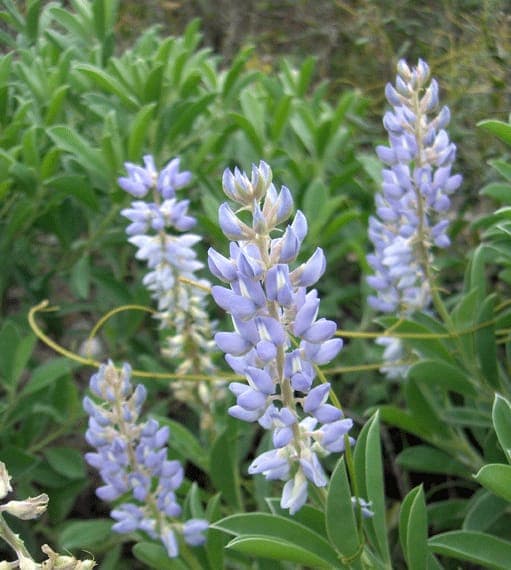
homeredwardprice / CC BY 2.0, via Wikimedia Commons
Lupinus diffusus: complete guide
Lupinus diffusus
Want to see Lupinus diffusus: complete guide in your garden?
1 minute, no credit card
Overview
Lupinus diffusus, also known as oak ridge lupine or sky-blue lupine, is a beautiful plant species native to the southeastern United States, particularly from Alabama, Florida, Georgia, Mississippi, and South Carolina. This elegant plant is known for its beautiful blue to purple-blue flower spikes appearing in dense clusters.
As a member of the Fabaceae family (pea and bean family), Lupinus diffusus can extract nitrogen from the air, making it an ideal plant for pollinator gardens and naturalistic front garden designs. The plant forms a shrubby shape that thrives in natural settings.
Appearance & Bloom
Lupinus diffusus typically grows to about 30-60 centimeters in height, though sometimes taller. The plant forms a neat, spreading shrubby form. The leaves are characteristic of lupines - palmate, divided into many small, narrow lobes.
The flowers are the glory of this plant. They are small, pea-shaped, and appear in dense, upright spikes or ears at plant top. Color ranges from bright blue to purple-blue, sometimes with white markings on flower petals. The flowering period typically runs from April through July in warm climates.
The flowers attract many bees and butterflies, making it an excellent plant for pollinator-friendly gardens.
Ideal Location
Lupinus diffusus thrives in sunny locations receiving at least six hours of direct sunlight daily. The plant can also grow in half-shade, though flowering will be less abundant.
The plant naturally grows in open places, open woodlands, and hillsides in its homeland. This suggests a preference for bright, open spaces without heavy shade from taller trees.
Soil
Lupinus diffusus prefers well-drained, acidic soils. The plant grows on sandy to loamy soils in its natural habitat. Heavier clay soils should be amended with sand and organic matter.
The plant can grow on nutrient-poor soils because it fixes nitrogen. This makes it very flexible for various soil situations. pH should be on the acidic side, preferably between 4.5 and 6.5.
Free design
Want to see Lupinus diffusus: complete guide in your garden? Make a free design now.
Watering
Lupinus diffusus has moderate water needs. After establishment, the plant is fairly drought-tolerant, though regular watering stimulates better bloom. Water regularly during growing and flowering periods, but allow soil to dry between waterings.
Avoid water stagnation, as this can lead to root rot. In rainy climates, the plant can probably function entirely without supplemental water.
Pruning & Shaping
Lupinus diffusus requires minimal pruning. The plant naturally grows in a neat form. You may remove faded flowers for neater appearance and to stimulate more blooms.
After flowering, you may cut back the plant to encourage a fuller plant next year, though this is not essential. In cold climates, you may remove dead above-ground portions after first frost.
Maintenance Calendar
January-March: Growing season in warm climates, very light watering in cold. April-July: Flowering period, regular watering. August-October: Bloom reduction, less water. November-December: Winter preparation, no maintenance in warm climates.
Winter Hardiness
Lupinus diffusus is moderately winter-hardy in temperate climates. The plant tolerates temperatures down to approximately minus 10 to minus 15 degrees Celsius, depending on local conditions.
In very cold climates, the plant may be annual or seed can be collected and replanted next season. In milder climates, it is a perennial plant.
Companion Plants
Lupinus diffusus combines beautifully with other North American wildflowers and native plantings. Consider coneflowers (Echinacea), black-eyed Susan (Rudbeckia), and American salvias.
Also beautiful are combinations with ornamental grasses and other lupine species.
Closing
Lupinus diffusus is an elegant, low-maintenance plant offering a naturalistic appearance to your garden. The blue flowers attract pollinators, making this a useful plant for the ecosystem. For gardeners seeking to create a natural, wild appearance, this is an excellent choice.
Sometimes available through specialized plant nurseries or seed merchants. On gardenworld.app, find more inspiration for naturalistic garden designs!
Want to see Lupinus diffusus: complete guide in your garden? Make a free design now.
Upload a photo, pick a style, and get a photorealistic design with plant list in under a minute.
No credit card required


Similar plants
Tall Silky Lupine: complete guide
Lupinus elatus
Tall silky lupine is a fast-growing Californian perennial with silvery foliage and blue-purple flower spikes, ideal for a prairie-style garden.
Garfield Lupine: complete guide
Lupinus garfieldensis
The Garfield lupine is a rare, fast-growing American perennial for alkaline, dry grassland gardens, with striking blue flower spikes.
Lupinus elegans: complete guide
Lupinus elegans
Lupinus elegans, the elegant lupine, is a spectacular blooming plant from Mexico with blue flower spikes. Care, cultivation and garden use.