
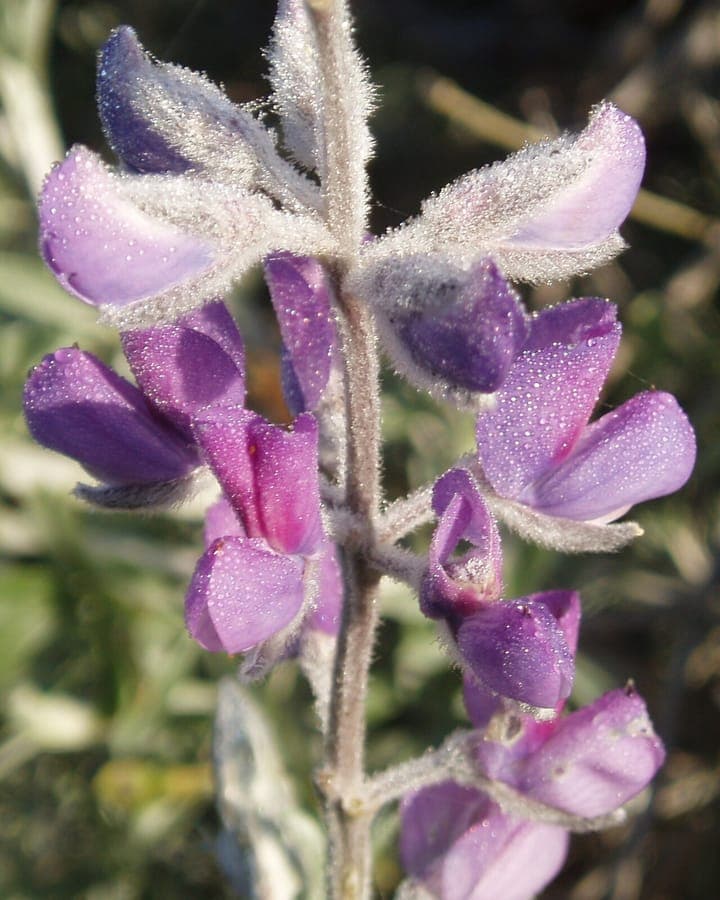
tomhilton / CC BY 2.0, via Wikimedia Commons
Lupinus chamissonis: complete guide to Chamisso bush lupine
Lupinus chamissonis
Want to see Lupinus chamissonis: complete guide to Chamisso bush lupine in your garden?
1 minute, no credit card
Overview
Lupinus chamissonis, commonly known as Chamisso bush lupine, is a fascinating shrubby lupine species from California. This plant belongs to the legume family (Fabaceae) and is renowned for its robustness and magnificent flower spikes. In its native habitat along the California coast, the plant develops into a substantial, attractive shrub. In European gardens, it has become increasingly popular with gardeners seeking authentic Californian wildflower aesthetics.
The Chamisso lupine is ideally suited for gardens with sufficient space. While not demanding in terms of care, it does require attention to proper growing conditions. Once established, this lupine develops into a beautiful shrub that flowers over an extended period.
Appearance & Bloom
The Chamisso bush lupine is characterized by its dense, upright growth habit and abundant foliage. The plant reaches heights of 60-90 centimeters and develops into a compact, evergreen-leaning shrub. The foliage consists of the typical lupine leaves: feathery and finely divided into numerous small leaflets arranged on a central rachis.
The flowers are the absolute highlight of this plant. Blooms develop in long, dense spikes that rise prominently above the foliage. Individual flowers are small and display the characteristic papilionaceous form typical of legumes, resembling tiny butterflies. Flower colors typically range through blues, purples, and occasionally pinkish hues. The blooming period is quite extended, usually from late spring through early summer.
Following flowering, hairy pods develop that contain seeds. These pods are characteristic of the Lupinus genus. When mature, they split open and scatter their seeds.
Ideal Location
The Chamisso lupine thrives in locations receiving full sun, meaning at least 6-8 hours of direct sunlight daily. The plant tolerates partial shade but will flower less prolifically and tend toward leggy growth in deeper shade.
Exposure to wind is actually not problematic, as the plant naturally tolerates coastal winds in its native habitat. The shrub even creates a decent windbreak.
Drainage is absolutely critical. Waterlogging around the roots is disastrous for this plant. Therefore, choose a location where water drains freely. Slopes and raised beds are ideal.
Soil Requirements
The Chamisso lupine is decidedly undemanding regarding soil nutrients. The plant thrives in lean soils because, as a legume, it forms a symbiosis with nitrogen-fixing bacteria in its roots. This means artificial nitrogen fertilizers are unnecessary and may even be counterproductive.
Critical is that the soil drains well. Heavy clay soils can be improved by adding coarse sand, perlite, or compost. For optimal growth, the plant prefers a pH between 6 and 7, meaning slightly acidic to neutral.
Proper soil preparation before planting makes a substantial difference. Mix compost or other organic material to a depth of at least 30 centimeters.
Free design
Want to see Lupinus chamissonis: complete guide to Chamisso bush lupine in your garden? Make a free design now.
Watering
Once established, the Chamisso lupine is fairly drought-tolerant and requires minimal water. This is a tremendous advantage in Mediterranean climates with dry summers. Immediately after planting, however, regular watering is essential until roots are well-established.
During the first summer, provide water when soil begins to dry. This might be every 3-4 days depending on weather. Once the plant is established, water needs decrease significantly.
In temperate climates with adequate soil moisture, supplementary water is usually unnecessary after the first growing season. However, guard against waterlogging, which is the plant's greatest enemy.
Pruning
Pruning is not essential, but you can lightly cut back the plant after flowering. This promotes more compact growth and fuller shrub development in the next season. Remove dead or diseased branches whenever noticed.
After flowering, you can remove seed-bearing pods, which may contribute to extended or repeated blooming. While labor-intensive, this effort is worthwhile if you desire more floral display.
When pruning, ensure you use sharp, clean tools to prevent damage and disease transmission.
Maintenance Calendar
Spring: Check that the plant has emerged from winter well. Remove dead wood. Perform light shape pruning if desired. Begin regular watering once growth starts.
Summer: The flowering period is in full swing. Ensure adequate water. After flowering, seed pods can be removed. Watch for pests such as aphids.
Fall: Growth slows. Gradually reduce watering. Apply no more fertilizer.
Winter: In frost zones, protection may be needed. In milder climates, the plant can overwinter outdoors.
Winter Hardiness
The Chamisso lupine is moderately winter hardy. In many European regions, it survives outdoor winter on well-drained sites. Severe winter frost can damage the plant, especially young specimens.
In cold areas, protect the plant by applying mulch around the base and wrapping vulnerable parts with burlap. Alternatively, grow in large containers that can be moved to shelter for winter.
In warm, Mediterranean climates, winter hardiness is not a concern.
Companion Plants
Within the Lupinus genus are many other interesting species. Lupinus arboreus (tree lupine) is a larger shrub suitable for larger scales. The perennial lupine (Lupinus perennis) is hardy and flowers beautifully. Russell Lupines are larger but less drought-tolerant.
Other Californian wildflowers like Achillea millefolium and Eschscholzia californica work well together. Sedums and other succulents also pair nicely with lupines.
For contrast, use gray-foliaged plants like Artemisia and soft yellow flowering companions.
Conclusion
Lupinus chamissonis is a wonderful plant for gardeners wishing to bring Californian nature into their own landscape. It requires little beyond the basics: full sun, well-drained soil, and modest watering. For more information and seeds, consult specialized retailers, and visit gardenworld.app for inspiration and design ideas with lupines and other wildflowers.
Want to see Lupinus chamissonis: complete guide to Chamisso bush lupine in your garden? Make a free design now.
Upload a photo, pick a style, and get a photorealistic design with plant list in under a minute.
No credit card required


Similar plants
Tall Silky Lupine: complete guide
Lupinus elatus
Tall silky lupine is a fast-growing Californian perennial with silvery foliage and blue-purple flower spikes, ideal for a prairie-style garden.
Garfield Lupine: complete guide
Lupinus garfieldensis
The Garfield lupine is a rare, fast-growing American perennial for alkaline, dry grassland gardens, with striking blue flower spikes.
Lupinus elegans: complete guide
Lupinus elegans
Lupinus elegans, the elegant lupine, is a spectacular blooming plant from Mexico with blue flower spikes. Care, cultivation and garden use.