
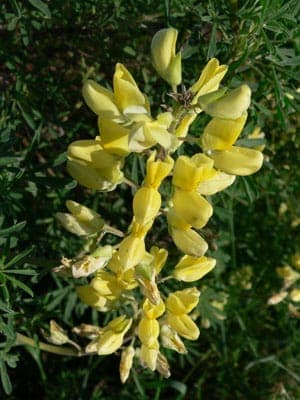
Clickie (talk) (Uploads) / CC BY 2.5, via Wikimedia Commons
Bush lupine: complete guide
Lupinus arboreus
Want to see Bush lupine: complete guide in your garden?
1 minute, no credit card
Overview
Lupinus arboreus, commonly known as bush lupine, is a striking subshrub native to the coastal regions of California, Oregon, and Washington. Unlike the more familiar herbaceous lupines, this species develops a woody base and can live for several years with proper care. It's a bold, architectural plant that brings vertical interest and vibrant colour to dry, open gardens. If you're tired of fussier perennials that demand rich soil and constant watering, bush lupine is a refreshing alternative. It thrives on neglect, provided the basics-sun and drainage-are met.
On gardenworld.app, you can design a drought-resistant garden layout where Lupinus arboreus plays a central role among other low-maintenance, sun-loving plants.
Appearance & bloom cycle
Bush lupine grows 100–150 cm tall with a spread of up to 120 cm. The foliage is palmate, with 7–11 narrow, silvery-green leaflets covered in fine hairs, giving the plant a soft, feathery texture. From May through July, tall spikes of pea-like flowers rise above the leaves, reaching up to 30 cm in length. Flower colours range from bright yellow to pale purple, though yellow-flowered forms are most common in cultivation.
The bloom period is reliable and attracts a wide range of pollinators, especially bumblebees and honeybees. After flowering, seed pods form and dry on the plant, eventually splitting open to disperse seeds. These seeds remain viable for several years. Note: all parts of the plant, especially the seeds, are toxic if ingested raw. Keep away from pets and small children.
Ideal location
Bush lupine demands full sun-rate it an 8 out of 10 for light exposure. A south- or southwest-facing position is ideal. It performs best in open, airy spots with good air circulation to prevent fungal issues. Avoid shaded or damp corners. This plant excels in coastal gardens, sandy banks, or gravel borders where other perennials struggle. It tolerates salt spray, making it a solid choice for seaside properties.
Inland gardeners should mimic these conditions: plant on a slope or raised bed to ensure rapid drainage. On gardenworld.app, you can simulate microclimates in your garden to find the perfect sunny, well-drained spot for your bush lupine.
Soil requirements
Well-drained soil is non-negotiable. Sandy or loamy soils with a pH between 6.0 and 7.5 work best. Avoid heavy clay or water-retentive soils. If your soil is dense, amend it with coarse sand or grit to improve drainage. Bush lupine prefers poor to moderately fertile conditions-do not enrich the soil with compost or manure. Excess nitrogen promotes leafy growth at the expense of blooms and can shorten the plant's lifespan.
As a member of the Fabaceae family, Lupinus arboreus hosts nitrogen-fixing bacteria in its root nodules. This means it naturally enriches the soil, benefiting neighbouring plants. It's an excellent candidate for regenerative gardening or low-input landscapes.
Free design
Want to see Bush lupine: complete guide in your garden? Make a free design now.
Watering
Once established, bush lupine is highly drought tolerant. During the first growing season, water deeply once a week during dry spells to help roots establish. After that, supplemental watering is rarely needed, even in prolonged droughts. Overwatering is a major cause of plant failure-wet soil leads to root rot, especially in winter.
Water at the base to keep foliage dry and reduce fungal risk. Drip irrigation or a soaker hose works better than overhead sprinklers.
Pruning
Pruning helps maintain shape and prolongs the plant's life. After flowering, cut back spent spikes to just above a set of healthy leaves. This prevents excessive seed production and keeps energy in the plant. In autumn, remove any dead or weak wood, but avoid heavy pruning in winter, as it can expose stems to rot.
Every 3–4 years, consider light rejuvenation pruning: cut back one-third of the oldest stems to encourage new growth from the base. This keeps the shrub from becoming too woody and sparse.
Maintenance calendar
- Jan: Check for frost damage, protect young plants if hard freezes are forecast
- Feb: Monitor soil moisture; avoid waterlogged conditions
- Mar: Plant new specimens once soil has warmed and drainage is assured
- Apr: Watch for aphids, water only if spring is unusually dry
- May: Flowers emerge; begin deadheading after bloom
- Jun: Peak bloom; inspect for powdery mildew in humid spells
- Jul: Allow final blooms to fade; collect seeds if desired
- Aug: No feeding; water only in extreme drought
- Sep: Let plant enter dormancy; no pruning
- Oct: Remove old wood, divide if needed
- Nov: Mulch lightly around the base to protect roots from freeze-thaw cycles
- Dec: Minimal care; ensure good drainage to prevent winter rot
Winter hardiness
Lupinus arboreus is hardy in USDA zones 8–10 (-12°C to -1°C). In zone 8, it usually survives winter but may suffer dieback in wet, cold conditions. Young plants are more vulnerable. Apply a light mulch of straw or leaf litter around the base in autumn to insulate roots-avoid thick, moisture-trapping covers like plastic.
In colder zones, grow in containers and move to a sheltered spot over winter. Expect a lifespan of 3–5 years in most gardens, especially where winters are damp.
Companion plants
Pair bush lupine with other drought-tolerant, sun-loving perennials. Good companions include Echinacea, Salvia, Artemisia, Yarrow (Achillea), and Russian sage (Perovskia). The silvery foliage contrasts beautifully with the lupine's flower spikes. Avoid aggressive spreaders like mint or bindweed that can overwhelm it.
Steer clear of other lupine species that may harbour pathogens, particularly anthracnose, which can spread quickly in humid conditions.
Closing
Bush lupine isn't for every garden, but if you've got a hot, dry, sunny spot that mocks most plants, this lupine might just thrive. It's low-input, beneficial to soil, and a magnet for pollinators. You'll find Lupinus arboreus at garden centres in late spring, often in 2–3 litre pots. Look for healthy, compact plants with no signs of yellowing or mildew. Give it space, sun, and sharp drainage-and you'll be rewarded with years of bold, carefree beauty.
Want to see Bush lupine: complete guide in your garden? Make a free design now.
Upload a photo, pick a style, and get a photorealistic design with plant list in under a minute.
No credit card required


Similar plants
Tall Silky Lupine: complete guide
Lupinus elatus
Tall silky lupine is a fast-growing Californian perennial with silvery foliage and blue-purple flower spikes, ideal for a prairie-style garden.
Garfield Lupine: complete guide
Lupinus garfieldensis
The Garfield lupine is a rare, fast-growing American perennial for alkaline, dry grassland gardens, with striking blue flower spikes.
Lupinus elegans: complete guide
Lupinus elegans
Lupinus elegans, the elegant lupine, is a spectacular blooming plant from Mexico with blue flower spikes. Care, cultivation and garden use.