
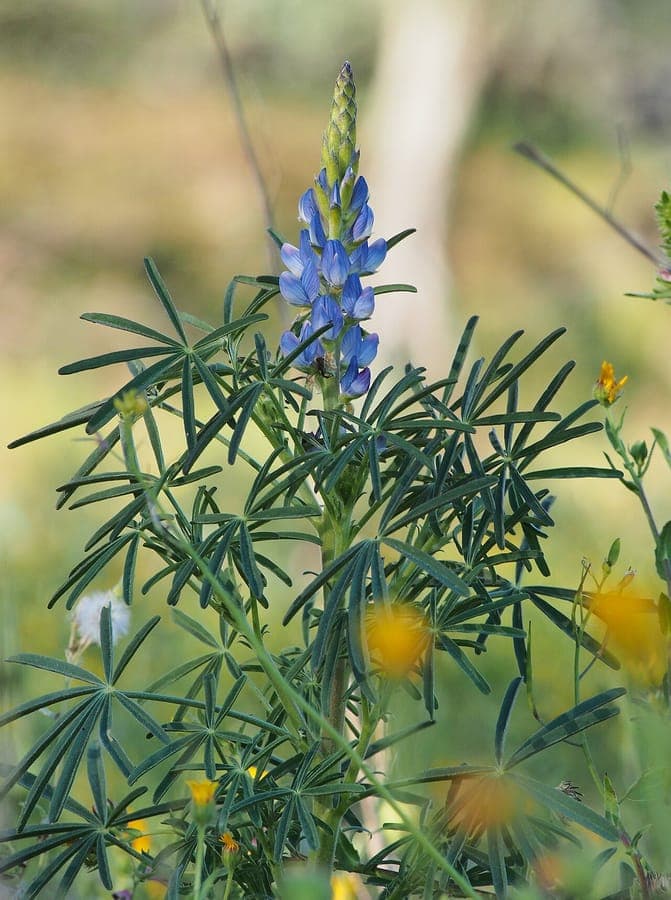
Luis Fernández García / CC BY-SA 4.0, via Wikimedia Commons
European blue lupine: complete guide
Lupinus angustifolius
Want to see European blue lupine: complete guide in your garden?
1 minute, no credit card
Overview
Lupinus angustifolius, known commonly as the European blue lupine, is a striking annual or short-lived perennial from the Fabaceae family. Native to southern Europe including France, Greece and Italy, it thrives in well-drained soils and full sun. In UK and northern European gardens, it's best treated as an annual, though it often self-seeds reliably. Its tall spires of vivid blue flowers make it a standout in cottage gardens, wildflower meadows and pollinator borders. Beyond beauty, it improves soil fertility by fixing nitrogen through root nodules, making it a smart choice for tired or depleted garden beds.
On gardenworld.app you can design a garden layout that maximizes the impact of European blue lupine, pairing it with complementary plants and textures.
Appearance & bloom cycle
This lupine grows 60–90 cm tall, with upright stems and palmate, narrow leaflets that give it an airy, textured look. Flowering occurs from June to August, depending on sowing time. The dense, cone-shaped racemes are typically deep sky blue, though paler blue, white or pink forms exist. Each flower spike opens from the bottom up, extending the bloom period. After flowering, seed pods form and dry on the plant – these contain hard seeds that can remain viable for years. Note: raw seeds are toxic and should not be consumed.
Bees, especially bumblebees, are frequent visitors, drawn to the nectar-rich blooms. The plant's structure provides excellent foraging access, making it a top-tier pollinator plant.
Ideal location
Full sun is essential – aim for at least 6 hours of direct sunlight daily. In partial shade, the stems become weak and leggy, and flowering drops significantly. Choose open borders, dry slopes or gravel gardens where air circulates freely. Avoid crowded planting schemes; this lupine needs space to develop its full height and form. It's not ideal for containers unless they're deep (at least 30 cm) and placed in a sunny, sheltered spot.
In exposed gardens, stakes may be needed to prevent wind damage. Use natural-looking twiggy supports rather than plastic hoops to maintain a natural aesthetic.
Soil requirements
European blue lupine prefers light, sandy or loamy soil with excellent drainage. It struggles in heavy clay or waterlogged conditions, where root rot quickly sets in. The ideal pH range is 5.5 to 7.0 – slightly acidic to neutral. Avoid rich soils or heavy fertilization, as excess nutrients promote leafy growth over flowering. This plant thrives in poor soil, where its nitrogen-fixing ability gives it a competitive edge.
It's an excellent choice for soil regeneration after growing heavy feeders like tomatoes or brassicas. No compost or manure needed at planting – let the lupine do the enriching.
Free design
Want to see European blue lupine: complete guide in your garden? Make a free design now.
Watering
Once established, this lupine is drought tolerant. Water young seedlings regularly until they're 15–20 cm tall. After that, only water during prolonged dry spells, especially in the flowering period. Overwatering is more dangerous than underwatering – soggy soil invites fungal diseases. Water deeply but infrequently to encourage deep root development.
Pruning
No pruning is required for plant health, but deadheading spent flower spikes can prevent excessive self-seeding if that's not desired. Leave some pods to ripen if you want volunteer plants next year. Remove any diseased or damaged stems promptly to prevent fungal spread. Cut back the entire plant after flowering if you're refreshing the border for autumn interest.
Maintenance calendar
- March: Sow seeds indoors in pots under glass (last frost is risk)
- April: Direct sow outdoors in well-prepared soil, 2–3 cm deep
- May: Thin seedlings to 30 cm apart; watch for slugs on young plants
- June–August: Peak bloom; monitor for aphids or powdery mildew
- September: Collect dry seed pods or leave for natural dispersal
- October: Clear spent plants; mark self-sown seedlings for next season
- November–February: No action needed
Winter hardiness
Lupinus angustifolius is generally grown as an annual in temperate climates. It's hardy to USDA zones 7–10. In the UK and northern Europe, it rarely survives winter frosts. However, it reliably self-seeds in mild areas, with seedlings appearing in early spring. These can be transplanted or thinned as needed. In sheltered microclimates, some rosettes may overwinter, especially under leaf litter.
Companion plants
Pair with drought-tolerant perennials like Echinacea, Salvia, or Verbena bonariensis. The vertical form of lupine contrasts beautifully with the mounding shape of Nepeta or the fuzzy leaves of Stachys. Avoid planting near shallow-rooted vegetables or greedy perennials that compete for moisture. Also works well with grasses like Stipa tenuissima for movement and texture.
On gardenworld.app you can preview how European blue lupine fits into seasonal border designs, including height layers and colour harmonies.
Closing
European blue lupine isn't for every garden – it needs the right conditions to shine. But when it's happy, it delivers bold colour, ecological benefits and effortless charm. It's perfect for low-fertility soils, wildlife gardens or spaces needing a naturalistic touch. Buy seeds from trusted garden centres or online retailers, and sow them directly where they're to flower. With minimal care and maximum impact, this lupine earns its place in any thoughtful garden. Try it this year, and let gardenworld.app help you plan where it fits best.
Want to see European blue lupine: complete guide in your garden? Make a free design now.
Upload a photo, pick a style, and get a photorealistic design with plant list in under a minute.
No credit card required


Similar plants
Tall Silky Lupine: complete guide
Lupinus elatus
Tall silky lupine is a fast-growing Californian perennial with silvery foliage and blue-purple flower spikes, ideal for a prairie-style garden.
Garfield Lupine: complete guide
Lupinus garfieldensis
The Garfield lupine is a rare, fast-growing American perennial for alkaline, dry grassland gardens, with striking blue flower spikes.
Lupinus elegans: complete guide
Lupinus elegans
Lupinus elegans, the elegant lupine, is a spectacular blooming plant from Mexico with blue flower spikes. Care, cultivation and garden use.