
Unknown authorUnknown author / Public domain, via Wikimedia Commons
Pine Lupine: complete guide
Lupinus albicaulis
Want to see Pine Lupine: complete guide in your garden?
1 minute, no credit card
Overview
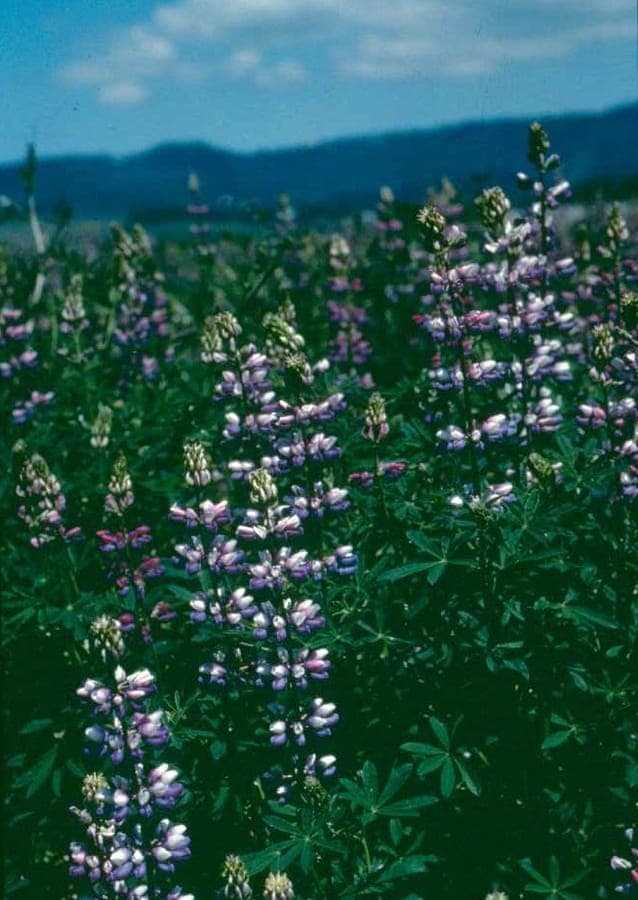
Lupinus albicaulis, commonly known as pine lupine or sickle-keel lupine, is an impressive North American wildflower. This plant naturally inhabits mountainous regions of Washington, Oregon and California. With its striking blue-violet flowers on tall spikes and finely textured foliage, Lupinus albicaulis brings understated elegance to dry, sunny gardens.
This lupine is particularly suited for gardeners struggling with dry soils and full sun exposure. It is exceptionally robust and winter hardy throughout the Netherlands.
Appearance and Bloom
Lupinus albicaulis grows as an upright herbaceous plant with fine, compound leaves. The foliage is characteristic of lupines, with small leaflets radiating like fingers. The plant reaches 60 to 120 centimeters in height.
The flowers are the primary ornamental feature. Blooms are small, approximately 1 centimeter, displaying beautiful blue to violet-blue coloring with occasional white markings. Flowers grow in dense spikes atop tall flower stems, creating an impressive display. Bloom period is July through August.
Following bloom, characteristic seed pods develop containing black seeds that self-sow readily.
Ideal Location
Lupinus albicaulis flourishes in full sun with at least six hours of direct sunlight daily. The plant accepts partial shade but produces fewer flowers. It thrives in dry to moderately dry conditions.
This lupine excels in dry borders, rock gardens and naturalistic plantings. It thrives on slopes where other plants struggle. The plant is unsuitable for wet, moisture-rich soils.
A natural planting location favors southeast to southwest exposure.
Soil
Lupinus albicaulis prefers well-draining, nutrient-poor soils. The plant accepts sandy, gravelly, and even rocky grounds. Soil pH can range from neutral to slightly alkaline (pH 6.5 to 8.0).
Ensure excellent drainage; add sand or gravel if your soil is excessively clay-based. This plant does not value fertility. Excessive compost or manure produces poor results - more foliage but fewer flowers.
Once established, the plant tolerates poor soils exceptionally well.
Free design
Want to see Pine Lupine: complete guide in your garden? Make a free design now.
Watering
Once established, Lupinus albicaulis is highly drought tolerant. Water regularly during the first growing year until the plant develops good root systems. Thereafter, water only during prolonged droughts.
Excessive water is more harmful than insufficient. Overly wet conditions cause root rot. Avoid evening watering and prevent wet foliage.
Pruning
Pruning is generally unnecessary. You can remove spent flower spikes to encourage further bloom, though this is not strictly required. Leave some spikes for seed production and wildlife attraction.
Following bloom, the above-ground portion largely dies back. Remove it in late fall or leave it for winter wildlife food.
Maintenance Calendar
May-June: Soil preparation; planting or direct sowing July-August: Regular watering first year; observe flowering September-October: Reduce watering; allow seed ripening November-April: Minimal care; plant overwinters underground
Winter Hardiness
Lupinus albicaulis is exceptionally winter hardy and thrives throughout the Netherlands without protection. The plant is a biennial to short-lived perennial, so it may decline after two years.
The plant self-sows readily and will return through natural seed dispersal. Consider periodically establishing new plants from seed.
Companion Plants
Lupinus albicaulis pairs beautifully with:
- Salvia (sage)
- Fleabane (flowering daisy)
- Linaria (toadflax)
- Papaver (poppy)
- Other drought-tolerant plants
Closing
Lupinus albicaulis is an excellent choice for dry gardens where you want dramatic flowers without intensive maintenance. This North American lupine delivers color and robustness. With full sun and well-draining soil, you'll enjoy many seasons of its beautiful blue-violet spikes and native beauty.
Find Lupinus albicaulis seed or plants through specialized seed merchants or on gardenworld.app.
Searching for more drought-tolerant plants? Explore our complete plant guide on gardenworld.app for dry garden inspiration.
Want to see Pine Lupine: complete guide in your garden? Make a free design now.
Upload a photo, pick a style, and get a photorealistic design with plant list in under a minute.
No credit card required


Similar plants
Tall Silky Lupine: complete guide
Lupinus elatus
Tall silky lupine is a fast-growing Californian perennial with silvery foliage and blue-purple flower spikes, ideal for a prairie-style garden.
Garfield Lupine: complete guide
Lupinus garfieldensis
The Garfield lupine is a rare, fast-growing American perennial for alkaline, dry grassland gardens, with striking blue flower spikes.
Lupinus elegans: complete guide
Lupinus elegans
Lupinus elegans, the elegant lupine, is a spectacular blooming plant from Mexico with blue flower spikes. Care, cultivation and garden use.