
Wikimedia Commons / CC BY-SA 3.0, via Wikimedia Commons
European fly honeysuckle: complete guide
Lonicera xylosteum
Want to see European fly honeysuckle: complete guide in your garden?
1 minute, no credit card
Overview
Lonicera xylosteum, commonly known as European fly honeysuckle, is a deciduous shrub that thrives in temperate European gardens. Unlike its climbing relatives, this species grows as an upright, bushy shrub reaching 1.5 to 2 meters in height and width. Native to woodlands across central and eastern Europe, it adapts well to British and northern European climates, including USDA hardiness zones 4 to 7. It's not just a filler shrub - it plays a real role in supporting biodiversity, offering nectar to pollinators and berries to birds. If you're designing a wildlife garden or restoring a native hedge, this plant earns its place.
Appearance & bloom cycle
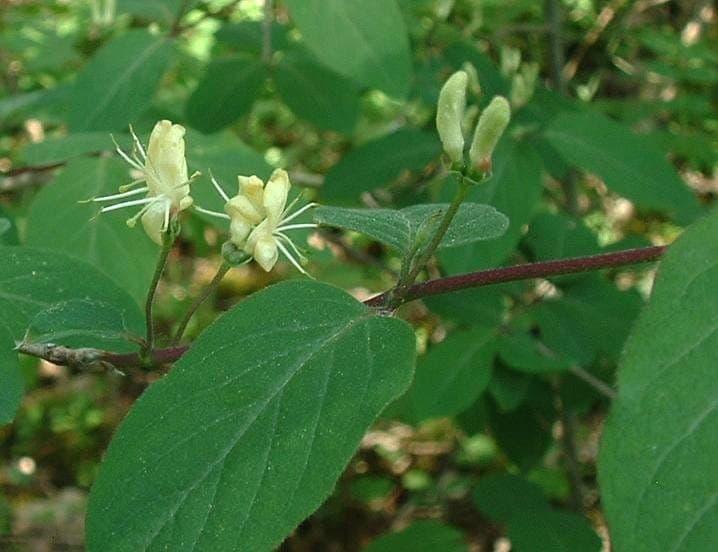
The plant forms a dense thicket of brownish stems with opposite, oval leaves 3–6 cm long. The foliage emerges in mid-April and stays fresh through autumn, turning a pale yellow before dropping in late October. Flowering occurs in May and June, with pairs of small, tubular, creamy-white flowers appearing at leaf axils along the stems. They're subtly fragrant, more noticeable in the morning. By late July, pollinated flowers develop into bright orange-red berries, maturing fully by August. These persist into November or even early winter, serving as a crucial late-season food source for thrushes, blackbirds, and redwings. Note: the berries are toxic to humans and pets - keep children away.
Ideal location
European fly honeysuckle prefers dappled shade or partial sun - think light woodland edges, under open canopies, or north-facing borders. A light rating of 6 out of 10 is ideal; full shade reduces flowering, while full sun may stress young plants unless soil moisture is consistent. It works well as part of a multi-layered planting scheme, sitting in the mid-canopy beneath taller trees like birch or rowan. Avoid hot, south-facing walls or exposed, windy spots. In urban gardens, it fits neatly into wild corners or mixed shrub borders.
Soil requirements
It grows best in moist, well-drained soil with a neutral to slightly alkaline pH (7.0–7.5). While it tolerates clay, avoid waterlogged conditions. Sandy soils need organic matter - mix in compost or leaf mould at planting to improve moisture retention. It doesn't require rich soil or feeding; in fact, too much fertility can lead to leggy growth. A mulch of leaf litter or wood chips in autumn mimics its natural forest floor and suppresses weeds.
Watering
Water young plants weekly during their first growing season, especially in dry spells. Provide 10–15 liters per plant to encourage deep root development. Once established, it's moderately drought-tolerant, though it performs better with consistent moisture. Avoid overhead watering to prevent powdery mildew. Use soaker hoses or water at the base during prolonged dry periods in summer.
Free design
Want to see European fly honeysuckle: complete guide in your garden? Make a free design now.
Pruning
Pruning is minimal. If shaping is needed, do it in early March before new growth starts. Remove dead, damaged, or crossing branches to improve airflow. Avoid heavy pruning - flowers form on previous year's wood, so cutting back in autumn or winter removes next season's blooms. If rejuvenation is necessary, prune one-third of the oldest stems annually over three years.
Maintenance calendar
- Jan: Inspect for winter damage; remove snow-laden branches if needed
- Feb: No action required
- Mar: Light pruning; apply mulch if not done in autumn
- Apr: Leaves emerge; watch for aphids on new growth
- May-Jun: Peak bloom; attract hoverflies and bees
- Jul: Berries begin forming; maintain soil moisture
- Aug: Berries ripen; remind household of toxicity
- Sep: Possible transplanting window if rootball is intact
- Oct: Leaves fall; add leaf mulch
- Nov: Berries persist; birds begin feeding
- Dec: Dormant; check structure for next year's shape
Winter hardiness
Hardy to USDA zone 4 (-30°C), Lonicera xylosteum handles cold winters with ease. In zone 7, it rarely suffers frost damage. Young plants benefit from a thick mulch layer to protect roots during freeze-thaw cycles. The persistent berries add winter interest and support hungry birds when other food is scarce.
Companion plants
Pair it with shade-tolerant perennials like Geranium sylvaticum, Digitalis purpurea, or Dryopteris filix-mas. It blends naturally with native shrubs such as Cornus sanguinea, Prunus spinosa, or Viburnum lantana. Avoid aggressive spreaders like Ligularia or dense groundcovers that block light. Use gardenworld.app to design layered planting schemes that include European fly honeysuckle in partial shade zones. Try combining it with early spring bulbs like snowdrops for year-round structure. The app helps match plants by light, soil, and wildlife value.
Closing
Lonicera xylosteum isn't flashy, but it's dependable - a quiet contributor to a resilient garden. It asks for little and gives back in bloom, berries, and biodiversity. You won't find it in every garden centre, but specialist native plant suppliers often stock it, especially in spring. Try Trillium or similar eco-nurseries, or check larger chains like B&Q or Wyevale if they carry native shrubs. When planting, give it space to develop its natural shape. With minimal care, it becomes a long-lived, wildlife-supporting shrub. Use gardenworld.app to plan where it fits in your space - whether filling a shady gap or anchoring a wildlife corridor.
Want to see European fly honeysuckle: complete guide in your garden? Make a free design now.
Upload a photo, pick a style, and get a photorealistic design with plant list in under a minute.
No credit card required


Similar plants
Yellow honeysuckle (Lonicera tragophylla): complete guide
Lonicera tragophylla
Meet yellow honeysuckle (Lonicera tragophylla): a Chinese climber with large golden flowers that thrives in partial shade.
Lonicera korolkowii: complete guide
Lonicera korolkowii Stapf
Discover blueleaf honeysuckle, a vigorous shrub with beautiful flowers. Guide on growing, shaping and why this Asian climbing plant is perfect for gardens.
Lonicera oblongifolia: complete guide
Lonicera oblongifolia Hook.
Discover swamp fly honeysuckle, a North American woodland plant. Guide on growing, caring and why this native species is valuable for gardens.