
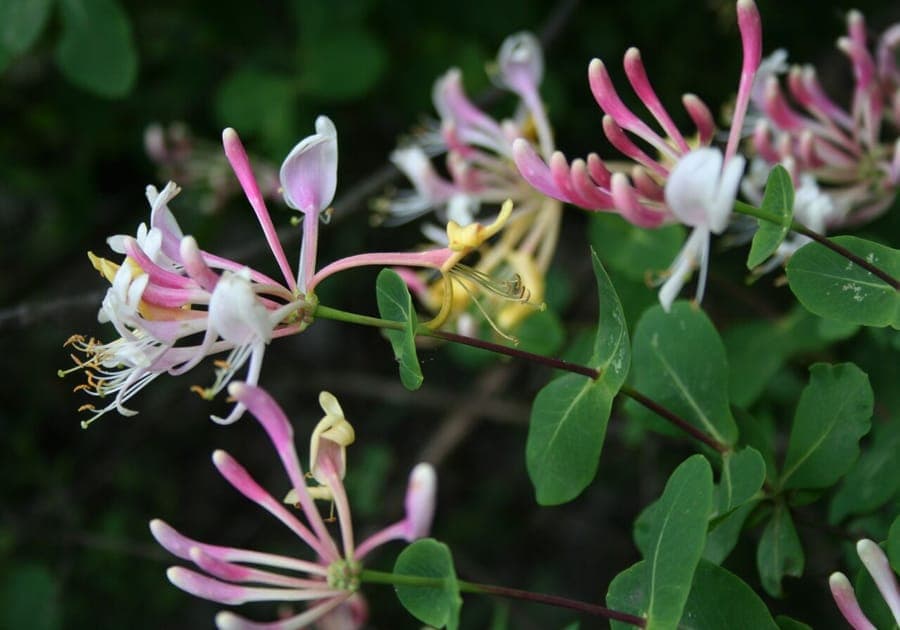
Franz Xaver / CC BY-SA 3.0, via Wikimedia Commons
Etruscan honeysuckle: complete guide
Lonicera etrusca
Want to see Etruscan honeysuckle: complete guide in your garden?
1 minute, no credit card
Overview
Lonicera etrusca, commonly known as Etruscan honeysuckle, is a graceful climber that brings old-world charm to modern gardens. Native to southern Europe - from Italy and Greece to southern France and Albania - this vine performs best in temperate to warm climates but adapts well to gardens in USDA zones 7-9. With a mature spread of 3 to 5 meters, it's ideal for softening walls, covering pergolas, or weaving through trellises without becoming invasive.
Unlike more aggressive honeysuckles, Lonicera etrusca grows steadily but predictably. It doesn't self-seed aggressively or smother nearby plants. Its fragrance is noticeable in the evening, making it a quiet star near patios or garden seating. On gardenworld.app, you can design a layout that positions this vine just right - balancing bloom visibility and structural support.
This member of the Caprifoliaceae family is semi-evergreen in milder areas, holding onto some leaves through winter. That means it offers year-round texture, especially valuable in gardens where winter interest is limited.
Appearance & bloom cycle
The flowers of Lonicera etrusca are its main attraction. They emerge in pairs along the stems from May through July, with a possible light rebloom in late summer if conditions are favorable. Each flower is tubular, about 3–4 cm long, and starts white, sometimes aging to pale yellow or soft pink at the base. The scent is sweet but not overpowering - just enough to draw in bees, moths, and hummingbirds.
Foliage is ovate, dark green above and paler underneath, with a fine down on young leaves. The leaves are arranged oppositely along the stems, creating a dense, layered look as the vine matures. In zone 8 and above, expect partial evergreen retention; in colder zones, it may die back slightly but regrows reliably in spring.
Flowers form on wood from the previous season, so timing your pruning correctly is key to maximizing blooms.
Ideal location
Lonicera etrusca thrives in full sun to light shade, scoring a 7 on the light scale (10 being full sun). Aim for at least 5–6 hours of direct sunlight daily. A south- or west-facing wall works best, but an east-facing trellis is also effective, especially in hotter inland areas where afternoon shade prevents stress.
This vine needs support - it climbs by twining, so it wraps itself around wires, rails, or wooden lattices. Install sturdy structures before planting; flimsy supports won't handle mature growth. Plant at least 30 cm from a wall to allow airflow and reduce fungal risk. On gardenworld.app, you can simulate how this honeysuckle will drape over structures over time, helping you plan spacing and support.
Avoid deep shade. While it may survive, blooming will be sparse, and the plant will stretch awkwardly toward light.
Soil requirements
Well-drained, humus-rich soil is ideal. The plant prefers a neutral pH between 6.5 and 7.0. Heavy clay soils can work if amended with compost or coarse sand to improve drainage. Poor drainage, especially in winter, leads to root rot - a common killer in cold, wet conditions.
For container growing, use a high-quality potting mix with added perlite or pumice. Choose a pot at least 40 cm deep to accommodate root development. Repot every 3–4 years or refresh the top layer annually.
Free design
Want to see Etruscan honeysuckle: complete guide in your garden? Make a free design now.
Watering
Young plants need consistent watering during the first two growing seasons. Water when the top 3–5 cm of soil feels dry. Once established, Lonicera etrusca is moderately drought-tolerant but performs best with even moisture.
During dry spells in June and July, deep watering every 7–10 days keeps the plant healthy and blooming. Avoid wetting the foliage to prevent powdery mildew. Water at the base instead.
Potted plants dry out faster - check them frequently in summer, especially on sunny patios.
Pruning
Pruning isn't required for survival, but it improves shape and flowering. The best time is late winter to early spring (February to March), just before new growth starts.
Remove dead wood, tangled stems, and any growth that crosses or rubs. For a neater look, cut side shoots back to 2–3 buds after flowering. Don't prune in autumn or late winter if you want maximum blooms - you'll remove flowering wood.
If the vine becomes too large, a hard prune in early spring is acceptable, though it may delay flowering by a season.
Maintenance calendar
- Jan: Inspect for winter damage, remove broken stems if accessible
- Feb: Begin pruning prep, tidy base area
- Mar: Prune as needed, apply compost around base
- Apr: Start light feeding with balanced organic fertilizer
- May: Monitor for aphids, slugs; water if dry
- Jun: Peak bloom - enjoy, ensure consistent moisture
- Jul: Watch for signs of stress; light feeding if needed
- Aug: Check for second flush; trim lightly if desired
- Sep: Stop fertilizing, reduce watering as growth slows
- Oct: Clear fallen leaves, mulch root zone
- Nov: Protect container plants from freezing
- Dec: Minimal care, avoid disturbing dormant plant
Winter hardiness
Hardy in USDA zones 7–9. In zone 7, mulch the root zone with compost or bark to protect against freeze-thaw cycles. Young plants benefit from burlap wraps or leaf mulch around the base.
Container-grown plants are more vulnerable. Move pots against a sheltered wall, wrap with hessian or bubble wrap, and elevate off cold ground. In severe winters, consider moving to an unheated greenhouse or garage.
Companion plants
Pair Lonicera etrusca with plants that share its needs:
- Lavandula angustifolia – for scent and drought tolerance
- Rosmarinus officinalis – structural evergreen contrast
- Salvia nemorosa – summer color without competition
- Clematis integrifolia – complementary bloom time
- Stachys byzantina – soft texture at base
Avoid overly aggressive spreaders or heavy feeders that could overwhelm it.
Closing
Lonicera etrusca is a low-fuss, high-reward climber. It's not flashy, but it delivers consistent blooms, subtle fragrance, and graceful growth year after year. Give it sun, well-drained soil, and a sturdy support, and it'll return the favor with summer-long charm.
Available at garden centres across the UK and US. Check labels carefully - it's sometimes mislabeled as Lonicera caprifolium. For a tailored design, use gardenworld.app to map out your honeysuckle's growth path and companion plantings.
Want to see Etruscan honeysuckle: complete guide in your garden? Make a free design now.
Upload a photo, pick a style, and get a photorealistic design with plant list in under a minute.
No credit card required


Similar plants
Yellow honeysuckle (Lonicera tragophylla): complete guide
Lonicera tragophylla
Meet yellow honeysuckle (Lonicera tragophylla): a Chinese climber with large golden flowers that thrives in partial shade.
Lonicera korolkowii: complete guide
Lonicera korolkowii Stapf
Discover blueleaf honeysuckle, a vigorous shrub with beautiful flowers. Guide on growing, shaping and why this Asian climbing plant is perfect for gardens.
Lonicera oblongifolia: complete guide
Lonicera oblongifolia Hook.
Discover swamp fly honeysuckle, a North American woodland plant. Guide on growing, caring and why this native species is valuable for gardens.