
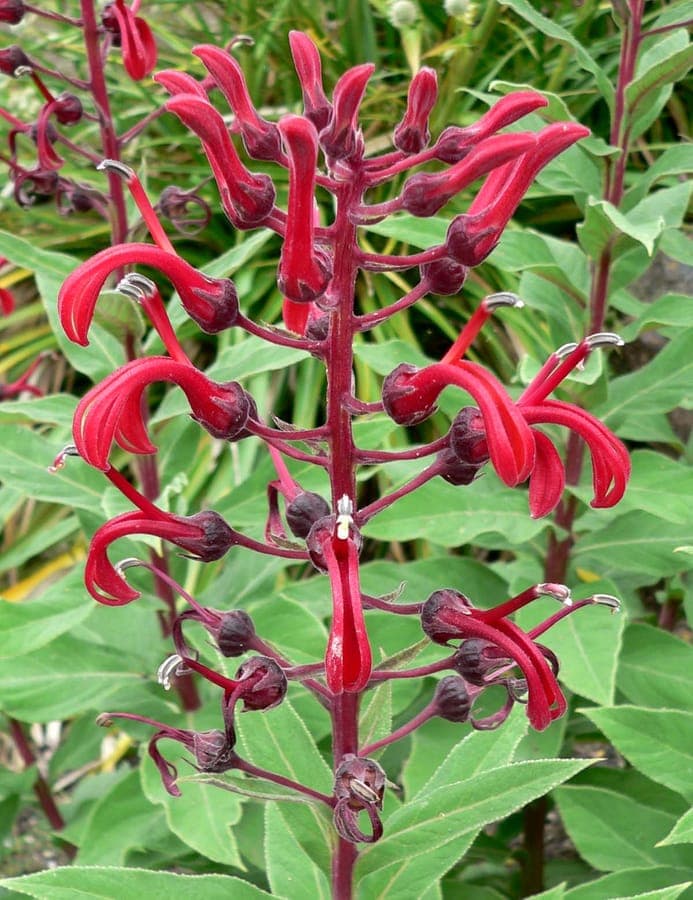
Stan Shebs / CC BY-SA 3.0, via Wikimedia Commons
Lobelia tupa: complete guide
Lobelia tupa
Want to see Lobelia tupa: complete guide in your garden?
1 minute, no credit card
Overview
Lobelia tupa, known as tupa or devil's-tobacco, is a spectacular plant species native to Chile, particularly central and southern Chile. This impressive plant is renowned for its dramatic red flowers that rise in long, elegant spikes. The plant can reach substantial height and offers true statement-making potential in gardens.
Placed in the Campanulaceae family, Lobelia tupa is much larger and more robust than many other lobelias. It offers a fantastic option for gardeners seeking to add dramatic, eye-catching elements to their landscape.
Appearance & Bloom
Lobelia tupa is a substantial plant capable of reaching 1 to 2 meters in height, or even taller in optimal conditions. The plant grows with relatively upright stems and has large, elongated leaves distributed along the stems.
The flowers are the true spectacle. They are long, tubular, and bright red-orange to red. They appear in long, dense spikes at the plant top, creating stunning visual impact. Flowers bloom from August through October, providing spectacular color in autumn months.
The plant grows as a herb that dies after flowering, though in many climates it will self-seed and bloom again.
Ideal Location
Lobelia tupa thrives in sunny to partly shaded locations. The plant tolerates full sun but can also perform excellently in locations with some shade during very hot midday hours, particularly in warmer climates.
This is a plant that requires more space than many garden plants. Place it as a focal point where it can stretch upward and reach full height. Preferably against a light background to showcase red flowers effectively.
Soil
Lobelia tupa is not particularly fussy about soil but thrives best in well-drained, moisture-rich soils. The plant tolerates both acidic and neutral pH soils.
While somewhat drought-tolerant once established, the plant performs much better with regular moisture, particularly during the growing season. Add ample organic matter if you have heavier soils.
Free design
Want to see Lobelia tupa: complete guide in your garden? Make a free design now.
Watering
Lobelia tupa requires regular watering during the growing season, more than many other Mediterranean plants. Keep soil moist but not waterlogged. Regular watering supports growth and blooming.
After establishment, particularly as the plant prepares for flowering, regular watering is essential. In dry periods, frequent watering is necessary.
Pruning & Shaping
Lobelia tupa requires little pruning. The plant naturally grows in a stately form. You may remove damaged leaves or entire branches to make the plant fuller.
However, the plant is robust enough that pruning is not necessary for health. After flowering, if you wish to collect seed, leave dead flowers standing.
Maintenance Calendar
January-April: Growing season, regular watering. May-July: Bloom preparation, adequate moisture. August-October: Flowering period, regular watering essential. November-December: Plant dies off, seed ripens.
Winter Hardiness
Lobelia tupa is moderately to poorly winter-hardy in cold climates. The plant cannot tolerate temperatures much below 0 degrees Celsius, except for very brief periods.
In temperate and warmer climates, the plant may be perennial. In colder areas, it is an annual or short-lived biennial. Seed can be collected for planting next year.
Companion Plants
Lobelia tupa combines well with other low to medium-height plants, not with other very tall plants. Consider grasses like miscanthus, calamagrostis, and other medium-height ornamental plants.
Also beautiful are combinations with softer-foliaged plants like Artemisia and silver-leafed types, which showcase the red flowers even better.
Closing
Lobelia tupa is a spectacular plant adding dramatic color and height to your garden. For gardeners seeking to make a true statement with large, red flowers, this is an excellent choice.
Not universally available. Check online plant nurseries. On gardenworld.app, find design inspiration for using spectacular plants!
Want to see Lobelia tupa: complete guide in your garden? Make a free design now.
Upload a photo, pick a style, and get a photorealistic design with plant list in under a minute.
10,000+ gardens designed already
No credit card required


Similar plants
Campanula alaskana: complete guide
Campanula alaskana
Discover Campanula alaskana, the delicate alpine bellflower from Alaska. Growing tips, hardy requirements, and design ideas for rock gardens and alpine troughs.
Campanula scouleri: complete guide
Campanula scouleri
Discover Campanula scouleri, the refined Pacific bellflower. Growing tips, care requirements, and design ideas for woodland and mountain gardens.
Doublehorn calicoflower: complete guide
Downingia bicornuta
All about Downingia bicornuta - the doublehorn calicoflower: sowing, location, bloom and care for this rare annual in your garden.