
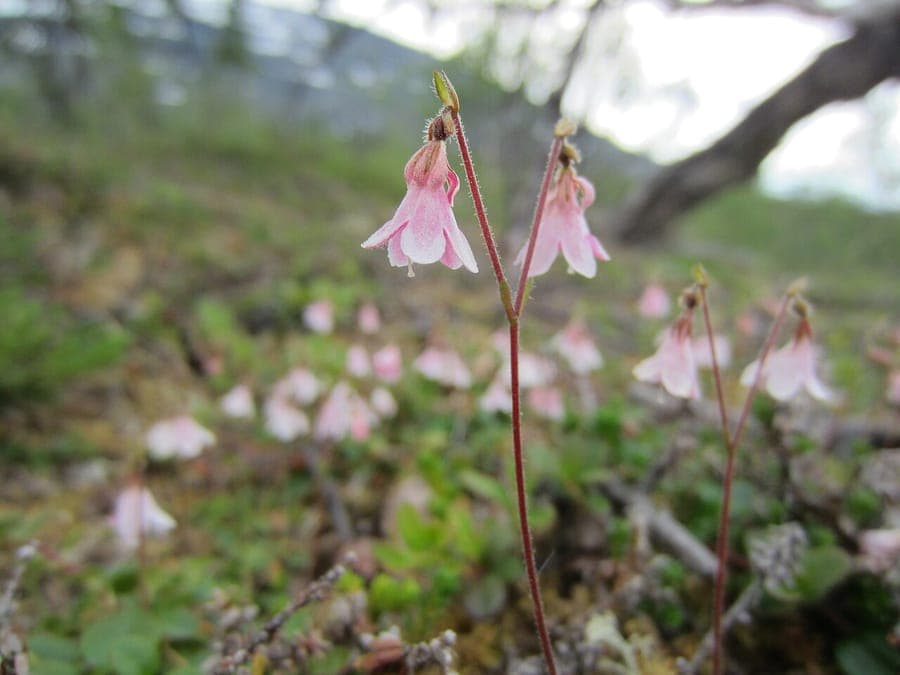
Statskog SF / CC BY-SA 2.0, via Wikimedia Commons
Linnaea borealis: complete guide
Linnaea borealis
Want to see Linnaea borealis: complete guide in your garden?
1 minute, no credit card
Overview
Linnaea borealis, known as Twinflower, is an enchanting alpine plant that derived its name from its characteristic paired flowers. This hardy plant is native to subarctic and subalpine regions from Eurasia to Alaska. Belonging to the Caprifoliaceae family, it serves as a valuable addition to cold climates and mountain gardens. The plant is prized for its ability to adapt to harsh climatic conditions and its charming pink flowers that emit a pleasant aroma.
Linnaea borealis grows as a low-growing, creeping plant that is ideal for alpine and subalpine garden designs. The plant typically reaches heights of only 5-15 cm and forms dense mats of small foliage. It is a valuable choice for gardeners in colder regions seeking interesting, manageable plants. The plant stands out for its ability to grow in areas where many other plants cannot survive.
Outside its native ranges, Linnaea borealis is less widely distributed, but increasing numbers of gardeners in colder climates are discovering the beauty of this unique plant. If you live in a cold or mountainous area and seek an interesting ground cover, Linnaea borealis is certainly worth exploring.
Appearance & Bloom
Linnaea borealis is a charming plant with very small, oval leaves arranged in opposite pairs along fine, thread-like stems. The leaves are fresh green in color and usually hairy. The plant forms dense mats that appear very neat and compact.
The flowers, however, are the true highlight of Linnaea borealis. They typically appear in July-August in elegant pairs (justifying the 'twinflower' name) on fine, upright stems. The flowers are pink to light red in color and have a delightful sweet-scented aroma. Each flower is very small - only about 8-10 mm long - but compensates for this with beauty and fragrance. They attract insects and form seeds in small, grainy fruits.
The overall appearance of Linnaea borealis is extremely delicate and dainty, making it ideal for sheltered corners of alpine gardens or containers.
Ideal Location
Linnaea borealis thrives best in locations with well-distributed sun to semi-shade. In very warm climates, however, it prefers shade. The plant is extremely frost-resistant and grows even under snow.
Place the plant in areas where air circulation is good and where moisture does not stagnate, as this can cause fungal issues. The plant loves alpine or mountainous environments. A location with east-facing exposure (morning sun, afternoon shade) is usually ideal.
Soil
Linnaea borealis prefers well-draining, acidic soils. The ideal soil is typically humus-rich, sandy to silty, with a pH of 4.5-6.5. The plant grows slowly and is particular - keep the soil acidic and well-drained.
Soil drainage is critical - the plant does not need much nutrition but requires excellent drainage. If planting in containers, use a mixture of heather/acidic potting mix with added sand or perlite. Ensure the pot has excellent drainage holes.
Free design
Want to see Linnaea borealis: complete guide in your garden? Make a free design now.
Watering
Linnaea borealis loves growing in moist (but not waterlogged) places. In alpine habitats, it thrives in areas with constant, gentle moisture from melting water streams. In gardens, you must water regularly but never allow water to stagnate.
During the growing period (spring to summer), you must water the plant regularly, especially during dry spells. In winter, you can reduce watering, particularly in areas with abundant snow. For container plants, ensure you never create standing water or stagnant moisture.
Pruning
Linnaea borealis requires virtually no pruning. The plant will maintain a neat shape on its own. Remove only dead or yellowed leaves as you notice them. If the plant grows unevenly in a container, you can gently remove excess stems, but this is generally unnecessary.
The plant grows very slowly and carefully, so aggressive pruning can cause more damage than good. Accept the natural spreading habit of the plant.
Maintenance Calendar
January-March: Plant may sleep under snow. Only check moisture.
April-May: Growth becomes visible; ensure regular watering.
June-July: Expect blooming; keep moisture constant.
August-September: Peak flowering; seed forms.
October-November: Growth slows; reduce watering.
December: Plant goes dormant; minimal maintenance.
Winter Hardiness
Linnaea borealis is extremely winter-hardy! The plant naturally grows in subarctic regions and can tolerate temperatures down to -40°C (USDA zone 2). This makes it ideal for very cold climates where many other plants simply cannot survive.
Indeed, in warm climates, this plant is more difficult to grow - it feels uncomfortable at temperatures above 20°C for extended periods. In warmer regions, it may grow better with some afternoon shade and careful summer watering.
Companion Plants
Linnaea borealis looks beautiful alongside other alpine plants:
- Calluna vulgaris (alpine heather)
- Vaccinium vitis-idaea (lingonberry)
- Gaultheria procumbens (wintergreen)
- Dryas species (mountain avens)
- Empetrum (crowberry)
Closing Thoughts
Linnaea borealis offers a unique opportunity for gardeners in cold and alpine climates. With its enchanting paired flowers and exceptional winter hardiness, this plant is a true jewel for mountain gardens. Through gardenworld.app, you can find more ideas for integrating alpine plants into your garden design. Whether you want to create an alpine garden or simply seek interesting ground covers, Linnaea borealis certainly deserves your attention.
This unique plant is less readily available than many other garden plants, so you may need to look at specialized nurseries or alpine garden organizations. Once established, it will provide you with a reliable, hardy ground cover for years. Place it in your alpine garden and enjoy its enchanting flowers! Through gardenworld.app, you can integrate this gem into your overall alpine garden design.
Want to see Linnaea borealis: complete guide in your garden? Make a free design now.
Upload a photo, pick a style, and get a photorealistic design with plant list in under a minute.
No credit card required

