
Mehdi Chetibi / CC BY 4.0, via Wikimedia Commons
Three-leaved Toadflax: complete guide
Linaria triphylla
Want to see Three-leaved Toadflax: complete guide in your garden?
1 minute, no credit card
Overview
Three-leaved Toadflax (Linaria triphylla) is an elegant, compact annual to perennial plant native to Mediterranean regions. Belonging to the Plantaginaceae family, this plant is prized for its delicate white flowers and fine, needle-like foliage arranged in groups of three along the stems. It represents an ideal choice for gardeners seeking Mediterranean plants with extended flowering periods and minimal maintenance requirements.
Three-leaved Toadflax reaches approximately 20-40 centimeters in height, creating a light, airy appearance in the garden. White flowers appear from April to June and are highly attractive to pollinating insects. This makes the plant valuable for sustainable, ecologically-focused gardens.
Appearance and bloom
The foliage of Linaria triphylla is exceptionally fine, needle-like, and arranged in clusters of three along the stems, explaining the species name triphylla (three leaves). The stems are slender, light, and possess an elegant form. From April, initial flowers appear and continue blooming through June.
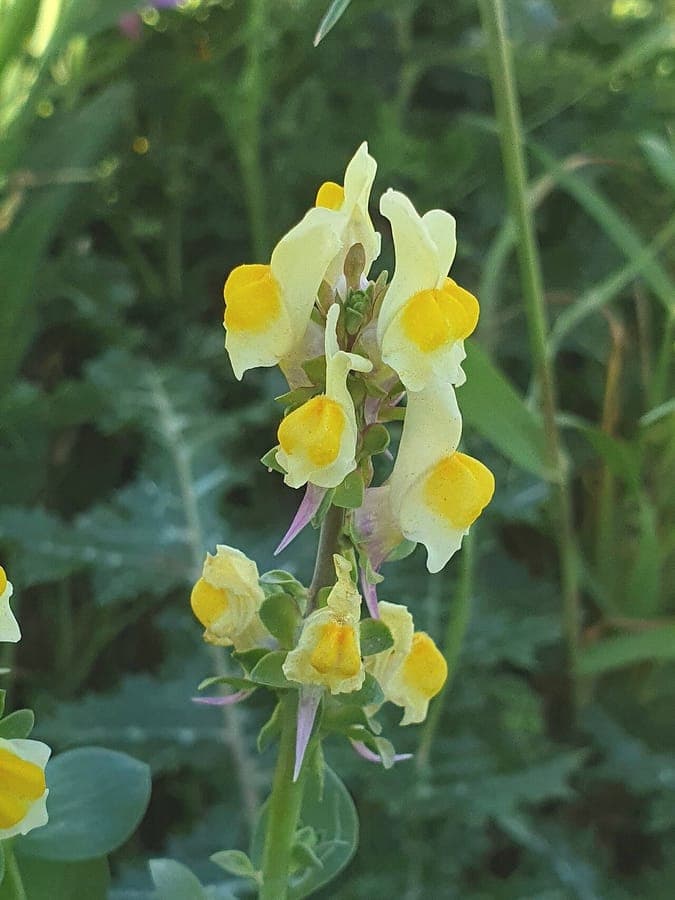
Flowers are diminutive, approximately 5-8 millimeters long, white-colored with subtle yellow spotting on the lower lip. The flowers resemble miniature snapdragon blooms and are highly specialized for honeybees and other long-tongued insects. The inflorescence is terminal, with flowers arranged along a single rachis.
Ideal location
Three-leaved Toadflax performs optimally in full sun positions receiving minimum 6 hours of direct daily sunlight. The plant tolerates some afternoon shade in extremely hot climates but flowers more abundantly in full sun. On coastal sites, it withstands even windy conditions excellently.
This plant excels in borders, rock gardens, pot cultivation, and as filler in dry gravel gardens. Its slender appearance fits well within modern garden design. This makes it flexibly applicable in gravel gardens and Mediterranean-style landscapes.
Soil
Linaria triphylla requires well-draining soil and thrives in poor soils without issue. The plant tolerates sandy, gravelly, and rocky substrates without complication. Having evolved on coasts where salt and drought dominate, the plant exhibits no preference for nutrient-rich, heavy soils.
Optimal pH is neutral to slightly alkaline (7.0-8.0). For container cultivation, use quality, well-draining potting soil amended with coarse sand for enhanced drainage. Planting in heavy clay without drainage improvement will result in root rot and decline.
Watering
Once established, Three-leaved Toadflax is very drought-tolerant, though it appreciates regular moisture during the growing season. During the first season, provide regular water until the root system develops fully. After establishment, the plant can thrive without supplemental water except in extremely dry conditions.
During the growing season, the plant appreciates regular moisture but not waterlogging. During wet, wintry periods, exercise caution: excess water causes root rot problems. Once established, the plant requires no fertilization.
Free design
Want to see Three-leaved Toadflax: complete guide in your garden? Make a free design now.
Pruning and care
Three-leaved Toadflax demands minimal intervention. After flowering, faded flower spikes can be removed for neater appearance. In spring (March-April), carefully cut previous season's growth back or simply remove dead leaves and stems.
The plant typically retains its foliage during winter in temperate climates, so pruning is not absolutely necessary. If rigorous pruning is desired, proceed carefully and never cut below 10-15 centimeters height. The plant will recover completely during the growing season.
Maintenance calendar
March to April: Inspect previous season's growth. Gently remove dead foliage and stems. Light pruning acceptable to encourage shape.
April to May: Flowering period begins. Enjoy white blooms. Ensure regular moisture in dry weather.
May to June: Peak flowering. Plant displays numerous white flowers. Remove faded flower spikes for neatness and extended flowering.
June to July: Flower production decreases. Plant remains attractive. Water regularly in dry conditions.
August to September: Seeds mature. Plant may become less attractive as vigor declines.
October to February: Plant dies back in cold climates or remains semi-evergreen in temperate zones. Minimal care needed.
Winter hardiness
Three-leaved Toadflax is frost-sensitive and typically grows as an annual plant in cold climates. In USDA zones 8-11, it can overwinter and grow as a perennial, but in zones 6-7 it will usually die in severe winters. In temperate climates, it may self-seed and return in subsequent years.
Seeds can be collected in August-September for sowing in the following spring. This provides a simple way to maintain this plant in the garden year after year.
Companion plants
Three-leaved Toadflax combines beautifully with other Mediterranean and coastal-friendly plants:
- Dianthus (Carnation): Related family, fragrant flowers
- Saxifraga (Saxifrage): Compact form, yellow flowers
- Armeria (Thrift): Low-growing, pink flowers
- Sedum (Stonecrop): Various species, fine texture contrast
- Thuja (Arborvitae): Gray-green screens for structure
- Lavandula (Lavender): Purple flowers and fragrance
- Helichrysum (Curry Plant): Golden flowers contrast nicely
Closing thoughts
Three-leaved Toadflax is an elegant, maintenance-free plant for sunny, dry gardens. With delicate white flowers and fine foliage from April through June, it offers substantial value in the spring garden. Ideal for Mediterranean landscapes, rock gardens, and contemporary designs.
Ready to acquire Three-leaved Toadflax? For additional advice about this plant and other Mediterranean selections, visit gardenworld.app for inspiration and personalized garden designs.
Want to see Three-leaved Toadflax: complete guide in your garden? Make a free design now.
Upload a photo, pick a style, and get a photorealistic design with plant list in under a minute.
No credit card required


Similar plants
White Beardtongue: complete guide
Penstemon albidus
Discover white beardtongue (Penstemon albidus) - elegant perennial with white to cream flowers. Drought-resistant, perfect for prairie and dry gardens.
Longsepal Beardtongue: complete guide
Penstemon calycosus
Discover longsepal beardtongue (Penstemon calycosus) - beautiful perennial with lilac-blue flowers. For partial shade and moist soil. Ideal for naturalized.
Penstemon cusickii: complete guide
Penstemon cusickii
Discover Cusick's beardtongue, a compact alpine flowering plant with violet-pink blooms. Perfect choice for rock gardens and water-wise landscaping.