
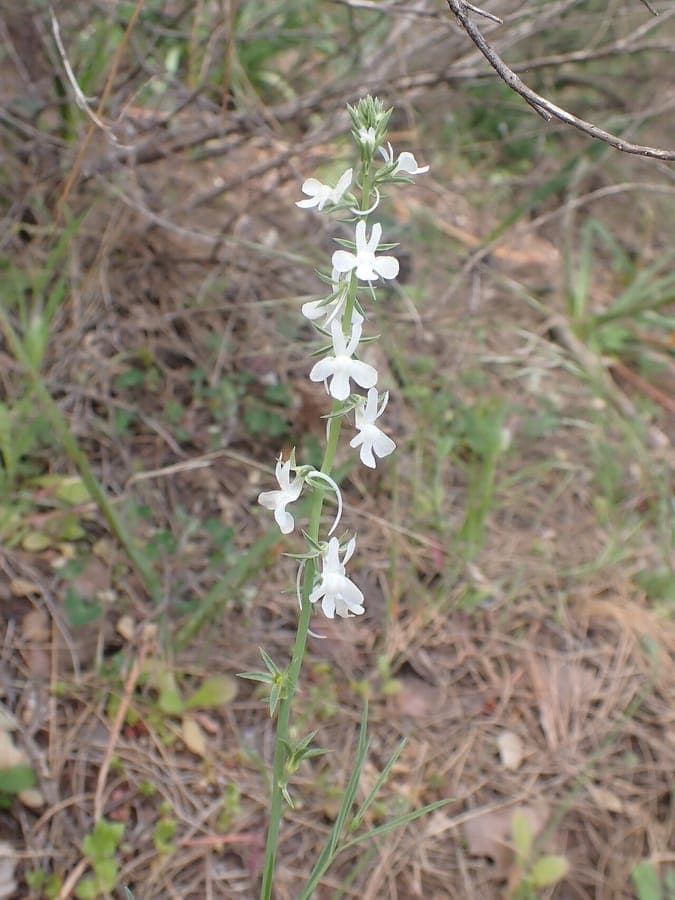
Sönke Bonde / CC0, via Wikimedia Commons
Aleppo toadflax: complete guide
Linaria chalepensis
Want to see Aleppo toadflax: complete guide in your garden?
1 minute, no credit card
Overview
Aleppo toadflax (Linaria chalepensis), also known as Mediterranean toadflax, is an elegant, graceful plant originating from Mediterranean regions through Iran and the Arabian Peninsula. This slender flowering plant belongs to the Plantaginaceae family and is a delicate addition to dry, sunny gardens with Mediterranean character.
Appearance and Bloom
Linaria chalepensis grows as a slender, upright plant with hairy, narrow leaves. The plant typically reaches heights of approximately 30 to 60 centimetres. Leaves are linear to lance-shaped with a soft, hairy texture. Flowers are small, white, sometimes with a pink tint, appearing from April through June in elongated flower racemes. Each bloom displays the characteristic linaria form: a small, 2-lipped flower with a spur at the base. The flowers attract many pollinators.
Ideal Location
Aleppo toadflax thrives in full sun. The plant loves warm, sunny positions with minimum 6 to 8 hours of direct sunlight daily. The plant tolerates wind well and needs no shelter. Intense afternoon sun is tolerated without problems. In very hot climates, some afternoon dappled shade proves beneficial, although not essential.
Soil
This Mediterranean plant makes minimal soil demands. Well-draining, fertile garden soil suffices. The plant grows splendidly in sandy, gravelly soils with moderate fertility. Heavy clay soils should be amended with sand. Neutral to slightly acidic pH (pH 6 to 7.5) is ideal. Poor drainage proves worse than poor fertility for this plant.
Free design
Want to see Aleppo toadflax: complete guide in your garden? Make a free design now.
Watering
Aleppo toadflax is drought-tolerant once established. Regular watering during the first growing season aids establishment. After establishment, supplemental watering is usually unnecessary; rainwater suffices. Avoid excessive moisture which can lead to root rot. During extreme drought periods, occasional watering proves beneficial, but this plant thrives with limited water supply.
Pruning
Minimal pruning is required. Spent flowers can be removed for neater appearance, although unnecessary. After the growing season, the plant can be carefully cut back. Diseased or dead portions are removed year-round. This plant requires no formal shaping.
Maintenance Calendar
March-April: Carefully remove grass-topped weeds. April-June: Peak flowering period. May: Remove spent flowers. July-October: Lower activity. November-February: Winter dormancy. March: Prepare for spring growth.
Winter Hardiness
Aleppo toadflax is winter-hardy to approximately minus 5-10 degrees Celsius in protected conditions. In milder coastal regions of Netherlands and Belgium, the plant can overwinter without protection. In harsher inland regions, winter protection proves beneficial. The plant is semi-evergreen; foliage typically drops in late autumn.
Companion Plants
Aleppo toadflax combines well with other Mediterranean and drought-tolerant plants such as lavender, sage, rosemary, thyme and sedum. Plant alongside other small wildflowers. A combination of white and yellow tones creates visual harmony. Well-suited to Mediterranean or gravel gardens.
Closing Thoughts
Aleppo toadflax is a charming, graceful addition to Mediterranean gardens and dry, sunny locations. With its delicate white flowers and hairy foliage, it offers engaging visual texture. Provide well-draining soil, full sun and minimal watering, and this plant will feel at home in your garden. For additional plant advice, visit www.gardenworld.app.
Want to see Aleppo toadflax: complete guide in your garden? Make a free design now.
Upload a photo, pick a style, and get a photorealistic design with plant list in under a minute.
No credit card required


Similar plants
White Beardtongue: complete guide
Penstemon albidus
Discover white beardtongue (Penstemon albidus) - elegant perennial with white to cream flowers. Drought-resistant, perfect for prairie and dry gardens.
Longsepal Beardtongue: complete guide
Penstemon calycosus
Discover longsepal beardtongue (Penstemon calycosus) - beautiful perennial with lilac-blue flowers. For partial shade and moist soil. Ideal for naturalized.
Penstemon cusickii: complete guide
Penstemon cusickii
Discover Cusick's beardtongue, a compact alpine flowering plant with violet-pink blooms. Perfect choice for rock gardens and water-wise landscaping.