
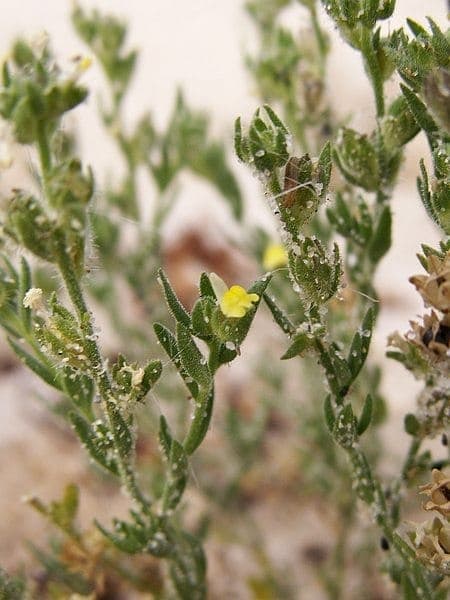
valnature@... / CC BY-SA 2.5, via Wikimedia Commons
Linaria arenaria: complete guide
Linaria arenaria
Want to see Linaria arenaria: complete guide in your garden?
1 minute, no credit card
Overview
Linaria arenaria, commonly known as sand toadflax or sandy linaria, is an elegant plant species native to western France and northwestern Spain. This delicate beauty is renowned for its bright yellow flowers that bloom throughout a long season from May to September. Though less common in English gardens, this species truly deserves more attention for its aesthetic appeal and ease of care.
The plant belongs to the Plantaginaceae family and naturally grows on sandy soils in coastal regions. This endows it with remarkable tolerance for dry conditions and poor soils, making it an excellent choice for gardeners seeking water-efficient solutions.
Appearance & Bloom
Linaria arenaria is a compact grower, typically reaching 20 to 40 centimeters in height. The stems are slender and elegant, with fine needle-like leaves that lie close against the stem, giving the plant a delicate texture that stands apart from many border plants.
The flowers are the stars of this species. They appear in clusters at the stem tips, displaying the characteristic two-lipped form typical of the Linaria genus. The color is a bright, pure yellow without marking or shading. Flowers bloom successively, creating an extended blooming period typically from May through September, sometimes extending into October if autumn is mild.
Ideal Location
Linaria arenaria thrives in full sun. The plant requires at least six hours of direct sunlight daily for optimal flowering. In warmer climates, some afternoon shade can be beneficial to protect blooms from scorching heat.
This is a plant that belongs in bright, warm, sheltered spots. Consider sunny borders, south-facing walls, or warm patio areas. It is therefore perfect for garden designs where abundant sunshine is available.
Soil
The soil preference of Linaria arenaria reflects its natural habitat: sandy, well-draining soils. The plant cannot tolerate waterlogged conditions around its roots, making good drainage essential.
Sandy, clay, or loam soils can all be amended with sand or grit. For heavy clay soils, prepare by adding sand and organic matter. pH is not critical, but the plant grows better in neutral to slightly acidic conditions.
Free design
Want to see Linaria arenaria: complete guide in your garden? Make a free design now.
Watering
Once established, Linaria arenaria is exceptionally drought-tolerant. The plant requires minimal water, particularly after the establishment phase. During extended dry periods, light watering is beneficial, especially in full-sun locations.
During the bloom period, you may keep soil slightly moister, but allow it to dry between waterings. Underwatering is preferable to overwatering, as leaf drop and root rot can occur with excessive moisture.
Pruning & Shaping
Linaria arenaria requires minimal pruning. You may remove misshapen or damaged portions, though this is unnecessary for plant health.
After blooming, particularly if you wish to collect seed, leave the plant undisturbed so seeds may ripen. In cold climates, after the first frost, you may remove dead above-ground portions while leaving roots in the soil.
Maintenance Calendar
January-February: Dormancy, no maintenance needed. March-April: Growing season begins, light watering if dry. May-October: Blooming period, regular watering during drought. November-December: Discoloration and winter preparation.
Winter Hardiness
Linaria arenaria is moderately winter-hardy in temperate climates. The plant tolerates temperatures down to approximately minus 10 degrees Celsius, though this depends on microclimate and soil conditions.
In severe winters, the plant may perish, especially in heavy soils or extremely wet conditions. In milder regions, it may overwinter successfully. If you live in a colder area, consider container cultivation so plants can be moved indoors in winter.
Companion Plants
Linaria arenaria combines beautifully with other Mediterranean plants. Consider lavenders (Lavandula), sun roses (Helianthemum), and catmint (Nepeta). These share the same sunny, dry-loving preferences.
Lovel combinations are also possible with grey-foliaged plants such as Artemisia and mouse-ear chickweed (Cerastium). These combinations create a rustic, Provencal effect.
Closing
Linaria arenaria is a low-maintenance plant delivering considerable beauty with minimal effort. The long blooming period and compact growth make it ideal for garden designers seeking something special. For those who want beautiful yellow flowers throughout months with minimal care, this plant is an excellent choice.
Available at major UK garden centers. At gardenworld.app, find more inspiration for incorporating this stunning flower into your garden design!
Want to see Linaria arenaria: complete guide in your garden? Make a free design now.
Upload a photo, pick a style, and get a photorealistic design with plant list in under a minute.
No credit card required


Similar plants
White Beardtongue: complete guide
Penstemon albidus
Discover white beardtongue (Penstemon albidus) - elegant perennial with white to cream flowers. Drought-resistant, perfect for prairie and dry gardens.
Longsepal Beardtongue: complete guide
Penstemon calycosus
Discover longsepal beardtongue (Penstemon calycosus) - beautiful perennial with lilac-blue flowers. For partial shade and moist soil. Ideal for naturalized.
Penstemon cusickii: complete guide
Penstemon cusickii
Discover Cusick's beardtongue, a compact alpine flowering plant with violet-pink blooms. Perfect choice for rock gardens and water-wise landscaping.