
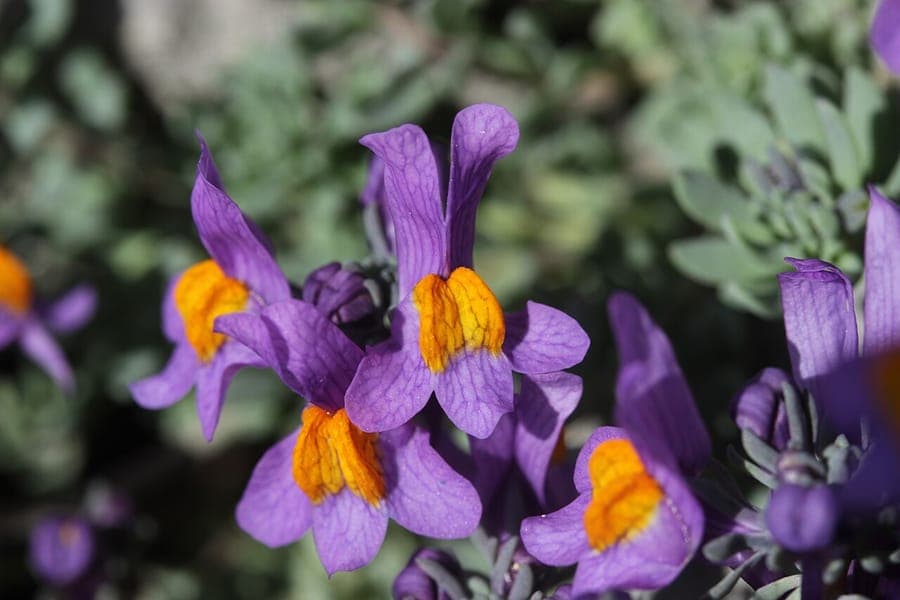
Björn S. / CC BY-SA 3.0, via Wikimedia Commons
Alpine toadflax: complete guide
Linaria alpina
Want to see Alpine toadflax: complete guide in your garden?
1 minute, no credit card
Overview
Alpine toadflax (Linaria alpina) is a charming mountain plant native to the Alps of central and southern Europe. This compact grower produces abundant delicate blue flowers with distinctive orange spotting. Perfect for rock gardens on calcareous soils.
Appearance and Bloom
Linaria alpina reaches 15-30 cm in height with a compact, brush-like form. Flowers appear from June to September in beautiful blue tones with characteristic orange or yellow markings on the lip. Flowers are small but prolific, creating spectacular displays.
Ideal Location
This alpine thrives in full sun locations with lean, well-drained substrates. Perfect for rock gardens, stone walls, and sloped terrain. The plant tolerates strong winds and inclines without difficulty.
Soil
Alpine toadflax grows optimally in poor, well-drained, calcareous soil with pH 7.5-8.0. Ensure good drainage; add gravel and small stones. Nutrient-rich soil produces weak growth and reduced flowering.
Watering
Once established, Linaria alpina is extremely drought-tolerant. Water regularly during the first growing season. Thereafter, natural rainfall suffices. Avoid waterlogging; drainage is essential.
Free design
Want to see Alpine toadflax: complete guide in your garden? Make a free design now.
Pruning
Pruning is minimal. Remove spent flower spikes to encourage tidy growth and extended flowering. After bloom, withered portions can be carefully trimmed.
Maintenance Calendar
- March-May: Growth begins, minimal water and nutrients
- June-September: Abundant flowering, regularly remove spent flowers
- October-November: Growth slows, prepare for dormancy
- December-February: Dormant, no care needed
Winter Hardiness
Alpine toadflax is hardy to -20°C (USDA zone 5-6). The plant overwinters well outdoors in northern climates. Ensure well-drained soil to prevent root rot.
Companion Plants
Alpine toadflax combines beautifully with other alpine plants such as alpine forget-me-not, alpine edelweiss, and saxifrages. Grey-foliaged plants create striking contrasts.
Closing
Alpine toadflax is indispensable for rock gardens and alpine compositions. With minimal care, this plant provides years of stunning blue flowers. Learn more on gardenworld.app for alpine garden designs. Visit gardenworld.app for inspiration creating rock gardens with Linaria alpina.
Want to see Alpine toadflax: complete guide in your garden? Make a free design now.
Upload a photo, pick a style, and get a photorealistic design with plant list in under a minute.
No credit card required

