
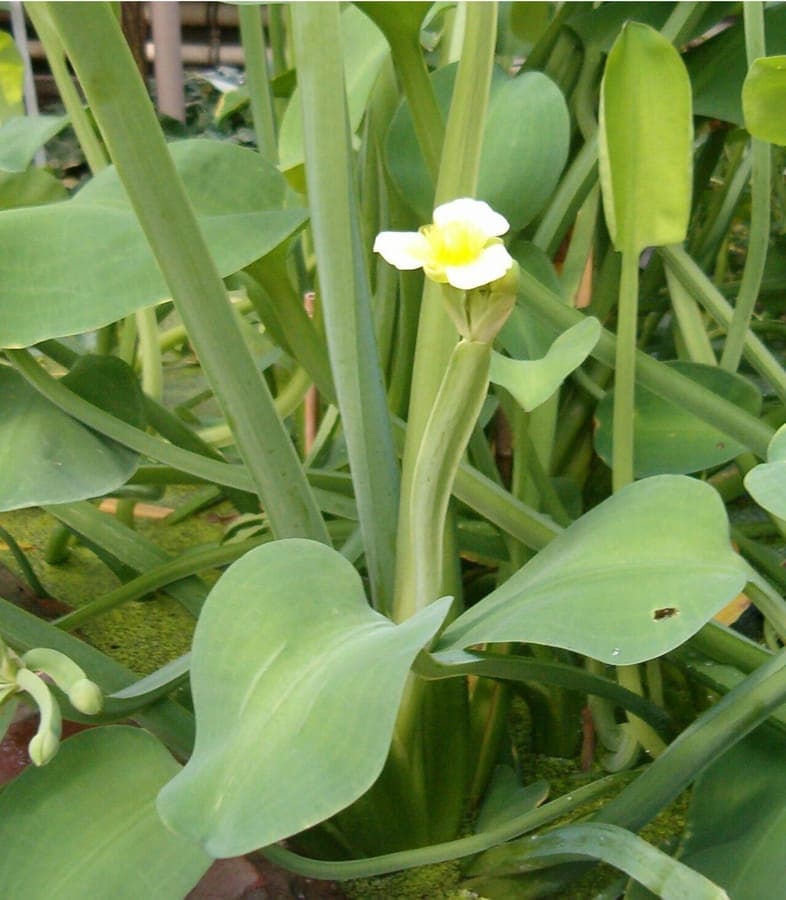
Wikimedia Commons / CC BY-SA 3.0, via Wikimedia Commons
Yellow water lily: complete guide
Limnocharis flava
Want to see Yellow water lily: complete guide in your garden?
1 minute, no credit card
Overview
The yellow water lily, scientifically known as Limnocharis flava, is an elegant aquatic plant originating from tropical America. It is celebrated for its vibrant yellow flowers and floating leaves. This plant thrives in still waters, ponds and water gardens where it creates a tropical atmosphere.
The yellow water lily is popular in pond gardens and aquascaping projects. It can grow at various water depths and forms an interesting growth pattern in water.
Appearance & bloom
The yellow water lily has round, floating leaves attached to a central leaf stem. The leaves have a deeply incised center making them interesting in shape. The flowers are bright yellow and appear above or just at the water surface.
Blooming occurs from May to October, particularly in warmer months. Each flower lasts only several hours but many flowers appear in succession.
Ideal location
The yellow water lily thrives in full sun to light shade. For optimal growth and rich flowering place it in full sun with at least six hours of direct sunlight. In tropical areas light shade can even be beneficial.
Ensure still water without strong currents. A pond area where the plant can establish is ideal.
Water
The yellow water lily grows in nutrient-rich water. A soil mix with organic matter works well when planting in containers. In garden ponds the plant draws nutrients from the water itself.
Slightly acidic to neutral water (pH 6 to 7) is ideal. Hard water is also acceptable.
Watering
The concept of watering is different for aquatic plants. Instead you focus on water quality. Keep water levels stable and prevent it from rising or falling dramatically. During dry periods as water evaporates, refill appropriately.
During growth periods regular feeding with nitrogen-rich fertilizers promotes better growth.
Free design
Want to see Yellow water lily: complete guide in your garden? Make a free design now.
Pruning
Pruning is not really necessary but you can remove dead leaves and flowers to keep the plant tidy. If the plant grows excessively you can remove some leaves to control growth.
Remove extensive underwater growth to maintain oxygen circulation.
Maintenance calendar
Spring: Plant begins growing. Add feeding. Check water quality.
Summer: Enjoy full blooming. Remove dead leaves. Add feed to support blooming.
Autumn: Blooming decreases. Gradually reduce feeding.
Winter: Plant grows slowly. In colder areas bring this plant indoors or protect from frost.
Winter hardiness
The yellow water lily is not winter hardy in temperate climates. It tolerates temperatures not below 10-15 degrees Celsius. In the Netherlands, Belgium and Germany you must bring this plant to a heated location or protect it.
In southern Europe it can overwinter outdoors in deeper water bodies. Ensure water does not completely freeze.
Companion plants
The yellow water lily pairs well with other aquatic plants such as water lilies in other colors, water plants and reed varieties. In garden ponds you can create group plantings for extra effect. Combine with fish and water snails for a healthy ecosystem.
In shallow waters it grows well alongside marsh plants.
Closing thoughts
The yellow water lily is a beautiful addition to water gardens and ponds. With regular maintenance and proper placement it develops into a striking aquatic plant. For advice on water plants and pond design consult gardenworld.app.
Want to see Yellow water lily: complete guide in your garden? Make a free design now.
Upload a photo, pick a style, and get a photorealistic design with plant list in under a minute.
No credit card required


Similar plants
California damsonium: complete guide
Damasonium californicum
Full guide to Damasonium californicum (California damsonium): shallow water, bog soil, care and companion plants for this rare western aquatic.
Sagittaria subulata: complete guide
Sagittaria subulata
Discover narrow-leaf arrowhead (Sagittaria subulata), an aquatic plant for ponds and water gardens. Complete cultivation and care guide.
Damasonium polyspermum: complete guide
Damasonium polyspermum
Damasonium polyspermum, or starfruit, is a submerged aquatic plant with star-shaped fruit clusters. Learn how to grow this aquatic plant.