
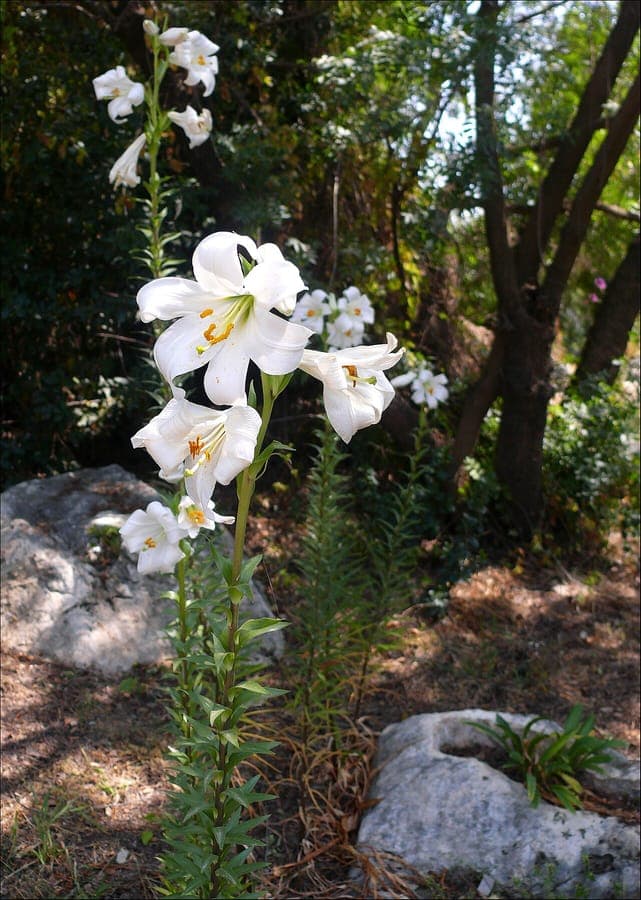
Zachi Evenor / CC BY 2.0, via Wikimedia Commons
Madonna lily: complete guide
Lilium candidum
Want to see Madonna lily: complete guide in your garden?
1 minute, no credit card
Overview
The Madonna lily (Lilium candidum) stands as one of the most revered flowering plants in garden history. With origins spanning the East Aegean Islands, Greece, Turkey, and the Levant, this species has graced gardens for centuries. Unlike most lilies that are planted in autumn, Lilium candidum follows a different rhythm – it's best planted in summer, after flowering, and grows actively from spring through early summer. This unique cycle means standard bulb care won't cut it; get the timing wrong, and you'll lose the bulb.
In the UK and US (USDA zones 5–8), this plant thrives in sunny, sheltered spots where its roots stay cool. It's not a showy hybrid bred for containers; it's a classic, stately plant that demands respect for its natural habits. Mature plants reach 90–120 cm and produce a striking floral display in early summer.
Using gardenworld.app, you can design a planting scheme that aligns perfectly with the Madonna lily's seasonal growth and light needs.
Appearance & bloom cycle
Lilium candidum blooms from late May through July, depending on climate. Each stem carries 6–12 large, fragrant, cup-shaped white flowers, each 10–15 cm across. The blooms have prominent yellow stamens and dark anthers, creating a bold contrast. A sweet, soft fragrance emerges in the evening, attracting moths and other night pollinators.
The plant begins growth in early spring with a basal rosette of broad, lance-shaped green leaves. From this base, a tall, unbranched stem rises, forming a terminal cluster of buds. Blooming is sequential, lasting 2–3 weeks per plant. After flowering, the stem and leaves yellow and die back completely by late summer.
Ideal location
Aim for a spot rated 7/10 for light – full sun to light shade. The top of the plant needs sun, but the roots must stay cool and shaded. A south- or southeast-facing wall works well, especially when paired with low, spreading companions that cover the soil.
Avoid deep shade or exposed, windy locations. While hardy, the tall stems can snap in strong gusts. Also avoid areas where water pools after rain. Good air circulation helps prevent fungal diseases like botrytis. In cooler zones, a sheltered microclimate improves flowering reliability.
Soil requirements
This lily prefers alkaline soil with a pH of 7.5–8.0. Acidic soils (below pH 7) lead to poor performance and bulb rot. Amend heavy clay with grit, sand, and garden lime to improve drainage and raise pH. Sandy soils may need compost to retain moisture without becoming waterlogged.
Plant bulbs 10 cm deep, spaced 25–30 cm apart. Unlike other lilies, Lilium candidum forms stem roots from the base of the stem – so don't bury it too deep. The planting site should remain undisturbed for years, as this species dislikes frequent transplanting.
Free design
Want to see Madonna lily: complete guide in your garden? Make a free design now.
Watering
Water regularly from March through July, especially during dry spells. The plant is actively growing and flowering during this period. Reduce watering in August as the foliage begins to yellow. By September, stop watering entirely.
The bulb enters summer dormancy and must stay dry. Wet soil during dormancy causes rot. If you're gardening in a high-rainfall area, consider growing in raised beds or containers to control moisture.
Pruning
Do not cut back foliage until it has fully yellowed. The leaves feed the bulb for next year's bloom. Removing green leaves early weakens the plant and may prevent flowering the following season.
Cut the stem down to ground level only after it has dried completely. Never tie or braid the leaves – this restricts photosynthesis. Let nature take its course.
Maintenance calendar
- March–April: Rosette emerges. Begin light watering if soil is dry.
- May: Flower stalk elongates. Maintain even moisture.
- June–July: Peak bloom. Avoid overhead watering to protect flowers.
- August–September: Foliage dies back. Stop watering. Do not disturb soil.
- October–February: Dormant. No action needed. Mulch lightly in colder zones (5–6) to protect from freeze-thaw cycles.
Winter hardiness
Lilium candidum is winter hardy in USDA zones 5–8. In zone 5, a thin layer of mulch can help prevent root disturbance from frost heave. In wetter climates, ensure excellent drainage to avoid bulb rot. In areas with heavy winter rains, consider growing in containers that can be moved to sheltered spots.
Companion plants
Pair with drought-tolerant, low-growing perennials that provide soil cover without competing. Lavender, catmint (Nepeta), and Artemisia are excellent choices. Avoid aggressive spreaders like mint or ground ivy. The goal is to keep roots cool and reduce weed competition.
Use gardenworld.app to test companion plant combinations and preview how they'll look in your garden layout.
Closing
The Madonna lily isn't the easiest bulb to grow, but its elegance and historical significance make it worth the effort. Understand its summer dormancy, respect its need for alkaline soil, and plant it where it can grow undisturbed. Purchase bulbs in summer (July–August) from trusted garden centres, OBI, or Truffaut, and plant immediately.
With patience, this timeless lily will return year after year, becoming a centerpiece in your garden.
Want to see Madonna lily: complete guide in your garden? Make a free design now.
Upload a photo, pick a style, and get a photorealistic design with plant list in under a minute.
No credit card required


Similar plants
Reverchon's gagea: complete guide
Gagea reverchonii
Full guide to Gagea reverchonii, Reverchon's gagea: rare Pyrenean bulb with bright yellow spring flowers, soil needs and companion planting.
Leafy gagea: complete guide
Gagea foliosa
Gagea foliosa is a rare Mediterranean bulb with bright yellow star-shaped flowers blooming February to March in well-drained rocky settings.
Tubular gagea: complete guide
Gagea fragifera
Gagea fragifera is a mountain bulb with golden-yellow star flowers blooming May to July on subalpine slopes from Europe to the Himalaya.