
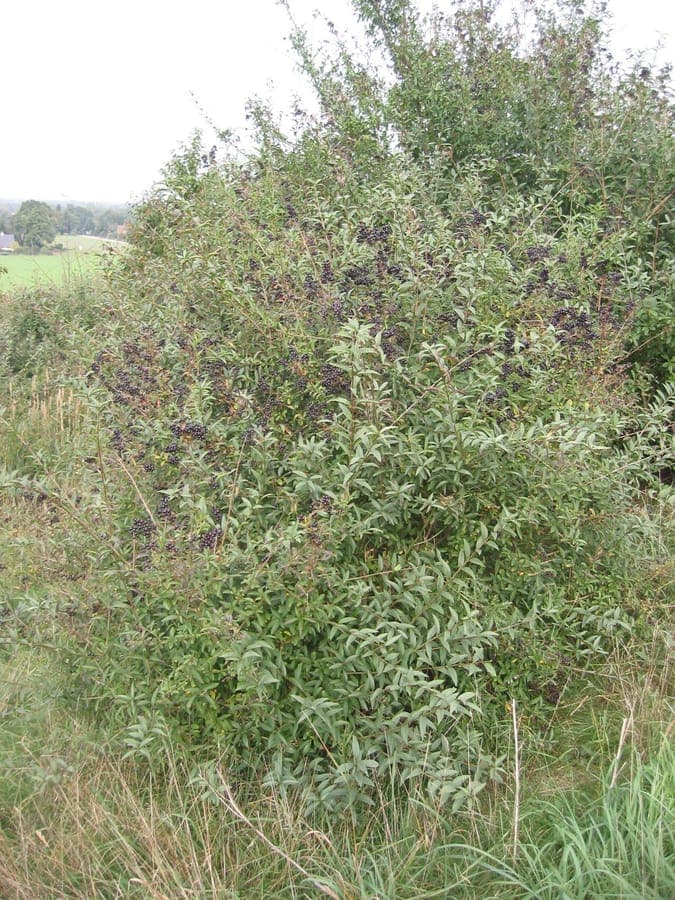
Rasbak / CC BY-SA 3.0, via Wikimedia Commons
Common privet: complete guide
Ligustrum vulgare
Want to see Common privet: complete guide in your garden?
1 minute, no credit card
Overview
Common privet (Ligustrum vulgare) is a tough, fast-growing shrub that's been a go-to for hedges across Europe for decades. Native to regions like France, Germany, and Great Britain, it belongs to the Oleaceae family and thrives in USDA hardiness zones 6 to 8. In the UK and Ireland (zone 8), it handles winter cold without issue. It's deciduous to semi-evergreen, meaning it holds some leaves in mild winters. This makes it a reliable choice for gardeners wanting year-round screening. Whether you're blocking a view or defining a boundary, common privet delivers.
Appearance & bloom cycle
Common privet grows 2 to 4 meters tall with a spread of 1.5 to 2 meters if left untrimmed. Its oval leaves are 3–7 cm long, dark green, and slightly leathery. In early summer, usually June, it produces fragrant white flower clusters at the tips of branches. These bloom for about three weeks and attract bees and hoverflies. By late summer, they develop into dark purple to black berries, which are toxic to humans but eaten by birds like thrushes and blackbirds. The plant blooms annually, provided it gets enough light and isn't over-pruned.
Ideal location
Full sun is best for dense growth, but common privet tolerates light shade. For hedges, aim for at least 6 hours of direct sunlight daily. In heavy shade, growth becomes sparse and leggy. Plant in sheltered spots if you're in a windy area-exposed sites can damage young shoots. Space plants 60 cm apart in a row for a solid hedge. On gardenworld.app, you can simulate hedge density and growth patterns to plan spacing before you buy.
Soil requirements
This shrub isn't fussy. It grows in clay, loam, or sandy soils as long as drainage is decent. A pH range of 5.5 to 7.5 works well. Avoid waterlogged or compacted ground. At planting, mix in a bucket of compost to boost root establishment. While it handles dry spells once established, it performs best in moist, well-drained soil. If your garden has poor soil, use the soil analysis tool on gardenworld.app to check nutrient levels and adjust accordingly.
Watering
Water newly planted privet weekly during the first growing season-about 10 liters per plant. After that, it's fairly drought-tolerant. During extended dry periods (3+ weeks without rain), give a deep soak to prevent stress. Use a soaker hose or water at the base to reduce evaporation. Overwatering, especially in clay, can lead to root rot. Let the top few centimetres dry out between waterings.
Free design
Want to see Common privet: complete guide in your garden? Make a free design now.
Pruning
Common privet responds well to hard pruning, making it a top pick for formal hedges. The first cut should come after flowering in June to avoid removing blooms and to encourage bushiness. A second trim in August keeps the shape tight. Use sharp shears and avoid cutting into old wood unless you're renovating. Never prune in autumn-it can trigger new growth that won't survive winter. Wear gloves and wash hands after handling, as berries and foliage are poisonous.
Maintenance calendar
- January: Check for winter dieback, remove dead wood
- February: No action needed unless storm damage
- March: Apply slow-release organic fertilizer
- April: Inspect for aphids or powdery mildew, improve airflow
- May: Water during dry spells
- June: First trim after flowering
- July: Monitor for pests and water in heatwaves
- August: Second trim for shape
- September: Reduce watering frequency
- October: Clear fallen leaves to prevent fungal issues
- November: Leave berries for birds, avoid pruning
- December: Minimal care, plant is dormant
Winter hardiness
Common privet survives down to -23°C (USDA zone 6). In the UK and much of northern Europe, it overwinters without protection. Young plants benefit from a 5–10 cm mulch layer around the base in their first winter to insulate roots. In harsh winters, top growth may scorch, but it regrows quickly in spring. Avoid planting in frost pockets or exposed uplands.
Companion plants
Pair common privet with other hardy shrubs like Cornus alba, Euonymus europaeus, or Ilex aquifolium for texture and year-round interest. Underplant with shade-tolerant perennials such as Lamium maculatum, Pachysandra terminalis, or Anemone nemorosa. Avoid invasive root competitors like bamboo. For wildlife value, mix in berry-producing shrubs like Viburnum opulus. Use gardenworld.app's companion planting tool to visualise combinations that thrive together in your garden's conditions.
Closing
Common privet isn't flashy, but it's dependable. With regular trimming, it forms a dense, neat hedge that lasts decades. It's not the most wildlife-friendly on its own due to toxicity, but birds benefit from the cover and berries. Buy healthy, root-ball plants from reputable garden centres, check for pests before planting, and give it a strong start. With a little care in the first year, it'll ask for little more. On gardenworld.app, you can design a low-maintenance layout where common privet plays its role perfectly.
Want to see Common privet: complete guide in your garden? Make a free design now.
Upload a photo, pick a style, and get a photorealistic design with plant list in under a minute.
No credit card required


Similar plants
Rough menodora: complete guide
Menodora scabra
Full guide to Menodora scabra: a drought-tolerant desert subshrub with bright yellow flowers, ideal for rock gardens and xeriscapes.
Fraxinus dipetala: complete guide
Fraxinus dipetala
California ash or two-petal ash from southwestern USA. Beautiful spring flowers, drought-tolerant. Experimental choice for warm Mediterranean front gardens.
Syringa komarowii: complete guide
Syringa komarowii
Syringa komarowii is a striking lilac from central China with elegant flower spikes and lovely foliage. Discover the complete care guide here.