
Rohan Pinto / CC BY-SA 4.0, via Wikimedia Commons
Wild ocinum: complete guide
Leucas aspera
Want to see Wild ocinum: complete guide in your garden?
1 minute, no credit card
Overview
Wild ocinum, better known as Leucas aspera, is a fascinating member of the Lamiaceae family (mint family). This plant originates from tropical and subtropical regions of Asia, particularly India and surrounding countries. In traditional medicine it is known as a powerful herbal remedy. The plant is also called "thumba" or "common leucas" and grows as a compact shrub with characteristic white to yellow flower whorls.
Leucas aspera is an annual to perennial plant that grows 60 to 90 centimeters tall. The plant is known for its rough texture and aromatic properties. In tropical gardens it thrives well, while in temperate climates it is cultivated as a container plant. The plant attracts insects and is used in many countries for medicinal purposes.
Appearance and bloom
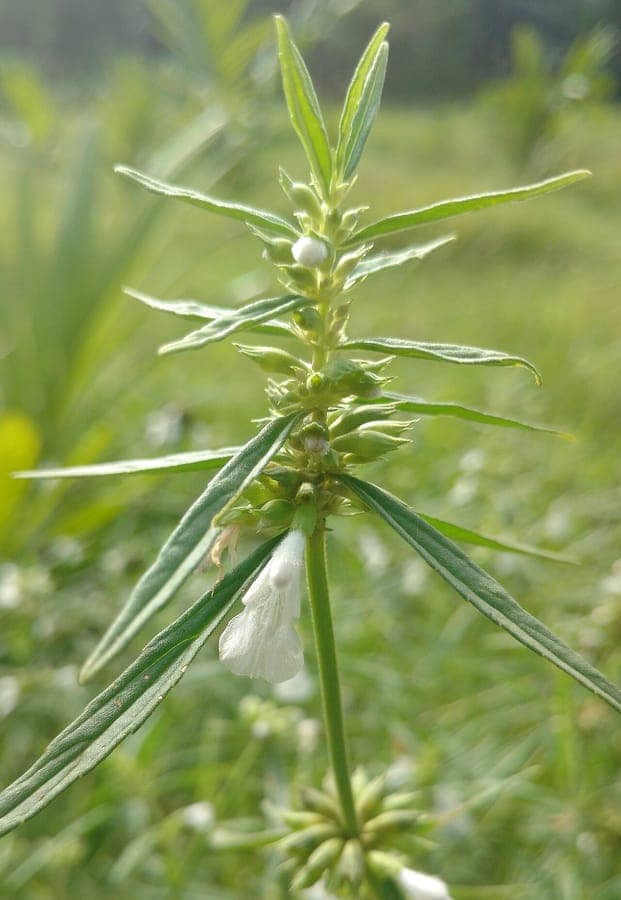
One of the most striking features of Leucas aspera is its bloom. The flowers appear in vertical whorls (rings) along the flower stems. The flowers are usually white to yellow colored and have a typical bilateral lip flower shape, characteristic of the Lamiaceae family. The whorls can be 1-2 centimeters wide and give the plant an interesting architectural quality.
The leaves are lanceolate to oval, with a distinctly rough surface that feels hairy. They are 2 to 5 centimeters long and grow opposite each other along the stems. The entire plant has an aromatic scent when touched. After blooming, small seeds form in nectaries below the flowers.
Ideal location
Leucas aspera grows best in full sun to light shade. At least four hours of direct sunlight per day is needed for healthy growth. In tropical regions, light afternoon shade can be beneficial, especially in very warm seasons. The plant thrives in warm climates and is sensitive to cold.
This plant is suitable for gardens in warm, temperate regions, but best for warm, coastal areas. It can also grow well in mixed borders with other herb plants. In temperate climates it grows best in protected locations, possibly against a south-facing wall.
Soil
Leucas aspera is not very particular about soil type. However, it thrives best in well-draining, nutrient-rich soil. Add organic matter to the soil before planting. The plant prefers a pH between 6.0 and 7.5, so slightly acidic to neutral soil.
The plant can grow in poor soils but will be more productive with regular feeding. Ensure the soil drains well, as the plant is susceptible to root rot in wet conditions. Mulching around the plant helps maintain moisture and prevent frost damage in mixed plantings.
Free design
Want to see Wild ocinum: complete guide in your garden? Make a free design now.
Watering
Leucas aspera loves regularly moist soil, especially during the growing season. Water growing plants regularly, keeping the soil evenly moist. However, do not let the soil become permanently wet - this leads to root rot. Water when the top centimeter of soil feels dry.
Once established, the plant is reasonably drought-tolerant and can handle shorter dry periods. In rainy seasons, you may skip supplemental water. In container cultivation, the plant needs more regular watering than in ground soil.
Pruning
Regularly pinching back the growing tips encourages a more compact, bushier plant. This can be done when the plant is about 15 centimeters tall. Later in the season you can remove faded flower whorls to encourage further blooming. This process is called "deadheading".
In spring you can prune the plant back to about 30 centimeters tall to encourage new growth. In colder climates where the plant dies back annually, this pruning guidance is not necessary. Try not to prune the plant in the deepest part of winter.
Maintenance calendar
February-March: Sowing seed in warm seed compost, growth of young plants. April-May: Transplanting into garden soil, start regular watering. June-August: Peak bloom, monthly feeding, pinching for bushier form. September-October: Seed collection, further blooming possible. November-December: In cold climates: remove plants or protect them.
Winter hardiness
Leucas aspera is frost-sensitive and thrives best in tropical to warm subtropical climates. In cold winters (below 5 degrees Celsius) the plant will die. In temperate climates it can be grown as a container plant and kept indoors over winter.
In warmer areas where frost is unlikely, it can grow perennially. In temperate zones it grows best as an annual or in protected environments. Protection measures such as frost cloth can be helpful in borderline cases.
Companion plants
Leucas aspera combines well with other herb plants in warm gardens. Suitable companions are rosemary, sage and other Mediterranean herbs. Tropical flowering plants such as hibiscus and bougainvillea also fit well in the same environment. In mixed borders it works well with other greenery.
It is important that the plant gets sufficient light and warmth. Avoid neighbors that cast shade. Visually, Leucas aspera combines well with plants of opposite growth forms for interesting texture contrasts.
Conclusion
Leucas aspera is an excellent choice for gardeners in warm climates seeking a useful, flowering herb plant. With its interesting flower architecture and traditional medicinal applications, it is a valuable addition to herb gardens. In temperate climates it can be grown as a seasonal container plant. Discover more inspiration for your garden on gardenworld.app!
Want to see Wild ocinum: complete guide in your garden? Make a free design now.
Upload a photo, pick a style, and get a photorealistic design with plant list in under a minute.
No credit card required


Similar plants
Apple mint (Mentha x villosa): complete guide
Mentha x villosa
Meet apple mint (Mentha x villosa): a fruity-scented kitchen herb with woolly leaves, perfect for tea and mojitos.
Salvia peyronii: complete guide
Salvia peyronii
Discover Salvia peyronii, a rare Lebanese mountain sage. Growing tips, hardiness, and companion planting for a Mediterranean gravel garden.
Bigleaf mint (Mentha x rotundifolia): complete guide
Mentha x rotundifolia
Discover bigleaf mint: cultivation, care tips, and garden uses. Learn how to grow this aromatic herb with soft, hairy leaves.