
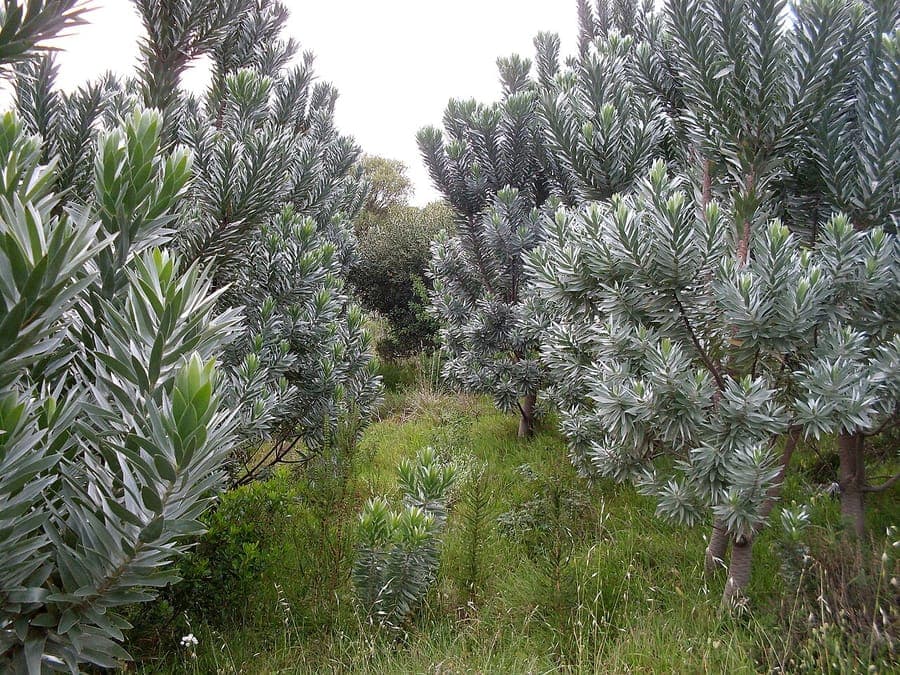
Abu Shawka / CC0, via Wikimedia Commons
Leucadendron argenteum: complete guide
Leucadendron argenteum
Want to see Leucadendron argenteum: complete guide in your garden?
1 minute, no credit card
Overview
Leucadendron argenteum, known as Cape silvertree or silvertree, is an exceptionally rare and elegant endemic plant of South Africa, specifically from the southwestern Cape region. This species occurs naturally only in a very limited area around Table Mountain in Cape Town, making it a genuine botanical rarity. The silvertree distinguishes itself through its striking silvery-iridescent foliage that sparkles spectacularly in bright sunshine, plus its unique conical flower inflorescences. This is not a plant for beginners, but for collectors and plant enthusiasts who appreciate challenges. With proper care, a silvertree can grow for many years and even flower, though this is extremely rare in Northern European conditions.
Appearance and Bloom
The silvertree grows as an upright to spreading shrub with a characteristic, almost sculptural form. Most striking are the leaves - these are very narrow, linear, and covered with fine silvery hairs that give the entire leaf an incredible silvery-white sheen. In bright sunlight, the tree literally appears to shimmer silver, which gave it its name. The leaves are evergreen and retain their intense silver color year-round. The flower structures are equally remarkable as the foliage - they are yellow to yellowish-brown conical inflorescences that form at twig tips. These flower structures typically appear in spring (March-May in their natural habitat), but inducing full bloom under Northern European conditions is nearly impossible. In South Africa, this plant reproduces via cones, not seeds.
Ideal Location
If you're fortunate enough to own a silvertree, place it in the sunniest spot in your home or greenhouse. This requires absolutely full sunlight for 6-8 hours daily - this is non-negotiable. The plant never grows well in partial shade or dappled light. Position the silvertree also where there's very good air circulation, as stagnant air causes fungal infections. Excellent ventilation in greenhouse gardens or conservatories is essential. Protect from cold wind, but ensure air circulates freely.
Soil
Silvertree naturally grows in heavy sand and gravel soil of the Cape. This tells all about the soil it needs - very well-drained, sandy, mineral-rich soil. For container growing, use a very coarse potting mix consisting of sand (40%), charcoal (20%), cork (20%), and universal potting soil (20%). Or choose a purchased Proteaceae-specific mix (available for South African plants). Silvertree tolerates no wet, heavy soil or compost-rich mixes.
Free design
Want to see Leucadendron argenteum: complete guide in your garden? Make a free design now.
Watering
This is where caution is essential. Silvertree requires moderate water during the growing season, but much less than most houseplants. Water when the top layer of potting mix begins to dry out, but not more frequently. Never allow water to stand around the plant. In winter, drastically reduce watering, irrigate only when absolutely necessary. Overwatering is the primary cause of death for silvertrees. Water from below (via saucers) rather than from above, as water on foliage can promote fungi. Use rainwater or distilled water whenever possible.
Pruning
Silvertrees require minimal pruning. Remove only dead branches and stray growth. The plant naturally forms a beautiful shape, and pruning doesn't stimulate extra branching. Very light pruning in spring is sufficient. Avoid aggressive pruning, as this weakens the plant.
Maintenance Calendar
March-April: Minimal pruning, inspect for pests. May-July: Careful watering, ensure good air circulation. August-October: Light watering, monitor humidity levels. November-February: Very minimal watering, cool dormancy period. Year-round: Check regularly for mealybugs and other pests.
Winter Hardiness
Silvertree is absolutely not winter-hardy in Northern European winters. This plant is suitable only for protected greenhouses, conservatories, or very warm, sheltered interior locations. In its natural habitat, it grows in a warm-temperate climate without frost. No European climate is suitable for permanent outdoor cultivation. Keep your silvertree permanently indoors in a cool greenhouse (6-12 degrees Celsius in winter is acceptable).
Companion Plants
Silvertree is typically grown as a specimen plant in a greenhouse or conservatory, not in combination with other plants. For adventurous collectors, you can pair it with other challenging South African plants such as:
- Erica species (Cape heaths)
- Disa species (orchids)
- Protea species
- Pincushion plants (Leucospermum)
But these combinations require expertise and specialized greenhouse conditions.
Conclusion
Leucadendron argenteum is not a plant for general gardeners. This is for collectors, plant enthusiasts, and those who enjoy challenges. The silvertree requires greenhouse expertise, very well-draining soil, careful water management, and perfect air circulation. But for those who can grow it skillfully, this rare plant offers incredible satisfaction. The silvery foliage color is unique and fascinating. Consult gardenworld.app for more help with exotic plants.
Want to see Leucadendron argenteum: complete guide in your garden? Make a free design now.
Upload a photo, pick a style, and get a photorealistic design with plant list in under a minute.
No credit card required


Similar plants
Gevuina avellana: complete guide
Gevuina avellana
Chilean hazel, Chilean wildnut, Gevuina avellana - South American tree with edible nuts. Exotic, interesting silhouette. Warm zones only. Requires winter protection.
Macadamia tetraphylla: complete guide
Macadamia tetraphylla
Discover how to grow Macadamia tetraphylla or rough-shelled macadamia. Tips for location, soil, water and maintenance.
Protea cynaroides: complete guide
Protea cynaroides
King protea (Protea cynaroides) is a spectacular South African flower with huge pink-red flowerheads. Perfect for cut flowers and exotic gardens.