
Buenos Aires peppergrass: complete guide
Lepidium bonariense
Want to see Buenos Aires peppergrass: complete guide in your garden?
1 minute, no credit card
Overview
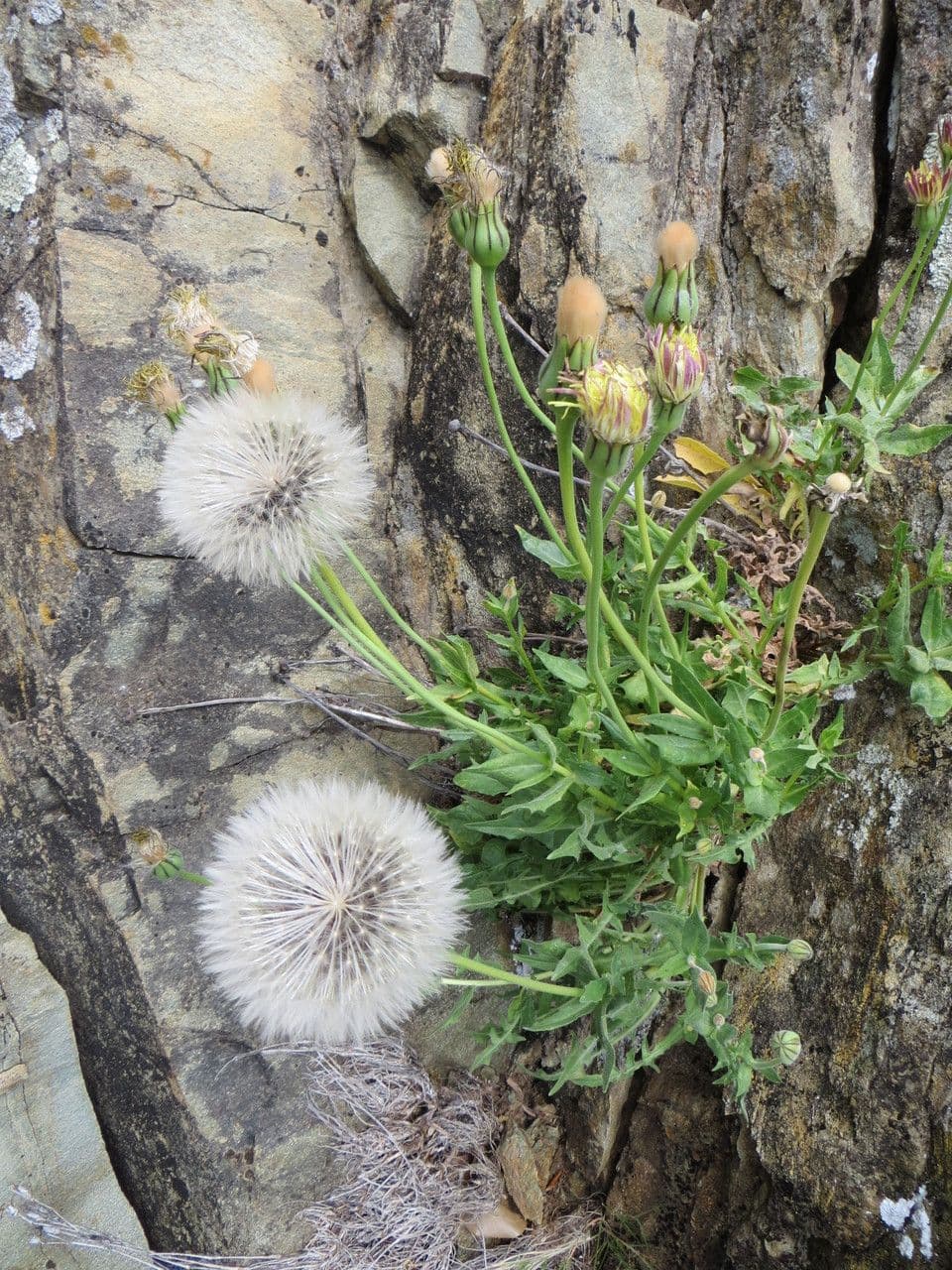
Lepidium bonariense, commonly called Buenos Aires peppergrass or peppergrass, is a charming herbaceous plant from South America (particularly Argentina, hence "bonariense"). This member of the Brassicaceae family (the cabbage family - also home to wasabi and radish) captivates with its fine, elegant habit and abundance of delicate white flowers.
Growing to 30-50 cm, it forms an airy, transparent shrublet that feels light and botanical. Despite its delicate appearance, it is reasonably robust and hardy to -5 C in temperate climates. The flowers attract bees and insects while seed capsules provide bird food late season. This makes it ideal for wild, wildlife-supporting garden designs.
Appearance and bloom
Lepidium bonariense grows as a slender shrub with thin, delicate stems covered in small, gland-covered green leaves. Leaves are typically 1-2 cm long, narrow and elegant. They emit a peppery scent when crushed, explaining the common name.
Flowers appear from May through September in numerous small clusters. They are tiny (3-4 mm), white to pale pink, and densely packed in short racemes. They are absolute nectar magnets for bees, hover flies and other small pollinators. After flowering, round seed capsules (silicles) provide abundant bird food, especially for finches and thrushes.
Ideal location
Lepidium bonariense is a sun-lover requiring at least 5-6 hours of direct daily sunlight. More sun means fuller, more compact flowering. In partial shade it survives but becomes lanky with sparse blooms.
The plant tolerates wind well. Windy sites are actually beneficial for wind pollination. Perfect for open gardens, rooftops, and exposed locations.
Soil
Lepidium bonariense is not demanding regarding soil - it grows in sand, loam, clay and everything between. What it absolutely requires is excellent drainage. Waterlogging is fatal. Ensure soil dries quickly after rain.
The plant tolerates poor soil better than excess feeding. Too much nitrogen produces weak, leafy growth without flowers. Lean is better than rich.
pH between 6 and 8 is ideal, though it tolerates acidic and alkaline soils.
Free design
Want to see Buenos Aires peppergrass: complete guide in your garden? Make a free design now.
Watering
Once established, Lepidium bonariense is remarkably drought-tolerant. During the first growing season (first 6 weeks), water once weekly. After that, you can largely stop except in extreme drought.
The plant accesses moisture from deeper soil layers. Even in Mediterranean summers without rain, it thrives. Waterlogging is the real enemy - ensure perfect drainage.
In very rainy winters, additional drainage may be needed (plant on mounds, add mulch).
Pruning
Pruning is not essential. You can lightly trim half the plant in June to keep it more compact, but this is optional. Avoid radical cutting - it can damage the plant.
Deadheading is unnecessary - the plant looks beautiful even with dried flowers. Leave some seed capsules for birds and self-seeding.
In spring (March), remove dead branches.
Maintenance calendar
March-April: New growth emerges; remove old wood.
May-June: Flowering begins; first delicate white blooms.
July-August: Peak bloom; abundant flowers, full nectar.
September-October: Flowering fades gradually; seed capsules form and brown.
November-January: Winter dormancy; plant retains some foliage.
February: Season preparation; check drainage.
Winter hardiness
Lepidium bonariense is hardy to approximately -5 C (USDA zone 9-10). In regions where frost regularly drops below -5 C, the plant may die and is best replanted annually. In milder climates (minimum temp above -5 C), it overwinters without problem.
Light frost (-3 to -5 C) causes minimal damage. Typical frost damage is leaf drop, with recovery in spring.
Companion plants
Lepidium bonariense pairs beautifully with other fine-textured, delicate flowering plants:
- Gypsophila (baby's breath): similar delicate white flowers, airy appearance
- Linaria (toadflax): thin, delicate forms, tiny flowers in pink/yellow
- Gaura: elegant arching blooms, white/pink flowers
- Cosmos: larger plant, fine forms, flowers in red/pink/white
This combination creates a light, naturalistic prairie-like structure.
Closing
Lepidium bonariense is for gardeners who appreciate subtle beauty. It is a slender, elegant plant with months of gentle blooming that attracts bees and birds. Low-maintenance, drought-tolerant, and interesting year-round. Perfect for wild gardens, pollinator gardens, and wildlife zones.
Difficult to find in regular nurseries, but seed is widely available online.
Design your wildlife gardens with gardenworld.app.
Want to see Buenos Aires peppergrass: complete guide in your garden? Make a free design now.
Upload a photo, pick a style, and get a photorealistic design with plant list in under a minute.
No credit card required


Similar plants
Brassica cretica: complete guide
Brassica cretica
Brassica cretica, the Cretan cabbage, grows wild on Aegean cliffs. Discover how to grow this drought-tolerant, yellow-flowered Mediterranean perennial.
Corsican cabbage: complete guide
Brassica insularis
Corsican cabbage is a rare Mediterranean rock cabbage with white flowers and blue-green leaves. Location, soil and winter protection.
Prostrate cabbage: complete guide
Brassica procumbens
Prostrate cabbage is a creeping North African cliff plant with yellow flowers. Discover location, soil type and winter protection.