
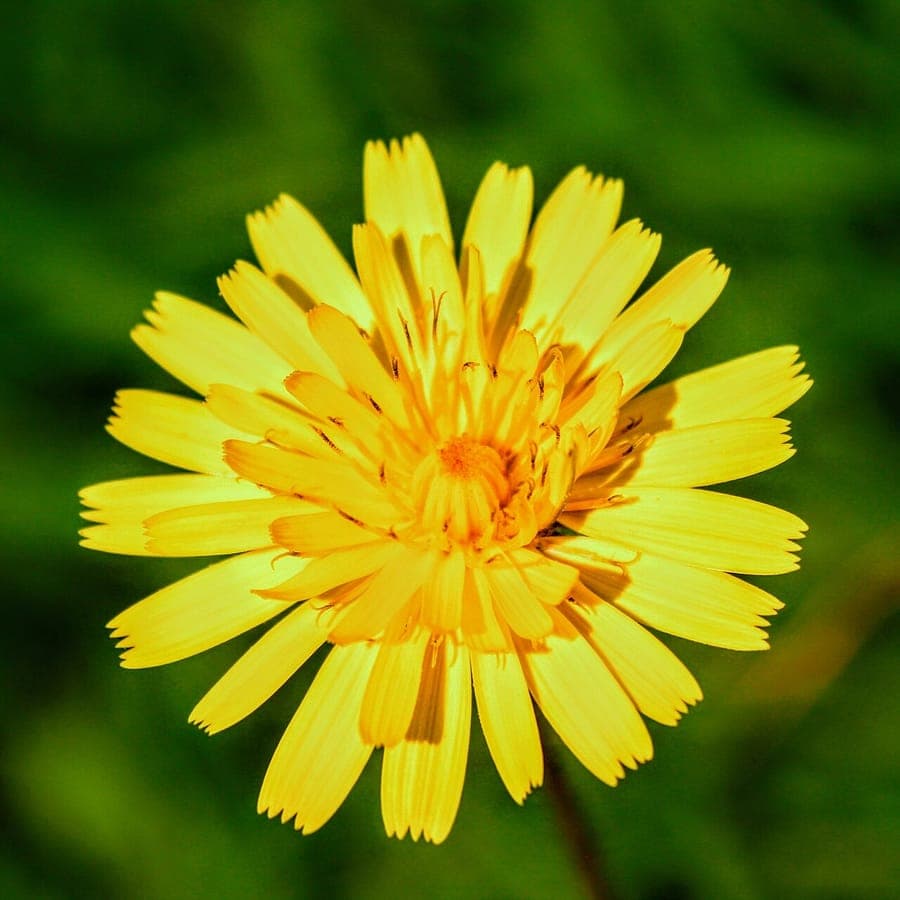
Kızıl / CC BY-SA 4.0, via Wikimedia Commons
Tuberous Hawkbit (Leontodon tuberosus): complete guide
Leontodon tuberosus
Want to see Tuberous Hawkbit (Leontodon tuberosus): complete guide in your garden?
1 minute, no credit card
Overview
The tuberous hawkbit (Leontodon tuberosus), also known simply as hawkbit, is a charming wildflower from the Mediterranean region. This plant is renowned for its bright yellow flowers, which closely resemble smaller dandelions, and its underground tubers that give it a distinctive characteristic trait.
This plant grows naturally throughout southern Europe, from Portugal to Turkey and even along the northeastern coast of Africa. It grows especially in dry, neglected grasslands, steep slopes, and rocky places where soil nutrients are sparse. These preferences tell us much about how we can manage this plant in our own gardens.
Although quite small and delicate, Leontodon tuberosus deserves recognition for its simplicity and frost resistance. This is absolutely the species for people who want to grow wildflowers without much effort.
Appearance and Bloom
Leontodon tuberosus is a low, frost-hardy herbaceous plant that primarily consists of a basal rosette of leaves. The leaves are approximately 10 to 20 cm long, dark green, somewhat rough and closed, with a distinctly wavy margin. They resemble dandelion leaves quite a bit, but are somewhat less toothed.
The flowers grow on sturdy, unbranched stems that rise 20 to 40 cm from the leaf rosette, depending on growing conditions. Each flower is a single flower head composed of approximately 100 to 200 small yellow florets densely packed into a disk about 1.5 to 2 cm in diameter. The florets open in the sun and close in darkness or when cloudy.
The blooming period runs from April to June in more southern areas, and May to July in more temperate climates. After pollination by bees and flies, seeds form, each equipped with a white feathery hair tuft (pappus) that flies on the wind.
Unique to Leontodon tuberosus is the presence of underground tubers - small, round, brown swellings on the roots. These tubers store nutrients for survival in dry, lean seasons. This is a key characteristic that makes the plant so drought-resistant.
Ideal Location
Tuberous hawkbit grows best in full sun in an open, unkempt place. Full sunlight of at least 6 to 8 hours per day is ideal. The plant also accepts light half-shade but will flower much less in shade.
Steep slopes, south-facing slopes, or rock gardens are perfect. The plant tolerates wind well and grows in such conditions, so shelter is not strictly necessary. In fact, the plant rather appreciates some air movement.
Soil
This is where Leontodon tuberosus shines: it tolerates very sparse, lean soils excellently. Sand, gravel, and even rubble soil are perfect. The plant roots in well-draining soils without much organic matter.
Soils that are too nutrient-rich can, paradoxically, be harmful - they stimulate leaf growth at the expense of flowers. A pH of neutral to slightly alkaline (7 to 7.5) is ideal, although the plant also grows on slightly acidic soils.
Do not worry about fertilization. No fertilizer is better than too much. This plant is adapted to nutrient-poor conditions.
Free design
Want to see Tuberous Hawkbit (Leontodon tuberosus): complete guide in your garden? Make a free design now.
Watering
Once established, tuberous hawkbit grows without much water. During the first growing season you should water the young plant regularly until it is well established (approximately the first year). After that you can cease almost all artificial watering except in extremely dry years.
In temperate climates, rainfall usually provides enough water. In Mediterranean climates, supplementary water in July and August can help if you want more flowers, but it is not strictly necessary.
Pruning
Leontodon tuberosus requires no active pruning. Remove flowers when they wilt to stimulate more flowers (deadheading). At the end of the season you can remove the dead leaf mass, but this is not strictly necessary.
Maintenance Calendar
January-March: Winter dormancy. Minimal activity. The plant exists underground as tubers.
April: Growth begins. Leaf rosettes appear. Water as needed.
May-June: Blooming time. Plenty of yellow flowers. Deadhead for more bloom.
July-August: Seed setting. Seeds ripen. Watering depends on rainfall.
September-October: Underground preparation. Plant gathers energy in tubers.
November-December: Winter dormancy completed.
Winter Hardiness
The tuberous hawkbit is extremely winter hardy and tolerates harsh winters without any problem. It grows in its natural habitat up to temperate mountain areas where frost occurs regularly. In USDA zones 3 to 10 it is entirely suitable for outdoor growing.
Winter protection is not needed; the plant grows back from its tubers each spring.
Companion Plants
Leontodon tuberosus grows wonderfully with other lean-soil, drought-resistant flowers. Other Mediterranean wildflowers such as daisy (Chrysanthemum segetum), Papaver rhoeas (poppy) and flax (Linum) form beautiful combinations. In rock gardens it works very well.
Avoid heavy, nutrient-rich plant species in direct vicinity that could overshadow Leontodon tuberosus.
Conclusion
The tuberous hawkbit is ideal for gardeners seeking a simple, frost-hardy wildflower that requires little water yet produces beautiful yellow flowers. It is a perfect choice for dry grasslands, rock gardens, or steppe gardens where fertility remains sparse. With seed (which spreads itself from flowers) or tuber division you can build colonies. Once established, this plant looks after itself. A true free card plant for lazy gardeners!
Learn more on gardenworld.app about Mediterranean wildflowers and how to transform your garden into a flower paradise.
Want to see Tuberous Hawkbit (Leontodon tuberosus): complete guide in your garden? Make a free design now.
Upload a photo, pick a style, and get a photorealistic design with plant list in under a minute.
No credit card required


Similar plants
Calendula stellata: complete guide
Calendula stellata
Complete guide to Calendula stellata, the star-flowered marigold from Sicily: location, soil, watering and companion planting tips.
Korean chrysanthemum: complete guide
Chrysanthemum x rubellum
Chrysanthemum x rubellum is a hardy autumn perennial with single pink to copper flowers from August to November. Care and combinations.
Helianthus divaricatus: complete guide
Helianthus divaricatus
Helianthus divaricatus is a North American woodland sunflower with yellow summer blooms, ideal for naturalistic borders and shady edges.