
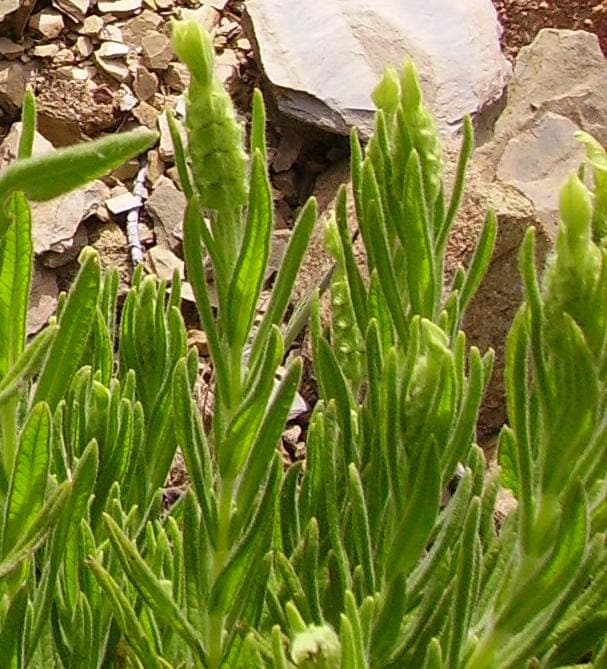
No machine-readable author provided. Muscari assumed (based on copyright claims). / CC BY-SA 3.0, via Wikimedia Commons
Madeira lavender: complete guide
Lavandula viridis
Want to see Madeira lavender: complete guide in your garden?
1 minute, no credit card
Overview
Madeira lavender, scientifically known as Lavandula viridis, stands out among lavender species for its bright green foliage and subtle floral tones. Native to Portugal and Spain, this evergreen shrub thrives in warm, dry climates but can adapt well to temperate zones with proper care. As a member of the Lamiaceae family, it shares characteristics with sage, thyme, and rosemary - notably aromatic leaves, woody stems, and resilience in poor soils. Unlike the classic purple lavenders, Lavandula viridis blooms in soft yellow-green hues, offering a unique aesthetic for gardeners seeking understated elegance.
This plant is less strongly scented than English or French lavender, making it a good choice for those who prefer milder fragrances. Yet it still attracts pollinators like bees and butterflies, adding ecological value to your garden. Its upright, bushy growth habit makes it ideal for borders, rock gardens, or container planting on patios and terraces.
Appearance & bloom cycle
Lavandula viridis typically reaches a height of 60–80 cm with a spread of 50–70 cm. It forms a dense, rounded mound with sturdy, woody stems and narrow, lance-shaped leaves. The foliage is a vivid green, slightly hairy, and softly textured - a refreshing contrast to the grey-green tones of most other lavenders.
Blooming occurs from June to August. The flower spikes are slender, about 8–10 cm long, and rise above the foliage on upright stems. Unlike traditional lavenders, the buds remain greenish-yellow and open into pale cream or light yellow flowers, sometimes with a faint pink blush. While not as showy as purple varieties, these blooms offer a delicate charm and last well into summer.
Ideal location
Sunlight is non-negotiable for Madeira lavender. It needs at least 6–8 hours of direct sun daily. A south- or southwest-facing spot in your garden is ideal. Sheltered locations, such as against a warm wall or near paving, help retain heat and improve winter survival. Avoid shaded or damp areas - these lead to leggy growth and reduced flowering.
Good air circulation is essential to prevent fungal issues, especially in humid climates. If growing in a container, choose a large pot with drainage holes and place it in an open area. On gardenworld.app, you can design a custom garden layout that highlights sun exposure and positioning for Lavandula viridis, ensuring your plant gets the best possible start.
Soil requirements
This lavender demands excellent drainage. Heavy clay or water-retentive soils will quickly lead to root rot. The ideal soil is sandy, gritty, or chalky, with a pH between 6.5 and 8.0. If your garden soil is dense, amend it with coarse sand, gravel, or perlite to improve aeration.
Avoid rich, compost-heavy soils - Lavandula viridis actually performs better in lean, low-fertility conditions. When potting, use a mix designed for cacti or succulents, or create your own blend with equal parts loam, coarse sand, and perlite. Plant at the same depth it was in the nursery pot - the crown should sit just above soil level.
Free design
Want to see Madeira lavender: complete guide in your garden? Make a free design now.
Watering
Once established, Lavandula viridis is extremely drought-tolerant. During its first growing season, water weekly to help roots establish. After that, supplemental watering is rarely needed, even in hot summers. Only water during prolonged dry spells, and always at the base of the plant to keep foliage dry.
Overwatering is the most common cause of failure. Soggy soil promotes root rot and fungal diseases. In containers, ensure excess water drains freely. As a rule of thumb: when in doubt, wait a day before watering.
Pruning
Pruning is crucial to maintain shape and prevent woodiness. Cut back the plant in early spring, around March, just after the last hard frosts. Trim stems by one-third to encourage bushy growth, but avoid cutting into old, leafless wood - it rarely regenerates.
After flowering, in late summer, remove spent flower spikes to tidy the plant and possibly encourage a second, lighter bloom. Regular pruning keeps the shrub compact and extends its lifespan.
Maintenance calendar
- January: Check for frost damage. Ensure soil remains dry.
- February: Inspect for dead wood. Prepare tools for spring pruning.
- March: Prune back by one-third. Remove any winter debris.
- April: Monitor for pests. No feeding required.
- May: Watch for aphids or mildew. Water only if dry.
- June–August: Peak bloom period. Avoid overhead watering.
- September: Deadhead spent flowers. Stop feeding.
- October–November: Keep soil dry. Clear fallen leaves around base.
- December: Protect container plants from wet and cold. Use breathable covers.
Winter hardiness
Lavandula viridis is marginally hardy, suited to USDA zones 8–9 (down to -10°C / 14°F). In colder zones, it may not survive harsh winters, especially if the soil stays wet. Mulching is not recommended - it can trap moisture and cause rot. Instead, ensure excellent drainage and avoid wet microclimates.
Potted plants are more vulnerable. Move containers against a sheltered wall or under eaves during winter. In areas with heavy snow or prolonged frost, consider wrapping the pot with hessian or bubble wrap. On gardenworld.app, you can generate frost-protection plans tailored to your location, helping you keep your lavender safe through winter.
Companion plants
Pair Madeira lavender with other drought-tolerant, sun-loving plants. Excellent companions include rosemary, thyme, sage, sedum, and yucca. These share similar soil and water needs and create a cohesive Mediterranean look. The silvery foliage of rosemary contrasts beautifully with the bright green leaves of Lavandula viridis.
Avoid moisture-loving plants like hostas or ferns, which require different care. Tall, shading plants should also be avoided - they block sunlight and reduce airflow.
Closing
Madeira lavender is a graceful, low-maintenance plant that brings subtle beauty to any garden. Its unique green flowers and aromatic foliage set it apart from more common lavenders. While it's less cold-hardy than some species, careful siting and winter protection can ensure long-term success. With minimal watering, well-drained soil, and a sunny spot, this lavender will thrive for years. Purchase healthy specimens from trusted garden centres like B&Q, Wyevale, or local independents. When planted thoughtfully, Lavandula viridis becomes a resilient and eye-catching feature in your outdoor space.
Want to see Madeira lavender: complete guide in your garden? Make a free design now.
Upload a photo, pick a style, and get a photorealistic design with plant list in under a minute.
No credit card required


Similar plants
Apple mint (Mentha x villosa): complete guide
Mentha x villosa
Meet apple mint (Mentha x villosa): a fruity-scented kitchen herb with woolly leaves, perfect for tea and mojitos.
Salvia peyronii: complete guide
Salvia peyronii
Discover Salvia peyronii, a rare Lebanese mountain sage. Growing tips, hardiness, and companion planting for a Mediterranean gravel garden.
Bigleaf mint (Mentha x rotundifolia): complete guide
Mentha x rotundifolia
Discover bigleaf mint: cultivation, care tips, and garden uses. Learn how to grow this aromatic herb with soft, hairy leaves.