
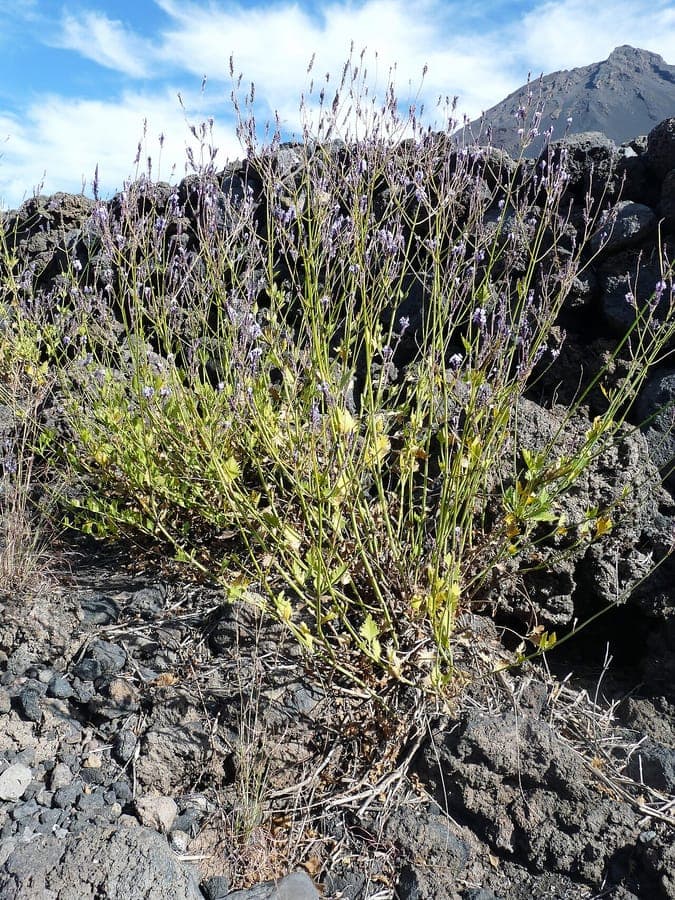
Ji-Elle / CC BY-SA 3.0, via Wikimedia Commons
Round-leaf Lavender: complete guide
Lavandula rotundifolia
Want to see Round-leaf Lavender: complete guide in your garden?
1 minute, no credit card
Overview
The Round-leaf Lavender (Lavandula rotundifolia) is a distinctive lavender species endemic to the Cape Verde islands. This plant is exceptional because it differs from typical lavenders with its notably rounded foliage. It is a highly robust plant ideal for coastal conditions and dry environments.
Appearance and Bloom
Lavandula rotundifolia distinguishes itself through characteristic round to oval leaves and purple flowers. The foliage has a silvery tint and feels velvety to the touch. The plant forms a compact, rounded habit approximately 40-60 cm tall. Flower spikes appear in long panicles throughout summer and early autumn.
Ideal Location
This plant thrives in full sun in warm, sheltered spots. A minimum of 6 hours of direct sunlight is essential. Perfect for coastal conditions as it tolerates salt air excellently. The plant is ideal for rock gardens, green roofs, and xeriscaping projects. Avoid heavily shaded areas where growth stagnates.
Soil
Well-draining, light soil is essential. Sandy, gravelly, or mineral-rich soils are ideal. This plant tolerates saline soils better than most lavenders. A pH range of 8-9 is preferred. Add coarse sand to clayey soils. Avoid heavy, waterlogged substrates.
Watering
Thorough watering at planting, then very little thereafter. Mature plants are extremely drought-tolerant. The plant endures extreme drought better than other lavenders. Overwatering is harmful and causes root rot. In rainy regions, supplemental watering is unnecessary.
Free design
Want to see Round-leaf Lavender: complete guide in your garden? Make a free design now.
Pruning
Prune after flowering in October-November. Remove approximately one-third to one-half of the plant for compact form. Avoid hard pruning into dead wood. Regular pruning prevents overgrown shapes. Spent flowers can be continuously removed.
Maintenance Calendar
Spring: Check for winter damage. Light pruning to maintain shape. Summer: Abundant flowering and intense fragrance. Deadheading stimulates further blooms. Autumn: After flowering, prune hard to achieve compact form. Winter: No maintenance needed. Extremely frost-resistant.
Winter Hardiness
Lavandula rotundifolia is frost-hardy to approximately -8 degrees Celsius. In Mediterranean climates, zones 8-10 are recommended. In very severe winters, protection may be beneficial. Good drainage and shelter are important. Prune damaged branches in spring.
Companion Plants
Combine with: Cistus, Santolina, Artemisia, Rosemary, Genista, Euonymus, and other coastal-tolerant plants. Silver-foliaged plants offer striking contrast. In Mediterranean gardens, perfect partner for Cape Verdean species.
Closing Thoughts
The Round-leaf Lavender is ideal for those seeking a unique, low-maintenance lavender species. Perfect for coastal or dry locations. Available at specialized garden centers. For more information about Mediterranean gardens, visit gardenworld.app. GardenWorld designs with you for sustainable, beautiful gardens with fitting plants.
Want to see Round-leaf Lavender: complete guide in your garden? Make a free design now.
Upload a photo, pick a style, and get a photorealistic design with plant list in under a minute.
No credit card required


Similar plants
Stagshorn Lavender: complete guide
Lavandula coronopifolia
Discover the exotic Lavandula coronopifolia with its distinctive fringed foliage and violet blooms. Ideal for dry, sunny gardens.
Salvia greggii: complete guide
Salvia greggii
Discover the benefits of Salvia greggii, a vibrant autumn sage with attractive flowers and minimal maintenance needs. Perfect bird plant for Mediterranean gardens.
Lavender cotton: complete guide
Santolina chamaecyparissus
Lavender cotton (Santolina chamaecyparissus) is a beautiful gray-green shrub from the Asteraceae family. This Mediterranean plant offers fragrance and refined appearance for dry gardens.