
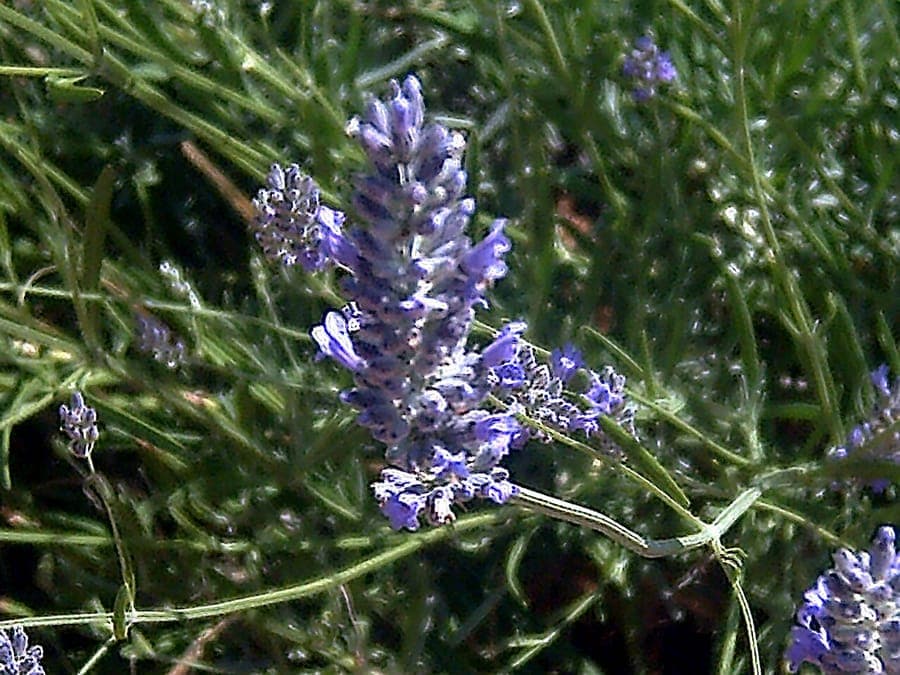
Javier martin / Public domain, via Wikimedia Commons
Broadleaf lavender: complete guide
Lavandula latifolia
Want to see Broadleaf lavender: complete guide in your garden?
1 minute, no credit card
Overview
Broadleaf lavender, or Lavandula latifolia, is a bold, aromatic subshrub native to southern Europe-particularly Spain, France, and Italy. Standing 60–80 cm tall, it's slightly larger and more vigorous than English lavender, with broader, grey-green leaves and long, slender flower spikes. It thrives in hot, dry conditions and is especially valued for its high camphor content, making it a favorite for essential oil production.
In gardens, it's best suited to USDA hardiness zones 7–8. While less cold-hardy than Lavandula angustifolia, it performs well in the UK and parts of the Pacific Northwest with proper drainage. It's not a long-lived perennial like some lavenders-expect 5 to 7 years of strong performance before renewal is needed.
Broadleaf lavender brings a sharp, medicinal scent to the garden, different from the softer, sweeter aroma of English types. Its blooming season is long, and it attracts bees, butterflies, and other beneficial insects. On gardenworld.app, you can design a drought-tolerant garden layout that features Broadleaf lavender as a structural highlight.
Appearance & bloom cycle
True to its name, Lavandula latifolia has wide, lance-shaped leaves up to 5 cm across, covered in fine down that gives them a silvery sheen. The foliage emerges in spring and remains evergreen in milder climates, turning slightly grey in summer heat.
Flowering begins in late June and runs through August, with some plants showing a lighter second flush in September if deadheaded promptly. The flower spikes are 4–6 cm long, held on sturdy stems up to 70 cm high, and display soft lavender to pale mauve hues. Each spike contains dozens of tiny tubular flowers that open gradually from base to tip.
The scent is pungent and fresh, with camphor and citrus notes-excellent for repelling moths and mosquitoes. Unlike some lavenders, it doesn't fade quickly when dried, making it ideal for sachets and potpourri.
Ideal location
This plant demands full sun-rate it a solid 8 out of 10 for light needs. It requires at least 7–8 hours of direct sunlight daily. South- or southwest-facing slopes, rock gardens, or raised beds work best. Avoid shaded areas, damp corners, or spots with reflected heat from walls unless drainage is excellent.
Air circulation is critical. Crowded plantings or hedge-like groupings increase humidity around the foliage, inviting fungal issues like root rot or botrytis. Space plants 40–50 cm apart to allow airflow. If your garden has heavy clay, consider growing Broadleaf lavender in a raised bed or container.
On gardenworld.app, you can simulate sun exposure across your yard to find the perfect spot for your lavender bed.
Soil requirements
Lavandula latifolia needs alkaline, well-drained soil with a pH of 7.0–7.5. It fails in acidic or water-retentive soils. The key is drainage-gravel, coarse sand, or crushed rock should make up at least 30% of the planting mix.
Avoid fertile, compost-rich soils. Lavender thrives in poor to moderate fertility. Too much nitrogen leads to leggy growth and fewer flowers. Amend heavy soil with perlite, pumice, or grit. A recommended mix: 2 parts topsoil, 1 part horticultural sand, 1 part crushed limestone or gravel.
Never mulch with organic materials like bark or compost-these hold moisture and encourage rot. Use small gravel or crushed oyster shell instead.
Free design
Want to see Broadleaf lavender: complete guide in your garden? Make a free design now.
Watering
Once established, Broadleaf lavender is extremely drought tolerant. Young plants need regular watering the first summer-about 1 liter per week during dry spells. Water at the base, early in the morning, avoiding wetting the foliage.
After year two, supplemental watering is rarely needed, even in hot summers. Overwatering is the most common cause of death. Signs include yellowing leaves, soft stems, and collapsed growth. In containers, water only when the top 5 cm of soil is dry.
Pruning
Prune in late summer, right after flowering-late August to early September. Cut back one-third of the green growth, shaping the plant into a neat mound. Never cut into old, woody stems; they won't re-sprout.
Use clean, sharp shears. Light annual pruning promotes bushy growth and prevents the plant from becoming leggy. Skip pruning in autumn or winter-this increases frost damage risk.
Maintenance calendar
- January: Check for winter damage. Keep dry.
- February: Inspect for pests or fungal spots. No pruning.
- March: Remove dead material. No feeding.
- April: Watch for new shoots. Water young plants if dry.
- May: Prepare for bloom. Avoid high-nitrogen fertilizers.
- June–August: Peak bloom. Monitor for aphids. Water only young plants.
- September: Prune after flowering. Deadhead spent spikes.
- October: Stop watering. Keep foliage dry.
- November–December: Protect container plants from prolonged freeze. Use burlap or frost cloth if needed.
Winter hardiness
Hardy in USDA zones 7–8. In zone 7, mulch the base with gravel or stone chips to prevent moisture buildup. Avoid organic mulch. In zone 6, grow in containers and move to an unheated garage or cold frame.
Wet winter soil is the main threat. Combine cold and soggy roots, and you'll lose the plant. Elevate containers or plant on a slope to improve runoff.
Companion plants
Pair Broadleaf lavender with drought-tolerant, sun-loving species. Good companions include Salvia officinalis, Echinacea purpurea, Nepeta faassenii, and Artemisia ludoviciana. Low-growers like Sedum 'Autumn Joy' or Thymus serpyllum help suppress weeds without competing for root space.
Avoid moisture-loving plants like hostas or ferns. Their needs clash with lavender's preference for dry feet.
Closing
Broadleaf lavender is a resilient, aromatic addition to sunny gardens. It's not the prettiest lavender in winter, but its summer performance is unmatched. With sharp drainage, full sun, and light annual pruning, it'll thrive for years.
You can find Lavandula latifolia at garden centres like those in the UK or independent nurseries. Look for compact, grey-leaved plants with no signs of mildew. Avoid overly green or floppy specimens-they've likely been overfed. With the right care, your Broadleaf lavender will become a fragrant backbone of your garden design.
Want to see Broadleaf lavender: complete guide in your garden? Make a free design now.
Upload a photo, pick a style, and get a photorealistic design with plant list in under a minute.
No credit card required


Similar plants
Apple mint (Mentha x villosa): complete guide
Mentha x villosa
Meet apple mint (Mentha x villosa): a fruity-scented kitchen herb with woolly leaves, perfect for tea and mojitos.
Salvia peyronii: complete guide
Salvia peyronii
Discover Salvia peyronii, a rare Lebanese mountain sage. Growing tips, hardiness, and companion planting for a Mediterranean gravel garden.
Bigleaf mint (Mentha x rotundifolia): complete guide
Mentha x rotundifolia
Discover bigleaf mint: cultivation, care tips, and garden uses. Learn how to grow this aromatic herb with soft, hairy leaves.