
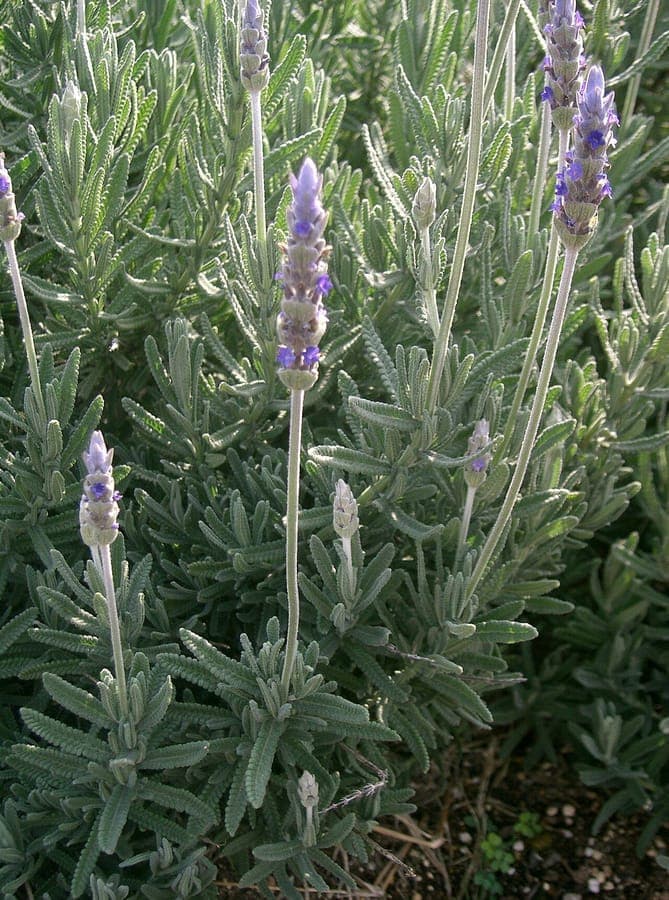
KENPEI / CC BY-SA 3.0, via Wikimedia Commons
French lavender: complete guide
Lavandula dentata
Want to see French lavender: complete guide in your garden?
1 minute, no credit card
Overview
Lavandula dentata, commonly known as French lavender, stands out with its long blooming season and distinctive toothed foliage. Native to regions like Morocco, Spain, and the Baleares, this evergreen shrub thrives in hot, dry climates and is best suited to USDA zones 8–11. Unlike English lavender, it's less cold-hardy but rewards gardeners with flowers from late spring through autumn, sometimes even into early winter in mild areas. In cooler regions, it's wise to grow it in containers so you can move it to shelter when temperatures drop. Use gardenworld.app to design a sun-drenched layout that highlights its silvery foliage and soft purple blooms.
Appearance & bloom cycle
The most striking feature of French lavender is its silvery-green, toothed leaves - a clear giveaway of its species name dentata. The foliage is softer and less aromatic than that of Lavandula angustifolia, but still carries a light, sweet scent when brushed. Flower spikes emerge from late May and can continue blooming until October. Each flower head is framed by long, showy bracts in lavender to deep purple, often with a hint of yellow at the tips, giving the plant a feathery, ornamental look. These bracts persist long after the tiny true flowers fade, extending visual interest. In full sun, the plant stays compact and bushy; in shade, it becomes leggy and weak.
Ideal location
Plant Lavandula dentata where it will receive at least 6–8 hours of direct sunlight daily. A south or southwest-facing wall, slope, or patio corner works best. In cooler climates, a container on a sunny deck or balcony allows flexibility. Avoid shaded or damp spots - poor air circulation invites fungal issues. If planting in the ground, ensure the site has excellent drainage. Raised beds or gravel mulch help keep roots dry. Garden centres across the UK and US often stock this plant in spring; choose specimens with firm stems and no signs of mildew.
Soil requirements
Well-drained soil is non-negotiable. Heavy clay or water-retentive soils will rot the roots. Amend garden soil with coarse sand, grit, or perlite - aim for at least 30% inorganic material. A pH between 6.5 and 8.0 is acceptable, but slightly alkaline (7.0–7.5) is ideal. In pots, use a mix of two parts loam-based compost, one part horticultural grit, and one part perlite. Avoid rich, moisture-holding potting mixes. Overly fertile soil leads to soft growth that's prone to winter damage.
Free design
Want to see French lavender: complete guide in your garden? Make a free design now.
Watering
Once established, French lavender is highly drought-tolerant. Water deeply but infrequently - only when the top 5–7 cm of soil is dry. Young plants need weekly watering in their first growing season. After that, natural rainfall is often sufficient, even in dry summers. Never let the plant sit in water. Use drip irrigation or water at the base to keep foliage dry and prevent mildew. Overhead watering is a fast track to root rot.
Pruning
Prune in early spring, just before new growth begins (late February to early March). Cut back about one-third of the previous year's growth, focusing on soft stems rather than old wood. This encourages bushiness and prevents the plant from becoming woody and sparse. After the first flush of flowers (around July), give it a light trim to promote a second bloom. Use sharp, clean shears. Avoid cutting into bare, leafless wood - this species doesn't regenerate well from old stems.
Maintenance calendar
- January: Check for pests or fungal spots. Keep container plants in a cool, bright spot.
- February: Begin light pruning.
- March: Complete pruning. Harden off plants before setting outside.
- April: New shoots appear. No feeding required.
- May–October: Blooming period. Deadhead regularly.
- November: Monitor for cold snaps. Move pots indoors if frost is forecast.
- December: Dormant phase. Minimal care needed.
Winter hardiness
French lavender survives winters in USDA zones 8–11. In zone 7 or colder, it's unlikely to survive prolonged freezing. The safest approach is container growing: use a terracotta pot with drainage holes and overwinter in a cool (5–10°C), bright location like a greenhouse or sunroom. Avoid warm, dry indoor rooms. If planted in the ground, apply a dry winter mulch like gravel or straw, but remove it early in spring to prevent crown rot.
Companion plants
Pair French lavender with other drought-tolerant species like rosemary, santolina, or Russian sage. It also complements ornamental grasses, sedums, and yarrow. These combinations create texture contrast and support pollinators throughout the season. For a low-maintenance, sun-loving border, this lavender is a natural fit. Use gardenworld.app to explore companion planting ideas that suit your garden's style and microclimate.
Closing
Lavandula dentata isn't the easiest lavender for cold climates, but it's worth the effort for its long bloom time and elegant form. Success comes down to three things: sun, sharp drainage, and restraint with water and fertilizer. Grow it in a pot if you're unsure about winter survival. Prune lightly and regularly to maintain shape. You'll find this plant at most garden centres in spring - look for stocky plants with healthy root balls. With a little care, French lavender becomes a focal point in any sunny garden corner.
Want to see French lavender: complete guide in your garden? Make a free design now.
Upload a photo, pick a style, and get a photorealistic design with plant list in under a minute.
No credit card required


Similar plants
Apple mint (Mentha x villosa): complete guide
Mentha x villosa
Meet apple mint (Mentha x villosa): a fruity-scented kitchen herb with woolly leaves, perfect for tea and mojitos.
Salvia peyronii: complete guide
Salvia peyronii
Discover Salvia peyronii, a rare Lebanese mountain sage. Growing tips, hardiness, and companion planting for a Mediterranean gravel garden.
Bigleaf mint (Mentha x rotundifolia): complete guide
Mentha x rotundifolia
Discover bigleaf mint: cultivation, care tips, and garden uses. Learn how to grow this aromatic herb with soft, hairy leaves.