
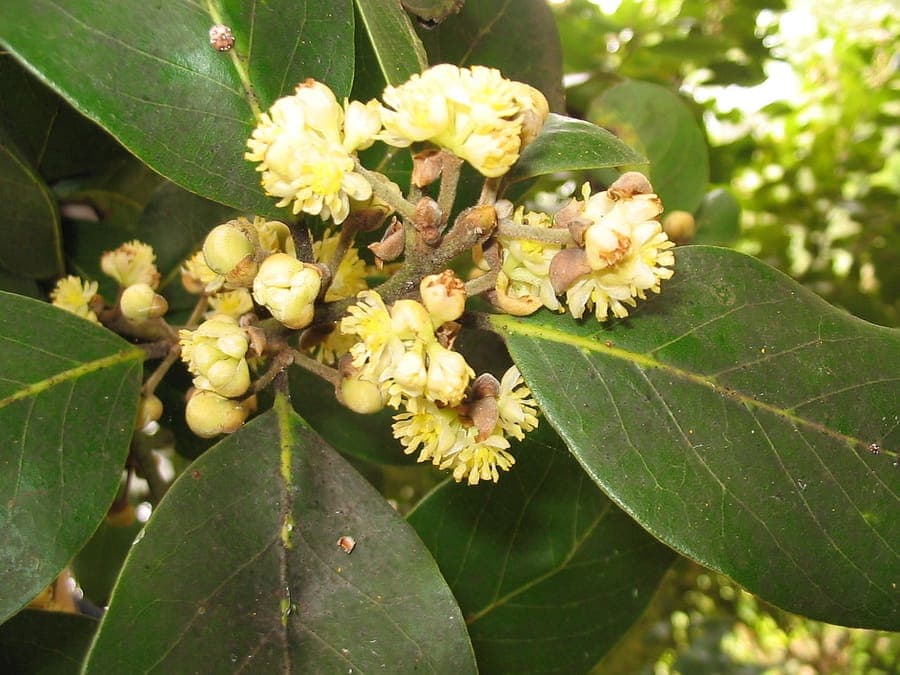
Ixitixel / CC BY-SA 3.0, via Wikimedia Commons
Laurus azorica: complete guide
Laurus azorica
Want to see Laurus azorica: complete guide in your garden?
1 minute, no credit card
Overview
Laurus azorica, commonly called Azores laurel or Macaronesian laurel, is an elegant, evergreen shrub native to the Azores. This plant has deep historical roots in these Atlantic islands and brings subtropical character to gardens in temperate climates. With its glossy dark green foliage and aromatic properties, Azores laurel is a refined choice for sheltered gardens.
The plant typically grows as a compact shrub to small tree, reaching 3-6 meters in maturity. It is a slow-growing plant requiring patience, but patience is rewarded with decades of ornamental value. gardenworld.app recommends Azores laurel for gardeners in temperate zones seeking subtropical elegance.
The plant is perfect for sheltered gardens, beneath tall trees, or against warm walls. It accepts shade better than many other aromatic plants and brings hospitality to dark garden corners.
Appearance and Bloom
Laurus azorica features beautifully glossy dark green foliage present year-round. Leaves are approximately 5-12 cm long, elliptical to lance-shaped with wavy margins. This glossy, voluminous foliage forms a dense, compact shrub.
Flowers appear in small, yellow to greenish-white clusters in spring and early summer. Though inconspicuous in color, flowers are highly fragrant and attract many pollen-feeding insects. The fragrance of the entire foliage is aromatic and pleasant.
After blooming, characteristic black berries approximately 1 cm in diameter develop. These berries ripen in autumn and are eaten by birds, making the plant bird-friendly.
Bark is gray to gray-brown and feels smooth on younger twigs. With age, bark becomes rougher, adding textural interest.
Ideal Location
Laurus azorica thrives in partial to full shade. Ideally 2-4 hours of filtered sunlight. The plant tolerates more shade than many other evergreens, making it useful for woodland-like settings.
Sheltered locations are essential. The plant cannot tolerate harsh winds or drying winds. Plant against warm walls or beneath tall trees for optimal protection.
Temperature: Laurus azorica is hardy to approximately -5 to -8°C. In colder regions, it requires protection or grows in pots that can be brought indoors in winter.
Free design
Want to see Laurus azorica: complete guide in your garden? Make a free design now.
Soil
Laurus azorica prefers nutrient-rich, well-draining soils. The plant performs best in slightly acidic to neutral soil. Chalky soils are less ideal but still accepted.
The plant loves humus-rich soil full of organic matter. Work compost or leaf mold into the planting hole for optimal growth.
Good drainage is important; prevent waterlogging at all costs. In wet areas, plant on raised beds or add sand and gravel to the planting site.
Watering
Laurus azorica prefers regularly moist soil. Water regularly, especially during growth and dry seasons. Summer watering is essential; ensure the plant doesn't dry out.
Mulching is highly beneficial. Use a layer of 5-8 cm of leaf mold around the plant to retain moisture.
Once established, the plant tolerates some drought, but consistently moist soil is preferred. Monitor for drought stress and water thoroughly when needed.
Pruning
Laurus azorica requires minimal pruning. The plant grows naturally compact. However, remove dead branches as soon as noticed.
Remove spent flowers after blooming for neater appearance. Perform any necessary pruning immediately after blooming to minimize damage to next season.
Deeper pruning can be done to adjust form, though this is rarely needed.
Maintenance Calendar
Spring: Check for winter damage. Begin regular watering. Perform light pruning if needed.
Summer: Actively monitor for drought stress. Water thoroughly regularly. Remove spent flowers.
Autumn: Refresh mulch layer. Reduce watering as autumn begins. Collect seeds if desired.
Winter: Protect against extreme cold where necessary with burlap. Reduce watering dramatically.
Winter Hardiness
Laurus azorica is hardy to approximately -5 to -8°C. In many European temperate-zone gardens, it can overwinter outdoors with protection. In colder regions, it grows better in pots that can be brought indoors in winter.
Young plants are more sensitive to cold than mature specimens. Provide protection in the first year after planting in risky regions.
Companion Plants
Laurus azorica pairs beautifully with:
- Hedera helix (ivy)
- Aucuba japonica
- Fatsia japonica
- Mahonia aquifolium
- Prunus laurocerasus (cherry laurel)
- Ferns such as Polystichum setiferum
Plant together for a shaded, woodland-like composition.
Closing
Laurus azorica is a refined plant that brings subtropical elegance to temperate gardens. With its glossy foliage, aromatic properties, and subtle beauty, it's a true treasure for sheltered gardens. gardenworld.app recommends Azores laurel for gardeners seeking something refined and special.
Want to see Laurus azorica: complete guide in your garden? Make a free design now.
Upload a photo, pick a style, and get a photorealistic design with plant list in under a minute.
No credit card required


Similar plants
Ocotea floribunda: complete guide
Ocotea floribunda
All about Ocotea floribunda, a tropical laurel tree from Central and South America: growing in temperate climates, containers, pruning, and care in greenhouses.
Redbay: complete guide
Persea borbonia
A full guide to redbay (Persea borbonia), a fragrant evergreen tree native to the southeastern United States, related to avocado and laurel.
Swamp bay: complete guide
Persea palustris
A full guide to swamp bay (Persea palustris), an evergreen tree native to the wetlands and coastal swamps of the southeastern United States.