
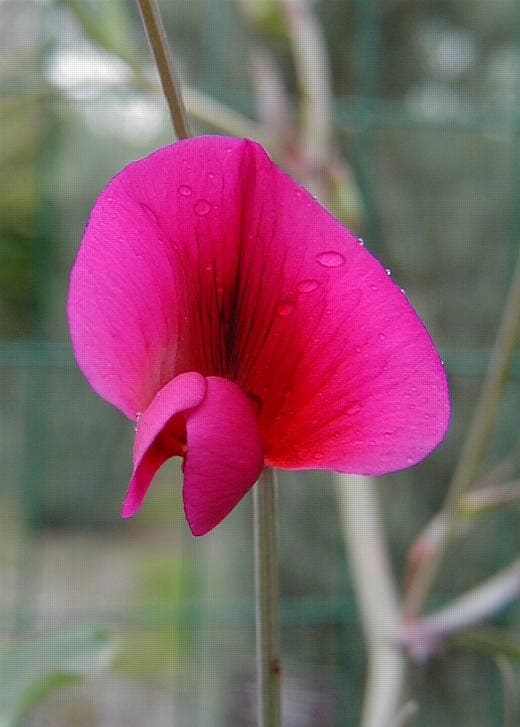
Chlarles E. Jones / CC BY-SA 2.5, via Wikimedia Commons
Tangier-pea: complete guide
Lathyrus tingitanus
Want to see Tangier-pea: complete guide in your garden?
1 minute, no credit card
Overview
Lathyrus tingitanus, also known as Tangier-pea or Tangier scarlet pea, is a magnificent climbing plant native to the western Mediterranean region, particularly Morocco and Spain. This member of the Fabaceae family is renowned for its vibrant crimson to deep pink flowers that bloom in spring. It is a plant gardeners love to use for vertical coverage and striking color accents.
Appearance and Bloom
Lathyrus tingitanus grows as a slender, tendril-climbing plant that can reach approximately 2 meters through its coiling tendrils. The plant features characteristic pea-like compound leaves and robust tendrils for climbing. The flowers are intensely red to deep pink, approximately 15-20 mm, appearing from March to May. They grow in clusters and possess a subtle fragrance.
Ideal Location
This climbing plant thrives best in a location with full sun to light shade, receiving at least 6-8 hours of direct sunlight daily. It prefers support via trellis, lattice, or other climbing framework. The plant can grow against south-facing walls, creating an impressive display.
Soil
Lathyrus tingitanus is not particularly fussy about soil composition but prefers well-draining, fertile soil. The plant thrives in neutral to slightly acidic soil (around pH 6.5-7.0). Adding organic matter such as compost or leaf mold supports growth.
Watering
This plant enjoys regular, consistent watering, especially during dry summer periods. Moisture levels should be maintained, but waterlogging must be prevented. Once established, the plant may require less frequent watering, though regular watering promotes blooming.
Free design
Want to see Tangier-pea: complete guide in your garden? Make a free design now.
Pruning
Pruning is minimal but you can encourage fuller growth by pinching back side shoots. Remove dead or damaged foliage regularly. After blooming, you can cut back the plant to manage size, though this is not strictly necessary.
Maintenance Calendar
- Spring (March-May): Direct sow seeds in well-prepared soil. Provide support and water regularly. Plant grows quickly and flowers.
- Summer (June-August): Monitor moisture; maintain consistent humidity. Deadhead spent flowers.
- Autumn (September-October): Plant slows blooming. Collect seed from mature pods for next season.
- Winter (November-February): Plant dies back in colder regions. In milder areas, it may overwinter or self-seed.
Winter Hardiness
Lathyrus tingitanus is not winter-hardy in many Northern European regions and is typically grown as an annual. However, it can overwinter in milder southern regions or self-seed.
Companion Plants
Combine Lathyrus tingitanus with:
- Clematis (Clematis vitalba)
- Climbing roses (Rosa spp.)
- Fuchsia
- Japanese honeysuckle (Lonicera japonica)
These combinations create a lush, colorful vertical garden.
Closing Thoughts
Lathyrus tingitanus offers a spectacular way to add color and texture to your garden. The bright red flowers contrast beautifully with green foliage. This is ideal for gardeners wanting to maximize vertical space. Find seedlings at garden centers. For more garden design inspiration, visit gardenworld.app for your next project.
More tips on climbing plants can be found on gardenworld.app.
Want to see Tangier-pea: complete guide in your garden? Make a free design now.
Upload a photo, pick a style, and get a photorealistic design with plant list in under a minute.
No credit card required


Similar plants
Tall Silky Lupine: complete guide
Lupinus elatus
Tall silky lupine is a fast-growing Californian perennial with silvery foliage and blue-purple flower spikes, ideal for a prairie-style garden.
Garfield Lupine: complete guide
Lupinus garfieldensis
The Garfield lupine is a rare, fast-growing American perennial for alkaline, dry grassland gardens, with striking blue flower spikes.
Lupinus elegans: complete guide
Lupinus elegans
Lupinus elegans, the elegant lupine, is a spectacular blooming plant from Mexico with blue flower spikes. Care, cultivation and garden use.