
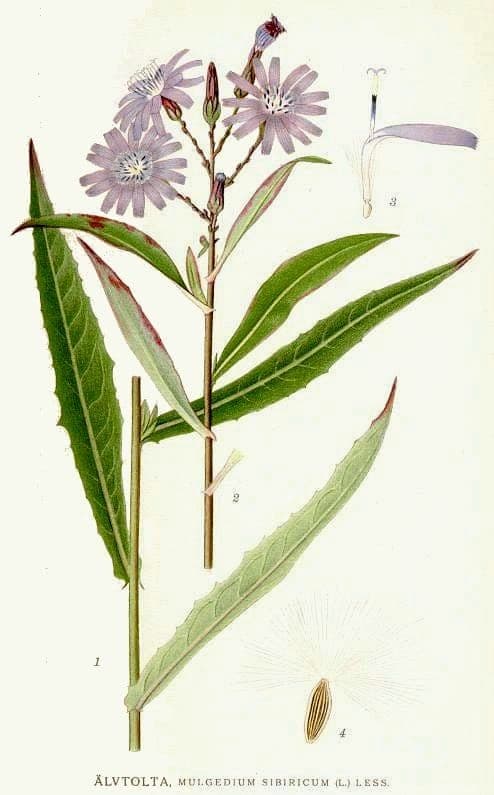
Carl Axel Magnus Lindman / Public domain, via Wikimedia Commons
Lactuca sibirica: complete guide
Lactuca sibirica
Want to see Lactuca sibirica: complete guide in your garden?
1 minute, no credit card
Overview
Lactuca sibirica, commonly called Siberian lettuce, is a biennial plant from the Asteraceae family. Native to northern and eastern Europe extending to Korea, it is a robust species thriving in more naturalistic garden settings. With its impressive floral display and practical growth habit, it is an excellent choice for gardeners seeking wilder, more biological approaches to garden design.
Appearance and Bloom
In its first year, Lactuca sibirica develops a rosette of long, lightly dentate leaves in shades of green and grey-green. In the second year, the plant shoots up to 60-150 centimetres tall and produces numerous dandelion-like yellow flowers. The flowering period is extended, often running from summer into autumn. Seeds disperse easily, encouraging natural regeneration.
Ideal Location
Lactuca sibirica thrives in sunny to lightly shaded locations with fertile, well-drained soil. The plant feels at home in biodiverse gardens, wild corners, and mixed borders. Wind and humid air are not detrimental. The plant tolerates open, sunny spots and partial shade equally well.
Soil
The plant prefers fertile soil but also tolerates average conditions. Heavy clay benefits from amendment with sand and humus. Self-seeding behaviour is enhanced by moderately fertile soil with some grit. Drainage must be adequate; waterlogged soil causes problems and rot.
Watering
Once established, Lactuca sibirica tolerates dry periods reasonably well. However, regular watering promotes stronger growth and more prolific flowering. During hot summers, soil moisture is beneficial. Keep soil moist but never waterlogged. Mulch to conserve moisture.
Free design
Want to see Lactuca sibirica: complete guide in your garden? Make a free design now.
Pruning
Not strictly necessary, though spent flowers can be removed to prevent excessive self-seeding or to keep the plant tidy. For wilder effects, allow the plant to complete its natural life cycle and self-seed freely.
Maintenance Calendar
Spring (Year 1): sow seeds directly outdoors or transplant seedlings. Summer (Year 1): water regularly, mulch for moisture retention. Autumn (Year 1): allow seeds to ripen and set. Spring (Year 2): seedlings will emerge from established seed. Summer-Autumn (Year 2): water, deadhead if desired, allow seed maturation.
Winter Hardiness
Lactuca sibirica is extremely hardy to zone 3. The plant tolerates cold winters without issue. Snow and frost do not damage young plants. Winter protection is unnecessary. Self-seeding behaviour thrives in temperate climates.
Companion Plants
Lactuca sibirica works well grouped with other wild grasses, perennial borders, and flower meadows. Beautiful beside larkspurs, delphiniums, and other tall flowering plants. Plant in dense clusters for dramatic impact. Perfect for biodiverse gardens and wildlife corridors.
Closing
Lactuca sibirica brings wild beauty and practical growth characteristics to any garden. With its self-seeding nature and extended blooming period, it is a low-maintenance option that largely manages itself. Group in wild corners or borders and enjoy summer-long yellow flowers. Find seeds and plants at gardenworld.app.
Want to see Lactuca sibirica: complete guide in your garden? Make a free design now.
Upload a photo, pick a style, and get a photorealistic design with plant list in under a minute.
No credit card required


Similar plants
Calendula stellata: complete guide
Calendula stellata
Complete guide to Calendula stellata, the star-flowered marigold from Sicily: location, soil, watering and companion planting tips.
Korean chrysanthemum: complete guide
Chrysanthemum x rubellum
Chrysanthemum x rubellum is a hardy autumn perennial with single pink to copper flowers from August to November. Care and combinations.
Helianthus divaricatus: complete guide
Helianthus divaricatus
Helianthus divaricatus is a North American woodland sunflower with yellow summer blooms, ideal for naturalistic borders and shady edges.