
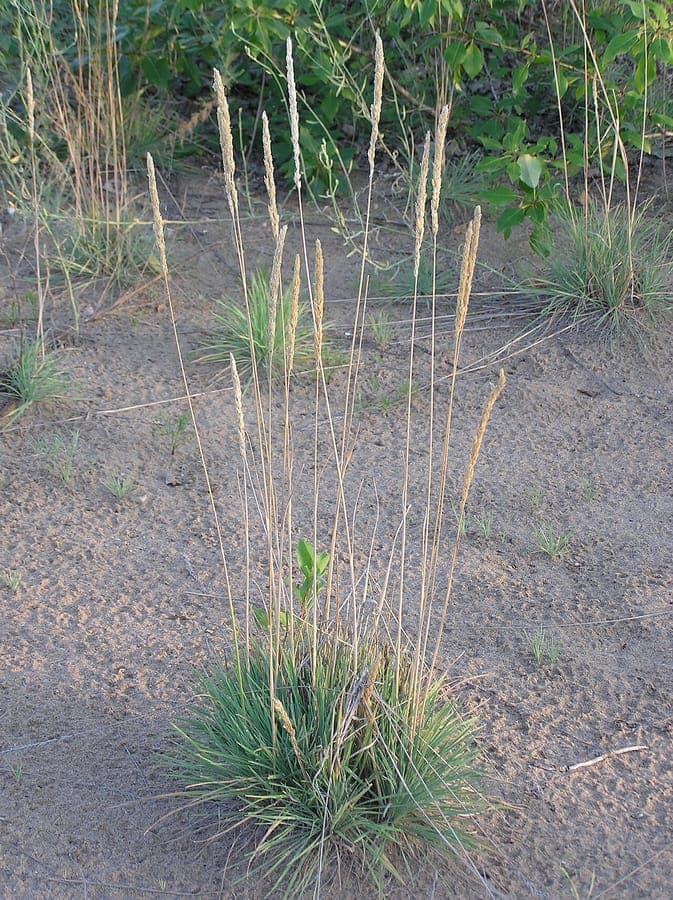
Le.Loup.Gris / CC BY-SA 3.0, via Wikimedia Commons
Blue Fescue Grass: complete guide
Koeleria glauca
Want to see Blue Fescue Grass: complete guide in your garden?
1 minute, no credit card
Overview
The Blue Fescue Grass (Koeleria glauca), also known as Silvery Hair Grass, is a stunning ornamental grass prized for its distinctive blue-green foliage and delicate silver-white flower spikes. Native to Europe and extending eastward to Mongolia, this grass thrives in dry slopes, steppes, and sandy terrain, making it an excellent choice for gardeners seeking year-round structural interest with minimal maintenance requirements.
The plant forms compact, dense cushions reaching 30-40 centimeters in height. The intensity of the blue coloration varies seasonally: spring displays the most vibrant hues, while summer tones shift toward silvery-green. This color variation throughout the year provides continuous visual appeal, making it a valuable addition to both traditional and contemporary garden designs.
Appearance and bloom
The fine, linear leaves of Blue Fescue Grass display a characteristic blue to grey-blue tint, growing in symmetrical, tight tufts that maintain an inherently structured shape without staking. From May through June, delicate flower spikes emerge: slender, upright panicles measuring 5-8 centimeters, with silvery-white to cream coloring that glistens subtly in sunlight.
The inflorescence consists of closely packed spikelets that create an exceptionally refined appearance. Once flowering finishes, seedheads form that attract numerous bird species. The dried floral material remains ornamentally valuable throughout autumn and winter, contributing to attractive winter garden structure and providing wildlife food sources into the dormant season.
Ideal location
Blue Fescue Grass performs best in full sun positions receiving 6-8 hours of direct daily sunlight. In full sun, foliage achieves its most intense, vibrant blue coloration. While the plant tolerates some afternoon shade, it becomes less compact and less vividly colored in reduced light.
This grass excels in dry borders, rock gardens, crevices, alpine troughs, and as edging material where it beautifully contrasts with lower groundcovers. Its compact size makes it perfect for container cultivation, allowing flexible placement and repositioning. Use it as a focal accent in contemporary gardens or Mediterranean-style landscapes for authentic regional character.
Soil
Koeleria glauca requires well-draining, poor to moderately fertile soil. The plant has evolved in harsh conditions: sandy, gravelly, and rocky substrates are ideal. Heavy, compacted clay soils and waterlogged conditions will cause root rot and plant decline.
Optimal soil pH ranges from 7.0 to 7.5 (neutral to slightly alkaline). Before planting, amend your soil by incorporating grit or coarse sand to improve drainage. Avoid adding rich compost or excessive organic matter, as this promotes lush vegetative growth at the expense of flowering. In poor, well-drained soils, the plant remains compact and maintains its exceptional coloration.
Watering
Once established, Blue Fescue Grass is extraordinarily drought-tolerant. During the establishment phase (first growing season, approximately 4-6 weeks after planting), provide regular moisture until the root system develops fully. After this critical period, supplemental watering is unnecessary except during exceptional drought conditions.
During wet seasons and cold winters, exercise caution with water: excessive moisture increases root rot risk. No feeding is necessary once the plant is established. This drought tolerance makes it invaluable for low-water gardens and xeriscape designs, reducing maintenance costs and environmental impact.
Free design
Want to see Blue Fescue Grass: complete guide in your garden? Make a free design now.
Pruning and care
Blue Fescue Grass demands minimal intervention. In late spring (March-April), cut all dead previous-season material back to approximately 5-8 centimeters from ground level using sharp shears or pruning equipment. Make clean cuts to minimize disease entry points.
Gently remove dead foliage by hand or with a steel rake if gray or damaged tissue accumulates internally. This promotes air circulation and reduces fungal disease risk. During the growing season, no additional pruning is needed: allow the grass to grow naturally, maintaining its inherent sculptural form.
Maintenance calendar
March to April: Cut back all dead material to ground level (5-8 cm). Inspect for previous season damage and address immediately.
April to May: New foliage emerges rapidly. Monitor drainage after heavy rainfall. No fertilizer application required.
May to June: Peak flowering period. Enjoy silvery-white floral spikes. Water only during prolonged dry spells.
July to September: Plant remains visually attractive. Remove any dead stems that appear. Seeds mature for wildlife.
October to November: Foliage may gray-brown (entirely normal). Retains structural garden interest and form.
December to February: Fully winter-hardy. Remove excessive leaf litter for tidiness, but preserve plant structure.
Winter hardiness
Blue Fescue Grass is exceptionally winter-hardy, withstanding temperatures far below 0 degrees Celsius. Suitable for USDA zones 4-9, it thrives throughout Europe and North America with no winter protection required, tolerating sustained temperatures approaching -20 degrees Celsius.
The plant is semi-evergreen, retaining foliage throughout winter. This attribute provides valuable winter interest in contemporary garden design. Even in severe winters with prolonged snow cover and temperatures below -25 degrees Celsius, only leaf tips may freeze; the plant recovers completely in spring. No winter mulching or protective measures are necessary.
Companion plants
Blue Fescue Grass pairs beautifully with other drought-tolerant plants:
- Stipa (Feather Grass): Creates lovely textural contrast with taller forms
- Festuca glauca (Sheep's Fescue): Low-growing companion with similar coloration
- Lavandula (Lavender): Purple flowers provide stunning color contrast
- Salvia officinalis (Common Sage): Gray-green foliage complements this grass
- Sedum (Stonecrop): Various colors and textures fill compositional gaps
- Heuchera (Coral Bells): Purple foliage creates visual depth
- Sempervivum (Hens and Chicks): Low, compact, and equally drought-tolerant
Closing thoughts
Blue Fescue Grass is a powerful, low-maintenance ornament for modern gardens. With striking blue coloration, minimal care requirements, and year-round structural interest, it delivers decades of garden pleasure. Ideal for drought-prone and water-conscious landscapes, it also thrives in containers for maximum flexibility and design adaptability.
Ready to acquire Blue Fescue Grass? Quality suppliers like local garden centres stock this grass regularly. For personalized advice about this plant and other ornamental selections, visit gardenworld.app to discover how these plants can transform your space.
Want to see Blue Fescue Grass: complete guide in your garden? Make a free design now.
Upload a photo, pick a style, and get a photorealistic design with plant list in under a minute.
No credit card required


Similar plants
Sporobolus pungens: complete guide
Sporobolus pungens
Sporobolus pungens is a stoloniferous Mediterranean coastal grass with outstanding salt and drought tolerance, perfect for seaside and dry gardens.
Mediterranean aegilops: complete guide
Aegilops biuncialis
Everything about Aegilops biuncialis, a Mediterranean annual grass with ornamental spikes and outstanding drought tolerance for dry gardens.
Silver bluestem: complete guide
Bothriochloa saccharoides
Full guide to Bothriochloa saccharoides (silver bluestem): site, soil, watering, winter hardiness, pruning, and garden companions.