
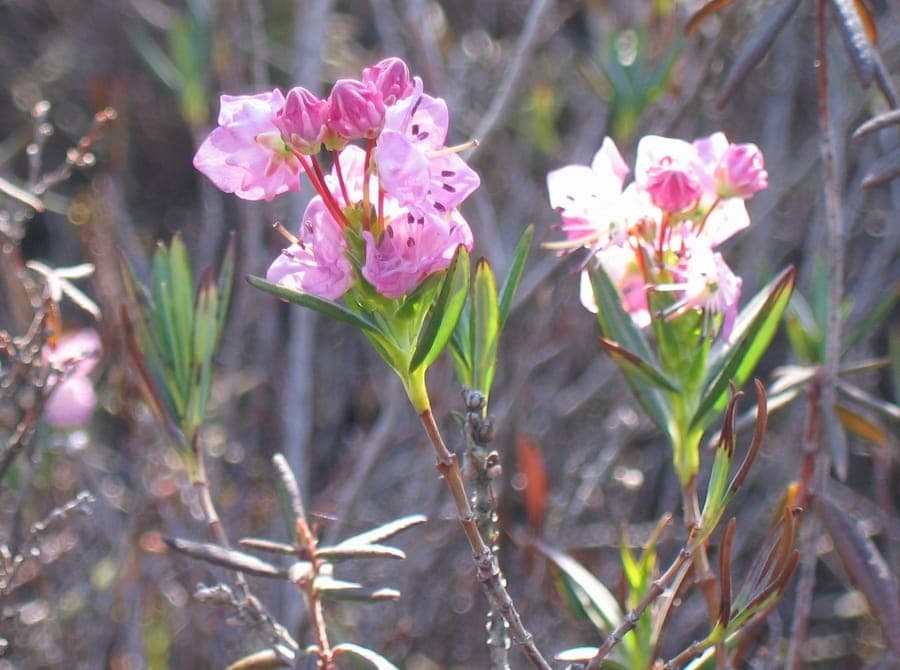
photo by user Meggar / CC BY-SA 3.0, via Wikimedia Commons
Bog laurel: complete guide
Kalmia polifolia
Want to see Bog laurel: complete guide in your garden?
1 minute, no credit card
Overview
Bog laurel (Kalmia polifolia) is a native North American dwarf shrub renowned for its distinctive purple flowers and compact growth habit. It naturally inhabits moist, acidic wetland soils from Subarctic regions through Maine, Wisconsin, and into North Carolina. In cultivation, bog laurel offers gardeners an intriguing option for landscapes featuring moist, acidic soils and partial shade conditions.
Appearance and Bloom
Bog laurel grows as a multi-stemmed dwarf shrub with a naturally compact, rounded form. The plant typically reaches heights of 30 to 60 centimetres. Its leaves are small, linear, and dark green with a fine texture that persists year-round. Flowers emerge from May through July in shades of scarlet-red to pale pink, sometimes nearly white, arranged in attractive umbels. The blooms display a characteristic saucer shape with prominent, exserted stamens that create a striking visual effect.
Ideal Location
Bog laurel thrives in full sun to partial shade conditions. A minimum of six hours of direct sunlight daily ensures optimal flowering. The plant performs well in cool climates and appreciates protection from intense afternoon sun in warmer summers. In southern regions, afternoon dappled shade prevents leaf scorch during peak heat.
Soil
Soil composition proves absolutely critical for bog laurel success. The plant demands acidic soil with a pH range between 6.0 and 7.3. A freely draining, moisture-retentive mix rich in organic matter is essential. Incorporate ericaceous compost, peat, or leaf and sand amendments into your planting hole. Many gardeners lower soil pH by adding sulphur dust or applying slow-release ammonium sulphate. Excellent drainage is vital because while the plant loves moisture, it absolutely refuses to tolerate waterlogged conditions.
Watering
Bog laurel requires consistently moist soil, particularly during the growing season. Keep the soil lightly moist at all times but never waterlogged. Regular watering proves necessary, especially during dry periods. Generous moisture is preferable to underwatering, provided drainage remains excellent. Use rainwater when possible, as it typically contains less lime than tap water. In winter, reduce watering frequency whilst maintaining evenly moist conditions.
Free design
Want to see Bog laurel: complete guide in your garden? Make a free design now.
Pruning
Bog laurel needs minimal pruning, especially since it naturally maintains a tidy compact form. After flowering, you may gently remove spent flowers to prevent self-seeding and maintain a neater appearance. Keep pruning efforts minimal; this plant thrives when its natural form is respected. Dead or damaged branches can be removed anytime during the growing season.
Maintenance Calendar
Spring (March-May): Check drainage, incorporate humus amendments, and establish regular watering schedules. Gently remove weeds whilst protecting shallow root systems. August-September: Prepare for winter dormancy and apply a thick mulch layer. October-February: Winter management is relatively straightforward. Periodically monitor for excess moisture accumulation. February-March: Apply slow-release ericaceous plant fertiliser.
Winter Hardiness
Bog laurel exhibits excellent winter hardiness, tolerating temperatures to approximately minus 20 degrees Celsius, making it suitable for most European gardens including UK, Netherlands, and Belgium. The plant retains its evergreen foliage year-round. In extremely cold winters, a protective 5 to 10-centimetre mulch layer prevents root frost damage, particularly in regions experiencing sustained freezing.
Companion Plants
Bog laurel combines beautifully with other Ericaceae family members including Rhododendron, Azalea, Japanese Tree Lilac (Syringa reticulata), and heather species. Add low-growing sedum varieties for lower layers, or plant bergenia species for textural contrast. In wetter locations, consider ornamental sedges, primula species, and hostas. This combination creates a harmonious, acid-loving plant community.
Closing Thoughts
Bog laurel deserves greater popularity in European gardens, particularly those featuring moist, acidic soils. Its elegant flowers, compact growth habit, and evergreen character provide year-round interest. Provide this plant with appropriate growing conditions - especially acidic soil and moist yet well-draining conditions - and it will reward you with years of spectacular blooms. For additional plant information, visit www.gardenworld.app.
Want to see Bog laurel: complete guide in your garden? Make a free design now.
Upload a photo, pick a style, and get a photorealistic design with plant list in under a minute.
No credit card required


Similar plants
Zenobia pulverulenta: complete guide
Zenobia pulverulenta
Everything about Zenobia pulverulenta (honeycup): siting, acid soil, pruning and the fragrant white bells, in this complete care guide.
Dwarf huckleberry: complete guide
Gaylussacia dumosa
Everything about dwarf huckleberry (Gaylussacia dumosa): acidic soil, partial shade, pruning and care for this compact North American berry shrub.
Drooping leucothoe: complete guide
Leucothoe fontanesiana
Everything about drooping leucothoe (Leucothoe fontanesiana): shade tolerance, soil, watering, pruning, hardiness and companion plants.