
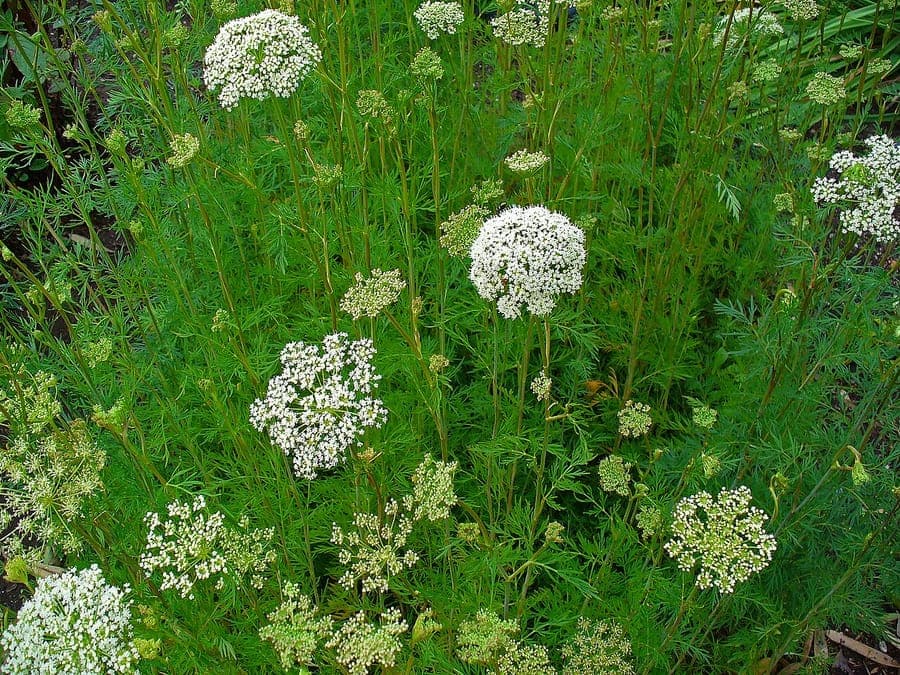
H. Zell / CC BY-SA 3.0, via Wikimedia Commons
Marsh milk-parsley: complete guide
Kadenia dubia
Want to see Marsh milk-parsley: complete guide in your garden?
1 minute, no credit card
Overview
Marsh milk-parsley, botanically Kadenia dubia (Schkuhr) Lavrova & V.N.Tikhom., is a distinctive perennial in the carrot family (Apiaceae). The species was formally described in 1986, though it had long been known under synonym names including Cnidium dubium and Selinum venosum. The species epithet 'dubia' reflects the long taxonomic uncertainty surrounding this plant: botanists placed it in several different genera over the decades before the monotypic genus Kadenia was finally established.
The natural range of marsh milk-parsley is impressive in its span: the plant grows from Central Europe (Germany, Poland, Czech Republic, Hungary, Austria) through the Baltic states and Eastern Europe deep into Siberia and Kazakhstan. In northwestern Europe it is uncommon to rare and appears on red lists of threatened plants in several countries. It grows naturally on wet, flower-rich meadows and marsh margins - habitats that have declined dramatically through drainage and agricultural intensification. On gardenworld.app you can explore how to incorporate unusual native species like this one into an ecologically thoughtful garden design.
Appearance and bloom cycle
Kadenia dubia is an herbaceous perennial that makes a striking impression through its fine, characteristically divided leaves. The leaves are two to three times pinnately divided, with narrow, linear leaflets that give the plant an elegant, airy quality reminiscent of fennel or fine-leaved coriander. The stems are erect, hollow, and can reach between 50 and 120 cm in height depending on growing conditions.
The flowers are typical for umbellifers: small white florets grouped into compound umbels that can reach 8 to 15 cm across. Flowering takes place in summer, typically from July through September. The flowers are strongly attractive to hoverflies, small bees, and other short-tongued insects seeking nectar on a flat, accessible flower platform.
After flowering, elongated, ribbed fruits develop - characteristic of the Apiaceae family. The ripe seeds carry small wings that promote dispersal by wind and water, fitting for a plant of wet habitats. In winter, the plant dies back to its underground rootstock.
Ideal location
As a genuine marsh plant, Kadenia dubia has clear requirements: it prefers light to partial shade and a permanently moist environment. In the wild it grows on:
- Wet, species-rich meadows and damp grassland
- Banks of ditches, streams, and rivers
- Marsh margins and waterlogged hollows
- Edges of alder carr woodland
In the garden it is well suited to:
- Pond margins and water feature planting
- Bog gardens and wet borders
- Gardens with a naturally high water table
- Low-lying spots where water naturally accumulates
The plant cannot tolerate extended drought. In ordinary, moderately dry garden soil it will survive but will never achieve the lush proportions it reaches in its preferred wet conditions. Direct sun is acceptable provided the soil stays consistently moist; partial shade beneath deciduous trees suits it particularly well.
Soil
Kadenia dubia favours moist, moderately to richly fertile soil with a neutral to slightly alkaline pH. The available data indicate a pH preference of 6.5 to 7.0 and high requirements for both soil and atmospheric humidity. The soil can be permanently moist but need not be fully submerged.
Soil guidelines:
- Texture: clay to loam, though peaty soils also work well; dry sandy soils are unsuitable
- Moisture: consistently high soil moisture is essential; this plant grows best in soil that never dries out completely
- Fertility: moderate to rich; soil enriched with compost or well-rotted manure suits it well
- pH: 6.5 to 7.0; neutral to slightly basic
- Organic matter: a high organic content helps retain moisture and supplies slow-release nutrients
When creating a bog bed or pond margin planting, incorporate a layer of clay or heavy loam to promote water retention, supplemented with compost. Avoid coarse sandy substrates that drain too freely.
Watering
Marsh milk-parsley is a plant with an active requirement for water - it suits garden situations where moisture is naturally present, such as pond margins, bog zones, or stream banks. Unlike most garden plants, it does not benefit from a dry resting period.
In a naturally wet position: No supplementary watering needed. Ensure the water level remains stable and does not drop significantly in summer.
In a conventional border: Water generously, especially during dry spells. A thick mulch layer of grass clippings, leaf compost, or bark helps retain soil moisture. Water preferably in early morning to minimise evaporation.
In a container: A planter with a water reservoir, or a large pot standing in a saucer of water, works well if you want to grow the plant without a pond. Ensure the roots are not sitting in stagnant water for extended periods (this can cause root rot in most umbellifers), but that moisture supply is always adequate.
In winter: The plant dies back to its rootstock; no watering needed. Ensure the soil does not dry out completely.
Free design
Want to see Marsh milk-parsley: complete guide in your garden? Make a free design now.
Pruning
Marsh milk-parsley needs minimal pruning, but a few simple interventions each year keep the plant tidy and vigorous:
After flowering: Remove old flower umbels once they have lost their decorative value. This prevents excessive self-seeding if you don't want the plant to spread freely. If you want it to naturalise in a wet border or pond margin, leave the umbels - ripe seeds are a useful food source for small finches in autumn.
In autumn: Cut the dead above-ground stems back to just above ground level after the first frost. This keeps the planting area tidy and reduces the risk of overwintering fungal disease in old stem material.
In spring: Remove any remaining old material before new shoots emerge. This is also the ideal moment to move self-sown seedlings to new desired positions.
Fertilising is generally unnecessary on rich, moist soils. On poorer sites, apply a thin layer of mature compost around the plants in spring.
Maintenance calendar
January - February: Winter dormancy. The rootstock survives well in frozen ground. No active maintenance needed.
March - April: The plant begins to shoot from the rootstock. Remove any remaining old stem material. Apply compost if desired. Monitor moisture levels - the soil must not dry out during the growing period.
May - June: Rapid growth of stems and the fine, divided foliage. Check soil moisture regularly and water if needed. Watch for aphids, which sometimes attack the young shoots of umbellifers - knock them off with a strong jet of water.
July - August: Peak of flowering. Enjoy the white umbels and the visiting insects. Retain or remove the flower heads depending on your preferences for self-seeding.
September - October: Flower umbels dry out. Leave for birds or cut back. Stems begin to discolour and die back.
November - December: After the first frost, cut stems back to just above ground level. Make the planting area winter-ready.
Winter hardiness
Kadenia dubia is a native Euroasian plant accustomed to severe continental winters. It is hardy to USDA zones 4 through 7, meaning it can tolerate temperatures down to around -30 degrees Celsius. In a northwest European garden (USDA zones 7-8), winter hardiness is not a concern at all.
The plant overwinters via its underground rootstock, which is protected by the soil. Even in severe winters with little snow cover, it regrows reliably in spring. A light covering of reed litter, dead leaves, or conifer branches is optional and really only worthwhile for newly planted specimens in their first winter.
A wet winter position is equally unproblematic, as long as water is not completely stagnant and oxygen-depleted. The plant is adapted in its native range to periodic inundation and copes well with fluctuating water levels. On gardenworld.app you can have a bespoke garden plan created with the moisture regime of your specific plot at its centre.
Companion plants
Marsh milk-parsley thrives in the company of other moisture-loving and bog plants. Good combinations include:
- Marsh marigold (Caltha palustris): One of the finest native waterside plants, with large yellow flowers in spring that fill the early gap before marsh milk-parsley comes into growth.
- Greater spearwort (Ranunculus lingua): Upright stems and yellow flowers make a striking pairing with the white umbels of marsh milk-parsley.
- Purple loosestrife (Lythrum salicaria): Bright pink-red flowers provide vivid colour contrast to the white umbels in the summer border.
- Yellow flag iris (Iris pseudacorus): The broad, upright leaves of yellow flag offer a fine textural contrast to the finely divided foliage.
- Hemp agrimony (Eupatorium cannabinum): Another native of wet habitats, flowering with pink plumes in late summer alongside the last umbels of marsh milk-parsley.
- Bulrush (Schoenoplectus lacustris): Adds architectural structure to the waterside planting next to the more upright stems.
Avoid combining with drought-tolerant plants in the same planting zone; the conflicting moisture requirements almost always result in one or both plants failing.
Closing thoughts
Marsh milk-parsley (Kadenia dubia) is one of the lesser-known but ecologically valuable native umbellifers of Europe. Its delicate divided foliage, its airy white flower umbels, and its significance as a food plant for hoverflies, bees, and insects of all kinds make it a rewarding addition to any wet garden, pond margin, or bog planting. The species is rare in the wild, and its use in the garden contributes directly to maintaining a diverse native flora.
At garden centres, ask for marsh milk-parsley in the pond and bog plant section or among native plants. Specialist native plant nurseries are the most reliable source. At gardenworld.app you can create a personalised front garden design that makes the most of your garden's moisture conditions while incorporating plants of genuine ecological value.
Want to see Marsh milk-parsley: complete guide in your garden? Make a free design now.
Upload a photo, pick a style, and get a photorealistic design with plant list in under a minute.
10,000+ gardens designed already
No credit card required


Similar plants
Cow-parsnip: complete guide
Heracleum sphondylium
Discover cow-parsnip, an impressive European meadow plant with large flower clusters. Perfect for natural meadows and waterside areas.
Creeping marshwort: complete guide
Helosciadium repens
Discover Creeping marshwort (Helosciadium repens), a low-growing marsh herb. Perfect ground cover plant for wet, shady garden locations.
Hippuris vulgaris: complete guide
Hippuris vulgaris
Discover Mare's-tail (Hippuris vulgaris). Learn everything about cultivation in ponds and water gardens, ideal water depth and maintenance tips.