
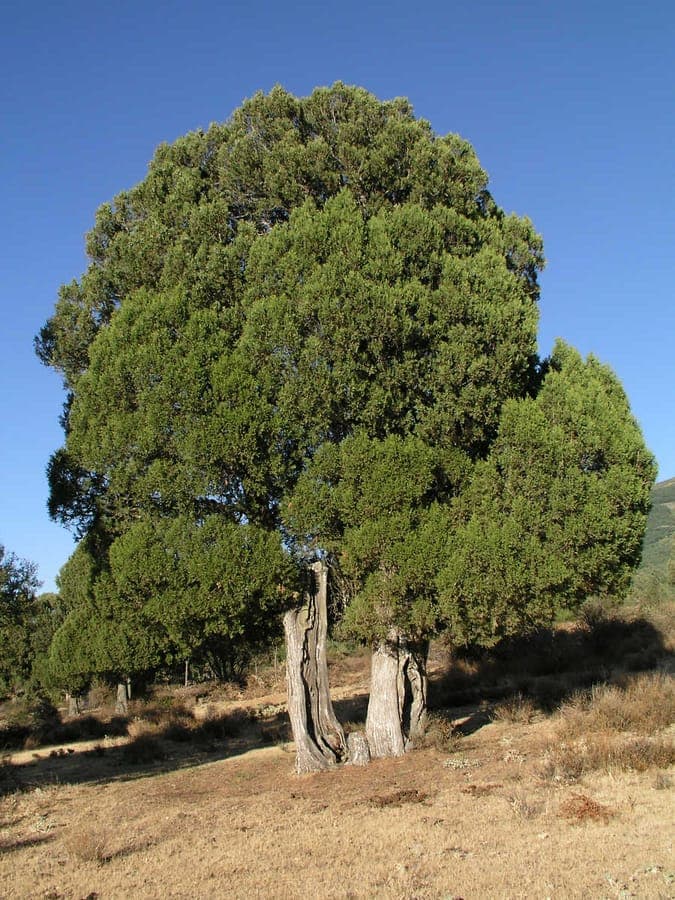
Wikimedia Commons / CC BY-SA 2.1 es, via Wikimedia Commons
Incense juniper: complete guide
Juniperus thurifera
Want to see Incense juniper: complete guide in your garden?
1 minute, no credit card
Overview
Juniperus thurifera, commonly known as incense juniper, is a rugged, slow-growing evergreen tree that thrives in hot, dry environments. Native to southern Europe and North Africa - particularly Spain, southern France, Morocco, and Algeria - this conifer brings architectural presence and aromatic resilience to gardens. It's not flashy, but it's dependable: a plant that stands tall through drought, wind, and poor soil. Reaching heights of 6 to 12 meters over decades, it grows as a narrow column when young, eventually broadening into a full, dense crown.
On gardenworld.app, you can design a drought-resistant garden layout that features Juniperus thurifera as a structural anchor. Its upright form works well in modern, minimalist gardens, gravel beds, or Mediterranean-style plantings. With a lifespan that can exceed 200 years, this is a tree that outlives generations - if given the right start.
Appearance & bloom cycle
The incense juniper has fine, scale-like foliage in deep green with a silvery sheen. When brushed or warmed by the sun, the leaves release a sweet, balsamic resin scent - hence the name. The bark on mature trunks becomes fibrous and peels slightly, adding textural interest.
Flowering occurs in February and March. The blooms are small and inconspicuous: male flowers appear as yellowish clusters at branch tips, releasing pollen in dry weather. Female flowers are greenish and develop into berry-like cones that ripen to a dark purple after 2–3 years. These aren't true berries but seed cones, and they attract birds like thrushes.
Ideal location
This juniper loves full sun - aim for a light level of 8 out of 10. It needs at least 6–8 hours of direct sunlight daily. Plant it on south- or southwest-facing slopes, in rock gardens, or as a windbreak. Avoid shaded areas; insufficient light leads to sparse growth and weak structure.
Use gardenworld.app to map sun exposure in your garden and determine the best spot for your incense juniper. The app helps identify microclimates and wind patterns, so you can place this tree where it'll thrive for decades.
Soil requirements
Well-drained soil is non-negotiable. Heavy clay or waterlogged ground causes root rot. The ideal pH range is 6.5 to 7 - slightly acidic to neutral. If your soil is dense, amend the planting hole with coarse sand or grit. Raised beds or sloped terrain work best.
Avoid organic mulches like bark chips near the trunk. Instead, use gravel or crushed stone to keep the base dry and deter weeds. This mimics the plant's natural rocky, arid habitat.
Free design
Want to see Incense juniper: complete guide in your garden? Make a free design now.
Watering
Water regularly during the first growing season - about 10–15 liters per week during dry spells. After year one, Juniperus thurifera is highly drought-tolerant. In summer, water deeply but infrequently, especially if rainfall is below 20 mm per week.
Never let the roots sit in water. Use deep soakings every 2–3 weeks during prolonged drought, rather than frequent shallow watering. Established trees rarely need irrigation.
Pruning
Pruning is minimal. This juniper shapes itself over time. Remove only dead, damaged, or crossing branches in early spring. Use sharp, clean secateurs and avoid cutting into old wood without foliage - recovery is slow.
If you must shape it, do so lightly in late winter. Heavy pruning can kill sections of the plant. For hedges or topiary forms, choose a more forgiving juniper species.
Maintenance calendar
- Jan: Check for winter damage. Remove broken branches.
- Feb: Flowering begins. No action needed.
- Mar: Light pruning possible before new growth starts.
- Apr: Resume watering if spring is dry.
- May: Monitor for spider mites, especially in hot, dry weather.
- Jun: Deep water if no rain for 3+ weeks.
- Jul: Protect young plants from scorching sun with temporary shade.
- Aug: Avoid fertilizing. Keep foliage dry to prevent fungal issues.
- Sep: Loosen soil around base. Do not add compost.
- Oct: Leave fallen leaves as light mulch.
- Nov: Add gravel around trunk to prevent stem rot.
- Dec: Stake young trees in windy areas.
Winter hardiness
Hardy to -15°C (USDA zone 7b), Juniperus thurifera handles cold well but dislikes wet winters. In areas with heavy snow or ice, tie upright branches loosely to prevent splitting. Ensure soil drains fast to avoid root freeze-thaw damage.
Companion plants
Pair with drought-loving, sun-tolerant species: Lavandula angustifolia, Santolina chamaecyparissus, Cistus spp., or Euphorbia myrsinites. Low-growing thymes make excellent ground cover. Avoid moisture-loving plants like ferns or astilbes.
Closing
Juniperus thurifera is a quiet achiever - not loud, but incredibly resilient. It's perfect for low-maintenance gardens, xeriscaping, or adding vertical structure to a rocky slope. Plant it in full sun, on well-drained soil, and step back. Over time, it develops character, texture, and a subtle fragrance that lingers on warm days. For planting layouts and companion ideas, visit gardenworld.app. You'll find inspiration for creating a garden that works with nature, not against it.
Want to see Incense juniper: complete guide in your garden? Make a free design now.
Upload a photo, pick a style, and get a photorealistic design with plant list in under a minute.
No credit card required


Similar plants
Cupressus macnabiana: complete guide
Cupressus macnabiana
The Fragrant Cypress offers elegant growth with fine, aromatic foliage. Perfect for temperate climates and as specimen trees in contemporary gardens.
Cupressus guadalupensis: complete guide
Cupressus guadalupensis
The Guadalupe cypress: an elegant conifer for gardens. Complete cultivation guide for this Mexican cypress. Information about care, location, form and maintenance.
Austrocedrus chilensis: complete guide
Austrocedrus chilensis
Discover Austrocedrus chilensis, the Chilean Cedar ornamental conifer. Elegant specimen with fine foliage and columnar form for permanent structure.