
Jean Tosti / CC BY-SA 3.0, via Wikimedia Commons
Cade juniper: complete guide
Juniperus oxycedrus
Want to see Cade juniper: complete guide in your garden?
1 minute, no credit card
Overview
Juniperus oxycedrus, commonly known as Cade juniper, is a rugged, slow-growing evergreen shrub native to southern Europe and North Africa. It's not a flashy plant, but it brings resilience, structure, and a sharp, resinous scent when brushed against. If you're designing a low-maintenance or drought-tolerant garden, this juniper is worth considering. It grows 1.5 to 2 meters tall and spreads up to 2 meters wide over time, expanding just 5 to 10 cm annually. That slow pace means less pruning and fewer surprises in your garden layout. On gardenworld.app, you can generate a garden plan that integrates Cade juniper seamlessly into rocky slopes or xeriscape beds.
This species thrives in hot, dry climates but adapts well to temperate zones as long as drainage is excellent. It's often used in erosion control on slopes, as a fragrant hedge, or as a sculptural element in contemporary garden designs. While not commonly found in standard garden centres, specialty nurseries and online growers are starting to stock it more regularly.
Appearance & bloom cycle
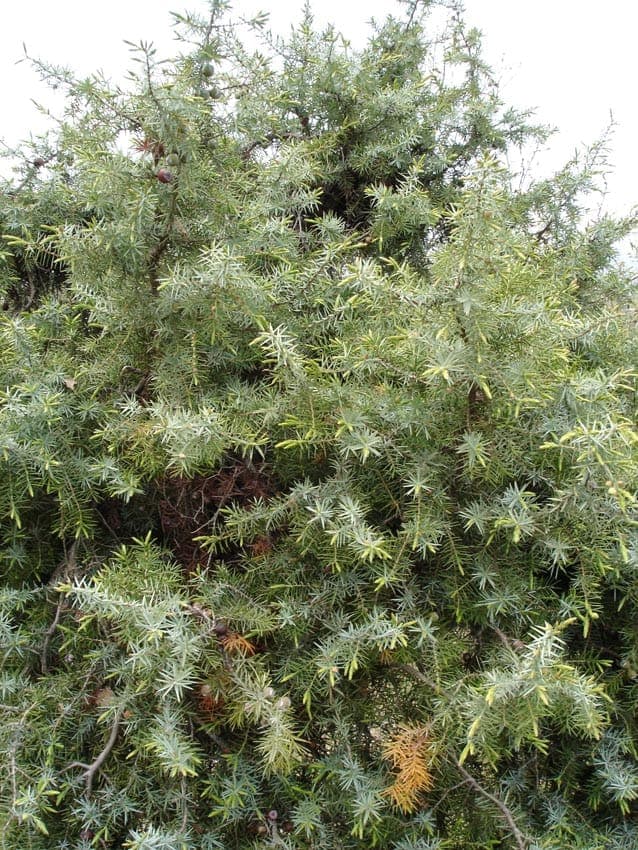
Cade juniper has stiff, needle-like leaves arranged in whorls of three. The needles are 1–2 cm long, dark green with a distinctive white stomatal band on the underside. When crushed, they release a pungent, turpentine-like aroma-quite different from the sweeter scent of common junipers. In May, small yellow-green flowers appear at the tips of new growth. Male flowers are brighter yellow, while female ones are more subdued. Pollination leads to the development of berry-like cones, which mature over two to three years into dark purple-black structures about 6 mm wide. These are not edible but are traditionally used to produce cade oil, a wood-tar oil used in skincare.
Ideal location
Full sun is essential-aim for at least 6 hours of direct sunlight daily. While it tolerates partial shade, growth becomes leggy and less compact. South- and west-facing slopes or borders are ideal. Avoid low-lying, damp areas where cold air settles or water pools. This plant excels in rock gardens, dry banks, and gravel pathways. If your garden has sandy or gravelly soil and full exposure, Cade juniper will likely thrive. Use gardenworld.app to assess your garden's sun exposure and microclimate before planting.
Soil requirements
Well-drained soil is non-negotiable. This juniper handles sandy, loamy, or rocky soils with ease but struggles in heavy clay. Ideal pH ranges from 5.5 to 7.5. If your soil is clay-heavy, amend it with coarse sand, perlite, or crushed gravel to improve drainage. No need for compost or fertiliser-this plant evolved in nutrient-poor conditions and can suffer from over-enriched soil.
Free design
Want to see Cade juniper: complete guide in your garden? Make a free design now.
Watering
During the first growing season, water deeply once or twice a week, giving 5–10 liters per plant depending on size and weather. After that, it becomes highly drought-tolerant. Established plants rarely need supplemental watering, even in hot summers. Overwatering is the most common cause of failure-root rot sets in quickly if roots sit in wet soil. Let the soil dry out completely between waterings.
Pruning
Pruning is rarely needed. Cade juniper naturally forms a dense, upright or spreading habit. If shaping is desired, do so in late winter or early spring (February–March). Avoid cutting into old wood-junipers don't regenerate well from bare stems. Use sharp, clean secateurs and trim only the current season's growth. For formal hedges, light trimming once a year keeps it neat.
Maintenance calendar
- January: Inspect for winter damage and rodent activity
- February: Light pruning if needed
- March: Final shaping, check for pests
- April: Growth resumes, no extra care required
- May: Flowering period, yellow-green blooms visible
- June: Pollination and cone development, monitor for drought stress
- July–August: Minimal care, avoid watering unless prolonged drought
- September: Check for scale insects or fungal issues
- October: Final visual inspection
- November: Prepare for winter, no pruning
- December: Dormant period, no action needed
Winter hardiness
Hardy to -15°C (USDA zones 7b–9). In most of the UK and northern Europe (zones 8a–8b), it survives winters without protection. However, in areas with wet, cold winters, poor drainage can lead to root rot, especially in young plants. A light mulch of pine bark can help, but keep it away from the trunk to prevent moisture buildup.
Companion plants
Pair with drought-tolerant perennials like lavender, rosemary, santolina, or cistus. Succulents such as sedum or sempervivum add texture at ground level. Avoid moisture-loving plants like ferns or astilbe. For height contrast, consider planting with olive trees or dwarf pines.
Closing
Cade juniper is a quiet achiever-unsung but incredibly reliable. It demands little and gives back with year-round structure and fragrance. You can find young plants at garden centres like B&Q, Wyevale, or online nurseries, typically priced between £25 and £40. Wear gloves when handling-it can irritate sensitive skin. For a garden design that maximises drought resistance and visual interest, visit gardenworld.app to explore layout options.
Want to see Cade juniper: complete guide in your garden? Make a free design now.
Upload a photo, pick a style, and get a photorealistic design with plant list in under a minute.
No credit card required


Similar plants
Cupressus macnabiana: complete guide
Cupressus macnabiana
The Fragrant Cypress offers elegant growth with fine, aromatic foliage. Perfect for temperate climates and as specimen trees in contemporary gardens.
Cupressus guadalupensis: complete guide
Cupressus guadalupensis
The Guadalupe cypress: an elegant conifer for gardens. Complete cultivation guide for this Mexican cypress. Information about care, location, form and maintenance.
Austrocedrus chilensis: complete guide
Austrocedrus chilensis
Discover Austrocedrus chilensis, the Chilean Cedar ornamental conifer. Elegant specimen with fine foliage and columnar form for permanent structure.