
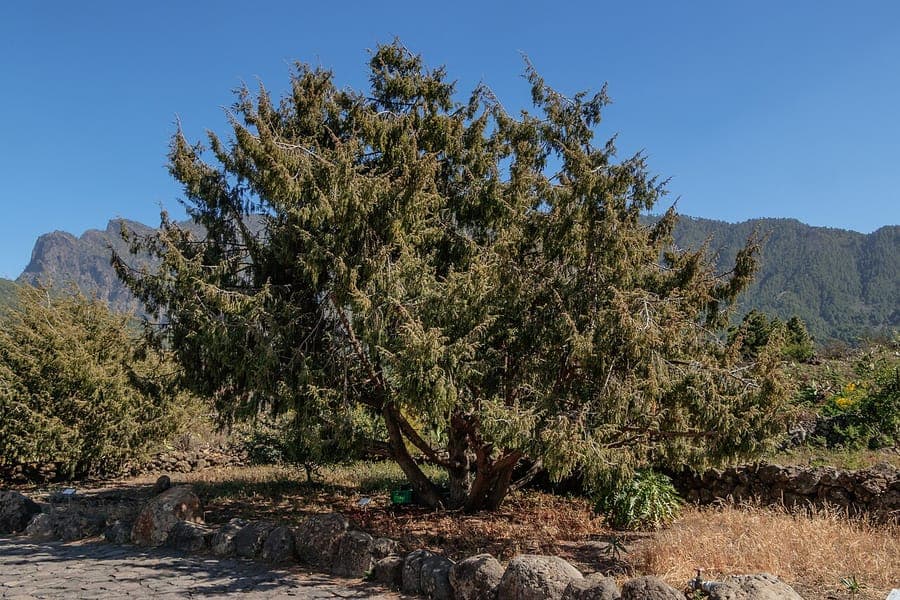
H. Zell / CC BY-SA 3.0, via Wikimedia Commons
Juniperus cedrus: complete guide
Juniperus cedrus
Want to see Juniperus cedrus: complete guide in your garden?
1 minute, no credit card
Overview
The Juniperus cedrus, commonly known as the Canary Islands juniper, is a remarkable conifer native to the Canary Islands and Madeira. This plant captures the imagination of gardeners seeking elegant structure and character. Growing as a compact shrub to small tree, it provides year-round textural interest and architectural presence in the landscape.
The Canary Islands juniper is celebrated for its attractive blue berries that emerge in autumn. This makes it visually striking from a horticultural perspective and valuable for bird enthusiasts. The plant grows steadily and deliberately, ensuring many years of enjoyment from your investment.
Appearance and bloom
The Juniperus cedrus distinguishes itself through slender, upright growth and exceptionally fine needle foliage. The needles are green with a slight sheen, giving the plant a blue-grey appearance. As specimens mature, some develop purplish tones, enhancing their elegance.
Female plants produce berries that start green and gradually turn blue-black. These berries are actually modified seed scales and persist on the plant for months, attracting birds and adding natural wildlife value. Male plants produce yellow pollen-bearing cones in spring.
Ideal location
The Canary Islands juniper thrives in full sun to partial shade. Provide at least six hours of direct sunlight daily for optimal growth and color development. In deeper shade, the plant becomes somewhat sparse, so ensure adequate light exposure.
Position the plant where air circulation flows freely. This prevents moisture-related issues and promotes healthy growth. Being island-native, it tolerates windy locations exceptionally well. For smaller gardens, it works beautifully along walls or as a focal point in borders.
Soil
The Juniperus cedrus is not particular about soil composition but demands excellent drainage. Heavy clay or waterlogged soil must be avoided, as these cause root rot. Slightly acidic to neutral pH between 5.5 and 7.0 is ideal.
When planting, incorporate coarse sand or small gravel into the planting hole for enhanced drainage. For heavy clay soils, slightly elevate the planting mound above grade. Once established, the plant is exceptionally forgiving and requires minimal supplementation.
Watering
Once well-established, the Canary Islands juniper is highly drought-tolerant. During the first growing season, water regularly, particularly in dry spells. Check that soil is moist to about 10 centimeters depth, never waterlogged.
From the second season onward, you can reduce watering significantly. The plant thrives on natural rainfall without supplemental irrigation. Only during extreme droughts may supplemental watering be needed. Ensure soil never completely dries out, but equally avoid standing water.
Free design
Want to see Juniperus cedrus: complete guide in your garden? Make a free design now.
Pruning
The Juniperus cedrus requires minimal pruning. It naturally maintains a neat form without intervention. Prune in spring as the plant emerges from dormancy. Remove only dead wood and crossing branches.
For more refined shapes, carefully trim the perimeter, but avoid wounding living tissue. Junipers regenerate poorly from old wood, so exercise restraint. Maintain the plant's natural character while tidying as needed.
Maintenance calendar
In spring (March-April), inspect the plant for damage and dead wood. This is the ideal time for any gentle pruning work. Apply a thin layer of compost around the plant base, keeping it away from the stem.
During summer, monitor for dry periods and water according to guidelines. In autumn (September-October), watch the beautiful berries develop, attracting birds to your garden. As winter approaches, the plant requires no special attention and maintains itself naturally.
Winter hardiness
The Juniperus cedrus is hardy to at least -15 to -20 degrees Celsius, making it suitable for much of northern Europe. In severe winters with extended frost, young growth may sustain minor damage, but the plant survives without issue.
In exceptionally cold regions, wrapping the plant with garden fleece in December provides extra insurance. This is rarely necessary. Snow accumulation poses no problem, as flexible branches easily shed the weight.
Companion plants
The Canary Islands juniper combines beautifully with other drought-tolerant plants. Consider echeveria, sedum, and other succulents. Low-growing shrubs like Buxus and Erica also pair well.
Grass-like plants such as Miscanthus or Pennisetum add rhythm to borders featuring this juniper. White-flowering plants like Deutzia provide striking contrast to grey-blue foliage. Avoid aggressive competitors in the root zone. The plant flourishes with adequate personal space.
Closing thoughts
The Juniperus cedrus is a worthy investment for those seeking permanent structural elements. With minimal care, it provides decades of enjoyment. Whether creating Mediterranean gardens or introducing northern influences, this juniper always finds its place.
Available through garden centers and online retailers. Both GardenWorld.app and local garden specialists carry quality specimens. Inspect roots carefully before leaving the nursery.
With this guide, you have everything needed to integrate the Canary Islands juniper optimally. Enjoy years of natural beauty!
Want to see Juniperus cedrus: complete guide in your garden? Make a free design now.
Upload a photo, pick a style, and get a photorealistic design with plant list in under a minute.
No credit card required


Similar plants
Cupressus macnabiana: complete guide
Cupressus macnabiana
The Fragrant Cypress offers elegant growth with fine, aromatic foliage. Perfect for temperate climates and as specimen trees in contemporary gardens.
Cupressus guadalupensis: complete guide
Cupressus guadalupensis
The Guadalupe cypress: an elegant conifer for gardens. Complete cultivation guide for this Mexican cypress. Information about care, location, form and maintenance.
Austrocedrus chilensis: complete guide
Austrocedrus chilensis
Discover Austrocedrus chilensis, the Chilean Cedar ornamental conifer. Elegant specimen with fine foliage and columnar form for permanent structure.