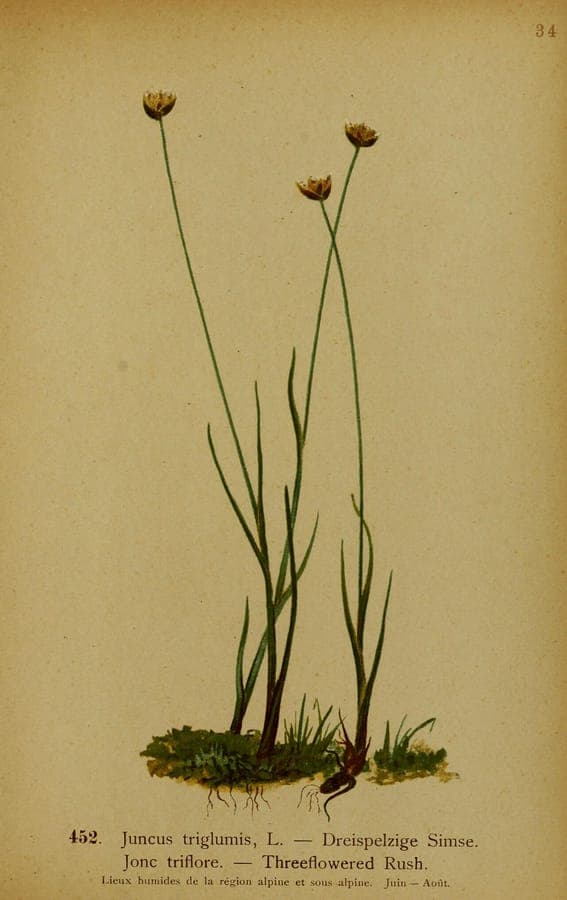
Club alpin allemand et autrichien.; Correvon, Henry / Public domain, via Wikimedia Commons
Juncus triglumis: complete guide
Juncus triglumis
Want to see Juncus triglumis: complete guide in your garden?
Full design in HD: €7.99
Look after your Juncus triglumis with the GardenWorld app
Identify plants with your camera and get a care calendar with reminders for this plant.


Overview
Juncus triglumis, known as three-flower rush or three-hulled rush, is a compact alpine plant from the Juncaceae family. This plant is found in subarctic and subalpine regions of the Northern Hemisphere and grows in mountain areas and cold, wet habitats. With its minimal size, fine texture, and preference for high altitudes, Juncus triglumis forms a unique addition to rock gardens, alpine borders, and natural mountain landscapes.
Juncus triglumis reaches a height of only 5 to 20 centimeters and forms very compact, tightly packed clumps. The plant produces small brown flowers in summer, with the name "triglumis" (three glumes) referring to the three sepals of each flower head. This is a plant for patient gardeners who appreciate subtle, fine details.
Appearance and bloom
The leaves of Juncus triglumis are very fine, almost invisibly thin, and grow in ultra-compact rosettes. They have a light grass-green color. The flowering consists of a few, small brown flowers that appear inconspicuously from June to September.
Although this plant does not stand out through special flowers, the botanical detail of the three-glume flowers is fascinating for plant collectors. The compact formation makes the plant ideal for small rock gardens and alpine troughs.
Ideal location
Juncus triglumis grows optimally in full sun to partial shade in cool, mountainous locations. The plant thrives in locations with cool climate and needs at least three to four hours of direct sunlight per day. In warm gardens, partial shade can be beneficial to help the plant cool down.
Free preview
Want to see Juncus triglumis: complete guide in your garden? Make a free preview of your design.
Soil
This plant thrives in very well-draining, moderately moist soils. Alpine gritty soils or rock gravel are ideal. The plant prefers acidic to neutral soil (pH 5.5-7.0). Add gravel, sand, and grit to garden soils to improve drainage. Waterlogging is absolutely to be avoided.
Watering
Juncus triglumis requires moderately frequent wet soils but no water stagnation. The plant tolerates some drought, especially if drainage is good. During the growing period, water when the top centimeter feels dry. In winter, the plant must remain dry.
Pruning
Juncus triglumis requires practically no pruning. Dead leaves can be gently removed. The plant rarely forms large clumps requiring division. Avoid aggressive pruning.
Maintenance calendar
Spring: Begin with careful watering. Check drainage. Summer: Maintain moderate moisture. Admire flowers. Autumn: Gradually reduce watering. Winter: Keep dry. Plant is inactive.
Winter hardiness
Juncus triglumis is very hardy to -20C or lower. The plant is perfect for cold climate zones and mountain areas. Very good winter drainage is crucial to prevent rot.
Companion plants
Juncus triglumis combines well with:
- Saxifraga (saxifrage) - alpine textures
- Draba (early bloomer) - similar scale
- Sedum - succulent texture contrast
- Armeria maritima - color variation
- Dianthus alpinus - compact flowers
Closing
Juncus triglumis is a precious plant for alpine gardeners. Though small and subtle, it offers fascinating botanical details and unparalleled growth character for rock gardens and mountain landscapes. For more alpine plant combinations, visit gardenworld.app/nl or gardenworld.app/en.
Frequently asked questions about Juncus triglumis
Is Juncus triglumis winter hardy?
Juncus triglumis is very hardy to -20C or lower. The plant is perfect for cold climate zones and mountain areas.
When and how do you prune Juncus triglumis?
Juncus triglumis requires practically no pruning. Dead leaves can be gently removed.
How much water does Juncus triglumis need?
Juncus triglumis requires moderately frequent wet soils but no water stagnation. The plant tolerates some drought, especially if drainage is good.
Where does Juncus triglumis grow best?
Juncus triglumis grows optimally in full sun to partial shade in cool, mountainous locations. The plant thrives in locations with cool climate and needs at least three to four hours of direct sunlight per day.
What soil does Juncus triglumis need?
This plant thrives in very well-draining, moderately moist soils. Alpine gritty soils or rock gravel are ideal.

See it in your garden
See Juncus triglumis in your garden
One photo of your garden and a few questions. You see the result in about a minute.
Try it with a photoIdentify this plant in your own garden. Identify a plant
Similar plants
Short-fruited Rush (Juncus brachycarpus): complete guide
Juncus brachycarpus
Complete guide to Juncus brachycarpus: wet soil, pond margins, bloom season, division and winter care for this North American rush in garden ponds.
Smallhead rush: complete guide
Juncus brachycephalus
Smallhead rush (Juncus brachycephalus) - a slender North American wetland plant for pond margins and boggy garden zones. Full care guide.
Mertens' rush: complete guide
Juncus mertensianus
Mertens' rush (Juncus mertensianus) - a compact alpine wetland plant with purple-brown flower heads for cool pond margins. Full growing guide.
