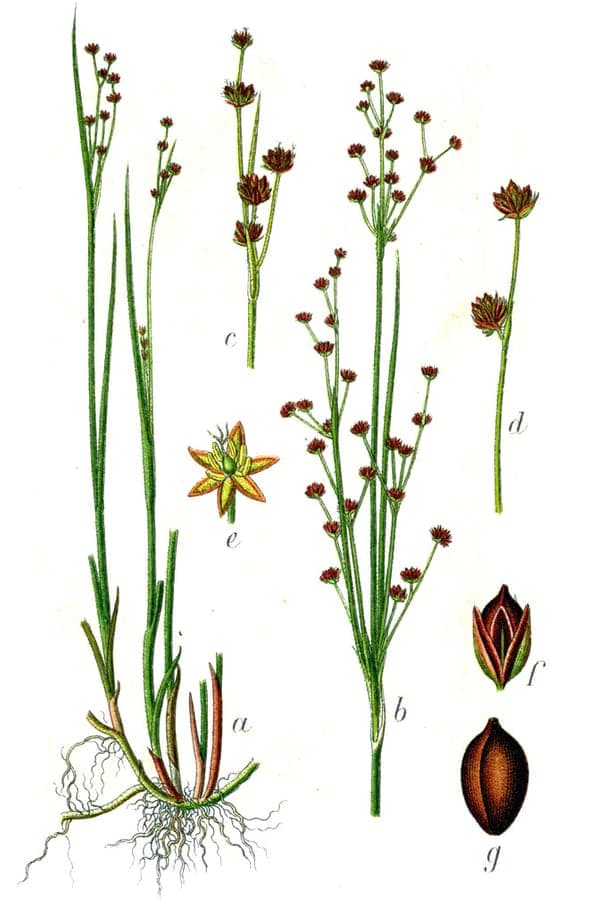
Johann Georg Sturm (Painter: Jacob Sturm) / Public domain, via Wikimedia Commons
Juncus alpinoarticulatus: complete guide
Juncus alpinoarticulatus
Want to see Juncus alpinoarticulatus: complete guide in your garden?
Full design in HD: €7.99
Overview
Alpine rush (Juncus alpinoarticulatus) is a cold-hardy sedge thriving in cool, moist alpine and subalpine regions across the Northern Hemisphere. This refined plant creates delicate tufts perfect for mountain gardens and high-altitude landscapes. Named for its adaptation to alpine conditions, it brings authentic upland character to cooler garden settings.
Appearance and Bloom
Forming tight tufts 20-40 cm tall, Juncus alpinoarticulatus displays slender, blue-green foliage with inconspicuous brown flowers from June through August. The densely packed leaf blades create fine, almost feathery texture. Growth habit remains compact and well-structured throughout the year.
Ideal Location
Choose open, sunny sites with good air circulation - full sun encourages strongest growth. In warmer regions, light afternoon shade prevents excessive drying. Avoid wind-tunnels that desiccate foliage despite adequate moisture.
Soil Requirements
Wet to very moist soil is essential, with reliable drainage preventing waterlogging. Acidic to neutral pH (5.5-7.0) suits growth optimally. In heavy clay, amend with coarse sand and gravel to improve internal drainage while maintaining moisture levels.
Watering
Keep soil consistently moist throughout the growing season. Alpine sites naturally maintain moisture, but supplemental watering helps establish young plants. Once established, mature specimens tolerate brief dry spells better than most Juncus species.
Free preview
Want to see Juncus alpinoarticulatus: complete guide in your garden? Make a free preview of your design.
Pruning
Pruning is minimal. Remove winter-damaged foliage in early spring before new growth emerges. Retain outer leaf layers for root protection and structural insulation.
Maintenance Calendar
April: Spring cleanup of debris. June-August: Monitor flowering development. September-May: Plant dormancy, minimal intervention.
Winter Hardiness
Fully hardy to USDA zone 2 - one of the hardiest Juncus species. Survives severe frost and deep snow cover without significant damage, making it ideal for high-altitude and northern gardens.
Companion Plants
Pair with alpine sedges (Carex), alpine saxifrages, and other cold-hardy moisture-loving plants for authentic mountain composition. Thrive together in wet alpine meadow recreations. Check OBI or Hornbach for compatible alpine plant material.
Final Thoughts
Juncus alpinoarticulatus rewards mountain gardeners with reliable cold-hardiness and minimal care demands. The fine texture and compact growth habit bring genuine alpine character to high-altitude landscapes. Explore more alpine garden concepts and plant pairings at gardenworld.app for inspiration, and discover additional mountain gardening strategies at gardenworld.app for your region's unique conditions.
See it in your garden
See Juncus alpinoarticulatus in your garden
One photo of your garden and a few questions. You see the result in about a minute.
Try it with a photoIdentify this plant in your own garden. Identify a plant
Similar plants
Juncus acutiflorus: complete guide
Juncus acutiflorus
Sharp-flower rush brings elegant grace to wetland gardens. Learn cultivation secrets, soil requirements, and companion planting for moist landscapes.
Juncus articulatus: complete guide
Juncus articulatus
Joint-leaf rush adds graceful texture to wetland gardens and waterside landscapes. Discover growing secrets for this temperate rush species.
Juncus arcticus: complete guide
Juncus arcticus
Arctic rush thrives in the most extreme climates. Discover how to cultivate this subarctic wonder for polar and high-altitude gardens.