
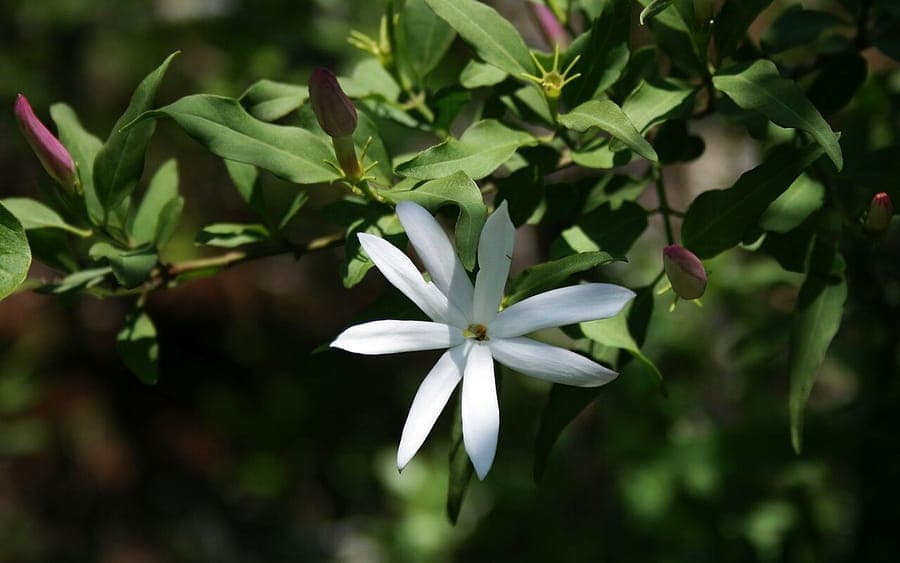
Franz Xaver / CC BY-SA 4.0, via Wikimedia Commons
Common wild jasmine: complete guide
Jasminum multipartitum
Want to see Common wild jasmine: complete guide in your garden?
1 minute, no credit card
Overview
Common wild jasmine (Jasminum multipartitum), native to southern and tropical Africa, is a vigorous, semi-wild climbing plant from the Oleaceae family. Also known as Muvwipyo in native languages, it grows naturally in open savanna landscapes and woodland areas. In temperate zones, it's primarily suited for greenhouse cultivation or very protected southern locations.
Appearance and bloom
Common wild jasmine grows as a lush vine with small, delicate green foliage divided into many fine segments - hence the name "multipartitum". The plant grows vigorously and develops interesting architectural form. White flowers appear in small, fragrant clusters offering refined character. Blooming typically occurs from summer through early autumn.
Ideal location
Position common wild jasmine in full sun to very light shade, receiving minimum 6 hours direct sunlight daily. In southern regions it can grow on very protected, warm locations. Ideally in a greenhouse or against a south-facing wall. This plant cannot tolerate cold winters outdoors.
Soil
Common wild jasmine prefers well-draining, slightly acidic to neutral soil. For container cultivation use standard potting soil, amended with 25% sand or perlite for optimal drainage. This plant responds poorly to waterlogging.
Watering
Water regularly during growing period (May-October) but allow soil to dry slightly between waterings. During hot periods daily watering may be needed. Winter: water minimally. This plant is fairly drought-tolerant once established but prefers more moisture during active growth.
Free design
Want to see Common wild jasmine: complete guide in your garden? Make a free design now.
Pruning
Prune common wild jasmine regularly during growing season for compact form. Remove long, thin growth and damaged branches. Regular pruning stimulates denser, bushier growth which is aesthetically pleasing.
Maintenance calendar
January-March: Prune for shape, minimal watering April-May: Reduce pruning intensity, gradually increase watering June-September: Growing season; regular watering, feeding October-November: Reduce watering, prepare plant December: Minimal watering, keep in warm location
Winter hardiness
Common wild jasmine is NOT winter hardy in temperate zones. Below 5-10 degrees Celsius the plant suffers serious damage. In southern regions with very protected microclimates it might be possible, but this is exceptional. Greenhouse cultivation is recommended.
Companion plants
Successfully combine with:
- Mandevilla (pink/red species)
- Bougainvillea
- Clerodendrum (Glory bower)
- Passiflora (Passion fruit)
- Other southern African climbers
Final thoughts
Common wild jasmine is an enchanting wild climber for those wanting exotic elegance in a conservatory or protected garden corners. The refined, finely-divided foliage and fragrant flowers make it botanically interesting. For gardenworld.app, ideal for exclusive greenhouse projects with south African theming.
Want to see Common wild jasmine: complete guide in your garden? Make a free design now.
Upload a photo, pick a style, and get a photorealistic design with plant list in under a minute.
No credit card required


Similar plants
Rough menodora: complete guide
Menodora scabra
Full guide to Menodora scabra: a drought-tolerant desert subshrub with bright yellow flowers, ideal for rock gardens and xeriscapes.
Fraxinus dipetala: complete guide
Fraxinus dipetala
California ash or two-petal ash from southwestern USA. Beautiful spring flowers, drought-tolerant. Experimental choice for warm Mediterranean front gardens.
Syringa komarowii: complete guide
Syringa komarowii
Syringa komarowii is a striking lilac from central China with elegant flower spikes and lovely foliage. Discover the complete care guide here.