
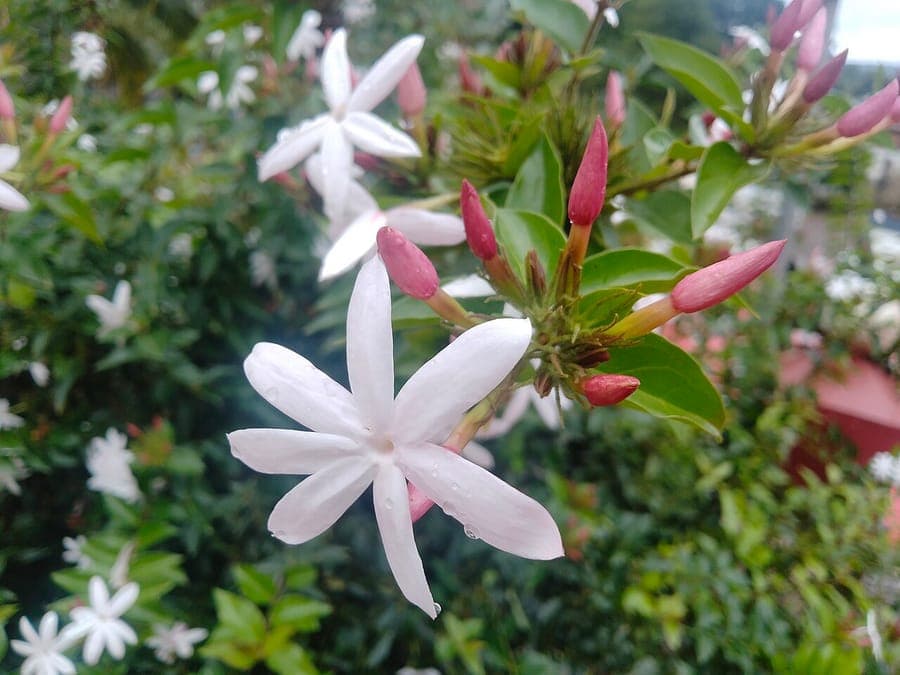
Vijayanrajapuram / CC BY-SA 4.0, via Wikimedia Commons
Gold Coast jasmine: complete guide
Jasminum dichotomum
Want to see Gold Coast jasmine: complete guide in your garden?
1 minute, no credit card
Overview
Gold Coast jasmine (Jasminum dichotomum), originating from tropical Africa, is an elegant climbing plant from the Oleaceae family. While this plant thrives in its native hot climate, growing it in temperate regions requires special attention. It offers fragrant white flowers and an exotic appearance guaranteed to impress garden visitors.
Appearance and bloom
Gold Coast jasmine grows as a slender, lush vine with fine, delicate leaves. The foliage is small, dark green and glossy, creating an airy appearance. The flowers are small, star-shaped white clusters releasing a sweet, intoxicating fragrance. While the exact blooming period varies in cooler climates, the plant flowers primarily during warm seasons.
Ideal location
In temperate climates, this tropical vine performs best in a warm greenhouse or during summer on a full sun terrace. Position it where it receives at least 6-8 hours of sun daily. If planting outdoors, choose a very protected location against a south-facing wall. Winter requires moving the plant indoors for frost protection.
Soil
Gold Coast jasmine prefers well-draining, slightly acidic to neutral soil. Use premium potting soil mixed with perlite (30%) for optimal drainage. This plant cannot tolerate waterlogged conditions - root rot is the primary problem. Ensure water drains quickly and never forms puddles.
Watering
Water regularly during the growing season (May-October) but allow soil to dry slightly between waterings. Excess moisture is more damaging than insufficient water. In winter during dormancy, reduce watering considerably. The plant responds better to moderate moisture than constant waterlogging.
Free design
Want to see Gold Coast jasmine: complete guide in your garden? Make a free design now.
Pruning
Prune Gold Coast jasmine in spring (March-April) to control shape and encourage new growth. Remove thin, weak growth and any damaged branches. The plant responds well to regular, gentle pruning that promotes fuller growth.
Maintenance calendar
January-March: Winter dormancy; minimal watering, move to warm location April-May: Gradually increase temperature, resume watering and feeding June-August: Full growth period; regular watering, monthly feeding September-October: Gradually reduce, prepare for winter November-December: Move to warm greenhouse; minimal watering
Winter hardiness
Gold Coast jasmine is NOT winter hardy in temperate climates. Temperatures below 10 degrees Celsius cause serious damage; below 5 degrees the plant will likely die. Winter survival requires a heated greenhouse or warm indoor space.
Companion plants
Combine with other tropical plants in the same greenhouse:
- Passiflora edulis (Passion fruit)
- Plumbago auriculata (Cape plumbago)
- Bougainvillea (various species)
- Mandevilla (pink/red varieties)
- Stephanotis floribunda (Madagascar jasmine)
Final thoughts
Gold Coast jasmine is an exclusive choice for plant enthusiasts willing to accept the challenge of tropical climbers. This is not an outdoor plant for temperate zones, but excellent for a warm greenhouse or conservatory. The fragrance and elegance fully compensate for the extra care required. For gardenworld.app, this would be ideal for a luxury greenhouse climbing plant project.
Want to see Gold Coast jasmine: complete guide in your garden? Make a free design now.
Upload a photo, pick a style, and get a photorealistic design with plant list in under a minute.
No credit card required


Similar plants
Rough menodora: complete guide
Menodora scabra
Full guide to Menodora scabra: a drought-tolerant desert subshrub with bright yellow flowers, ideal for rock gardens and xeriscapes.
Fraxinus dipetala: complete guide
Fraxinus dipetala
California ash or two-petal ash from southwestern USA. Beautiful spring flowers, drought-tolerant. Experimental choice for warm Mediterranean front gardens.
Syringa komarowii: complete guide
Syringa komarowii
Syringa komarowii is a striking lilac from central China with elegant flower spikes and lovely foliage. Discover the complete care guide here.